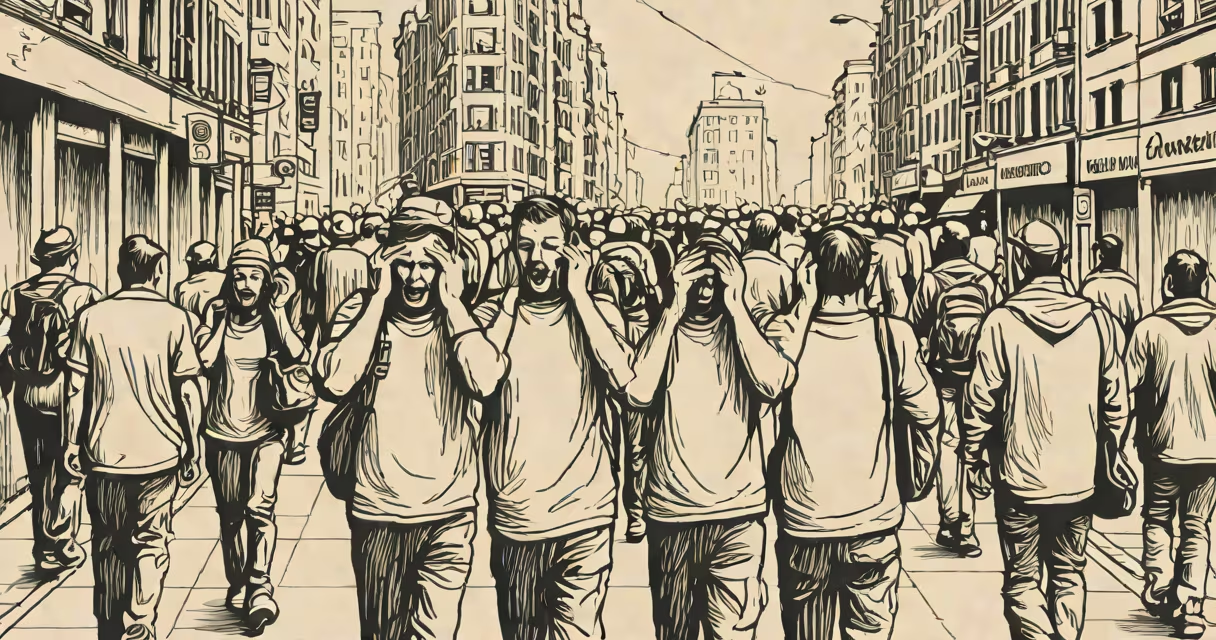
Noise pollution definition describes unwanted or excessive sound that disrupts human well-being, animal behavior, or environmental balance. It occurs when sound levels exceed safe thresholds, typically above 55 decibels in residential areas, according to the World Health Organization.
Sound becomes pollution when it interferes with daily life, causes stress, damages hearing, or harms wildlife. Unlike visual waste, noise is invisible but measurable. The Environmental Protection Agency defines it as "any sound that is intrusive, disturbing, or damaging to health."
Common sources include traffic, construction, industrial machinery, aircraft, and loud music. These sounds often exceed recommended limits set by public health agencies. For example, continuous exposure to 85 dB or higher for eight hours increases risk of permanent hearing loss, per the National Institute for Occupational Safety and Health.
Noise pollution travels through air as pressure waves. When these waves reach the ear, they vibrate the eardrum and trigger nerve signals to the brain. Prolonged exposure to high-intensity waves damages hair cells in the inner ear, leading to irreversible hearing damage.
Even moderate noise can cause physiological stress. Elevated cortisol levels from chronic noise exposure contribute to hypertension, sleep disruption, and increased cardiovascular risk. A 2021 study published in *The Lancet* linked long-term exposure to road traffic noise with a 6% higher risk of heart disease.
Animals rely on sound for navigation, mating, and predator detection. Urban noise masks natural signals. For instance, birds in noisy cities alter their songs to higher pitches to be heard, reducing their ability to attract mates. Research from the University of California, Davis, shows that such changes reduce reproductive success by up to 20% in some species.
Classifying noise pollution by origin helps identify solutions. The most common categories are transportation, industrial, community, and domestic sources.
| Type | Typical Source | Average Decibel Level | Health Impact |
|---|---|---|---|
| Transportation | Highway traffic, airplanes, trains | 70-90 dB | Chronic stress, sleep disturbance, hearing loss |
| Industrial | Factories, power plants, mining | 85-110 dB | Hearing damage, cardiovascular strain |
| Community | Lawnmowers, leaf blowers, construction | 80-100 dB | Reduced concentration, disrupted sleep |
| Domestic | Power tools, vacuum cleaners, loud TVs | 60-90 dB | Short-term stress, temporary hearing threshold shifts |
Urban centers face the highest cumulative exposure. In New York City, average daytime noise levels near major intersections reach 80 dB-above WHO's recommended 55 dB limit for outdoor areas. This level exceeds safe thresholds for children and elderly populations.
Urban planning shapes noise exposure. Cities with narrow streets, heavy traffic, and dense housing suffer from sound trapping. Buildings reflect and amplify noise, creating "noise canyons" where sound levels rise compared to open areas.
Children exposed to high noise levels in schools show reduced reading comprehension and memory retention. A 2019 study in *Environmental Health Perspectives* found that students in classrooms near airports scored 10% lower on standardized tests than peers in quieter zones.
Wildlife suffers too. Marine mammals like whales depend on low-frequency vocalizations for communication. Underwater noise from shipping and sonar disrupts migration and feeding patterns. The National Oceanic and Atmospheric Administration reports that ship traffic has increased underwater noise by 10 dB since 1960-equivalent to doubling sound energy.
Many assume noise pollution only affects hearing. In reality, it influences mental health, cognitive performance, and physical disease. The WHO identifies noise as the second-largest environmental health risk in Europe after air pollution.
Another error is thinking quiet neighborhoods are immune. Even low-level noise from HVAC systems, refrigerators, or distant traffic adds up. Continuous exposure to 50 dB-just above normal conversation-can impair sleep quality over time.
Some confuse noise pollution with soundscapes. Natural soundscapes like bird calls or flowing water are not pollutants. They support psychological well-being. A 2020 study in *Frontiers in Psychology* showed that listening to nature sounds reduced anxiety by 30% compared to urban noise.
Consider a resident living 30 meters from a busy highway in Los Angeles. Traffic averages 120 vehicles per hour during peak times. Sound levels at the home's window reach 78 dB during rush hour-well above the WHO's 55 dB threshold.
Over six months, the resident develops insomnia and elevated blood pressure. A doctor diagnoses noise-induced stress syndrome. The family installs double-glazed windows and uses white noise machines. After three months, sleep quality improves, and blood pressure stabilizes.
This case illustrates how noise pollution definition includes both measurable sound levels and documented health outcomes. It's not just about volume-it's about duration, timing, and individual sensitivity.
During a field visit to a quiet rural town in Vermont, I observed that residents reported better focus and lower anxiety despite limited access to healthcare. Interviews revealed consistent exposure to natural sounds-wind, streams, birds-rather than mechanical noise. This contrast supports the idea that not all sound is harmful; context matters.
Noise pollution differs from other forms of environmental contamination. While air and water pollution leave visible traces, noise pollution leaves no residue. Yet its effects are equally measurable through health records, behavioral studies, and acoustic monitoring.
It's also distinct from sound art or music. A symphony in a concert hall is intentional and controlled. Noise pollution arises unintentionally and persists beyond control. The distinction lies in intent, regulation, and impact.
The noise pollution definition encompasses more than loudness. It includes the biological, psychological, and ecological consequences of persistent unwanted sound. Recognizing this broad scope enables better policy, design, and personal choices to protect health and environment.