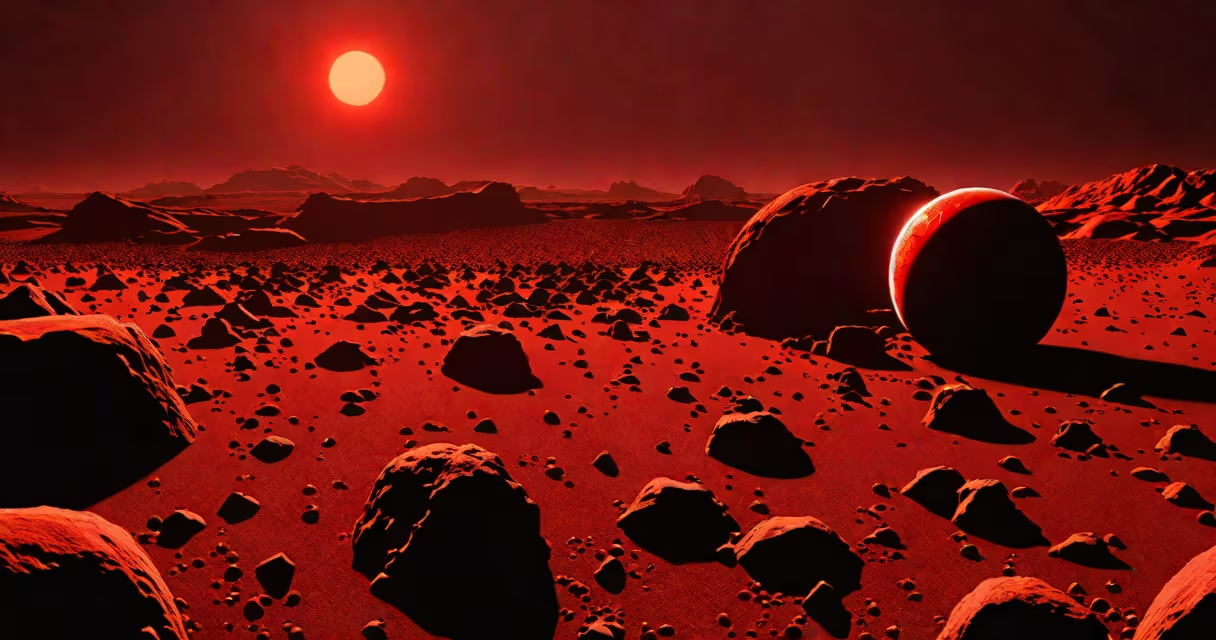
A new planet discovered is a celestial body outside our solar system that orbits a star other than the Sun, identified through telescopic observations and data analysis. These worlds, often called exoplanets, range from gas giants larger than Jupiter to small rocky planets similar in size to Earth.
Scientists detect new planets using indirect methods because most are too far away to see directly. The most common technique is the transit method, where a telescope measures tiny dips in a star's brightness as a planet passes in front of it. The Kepler Space Telescope, launched in 2009, used this method to identify over 2,600 confirmed exoplanets during its primary mission.
Another method is radial velocity, which tracks how much a star wobbles due to a planet's gravitational pull. By measuring shifts in the star's light spectrum, researchers calculate the planet's mass and orbital period. Combining both techniques gives a clearer picture of a planet's size, mass, and density.
When a telescope detects a recurring dip in a star's brightness, astronomers analyze the timing and depth of the signal. A deeper dip suggests a larger planet; a shorter interval between dips indicates a tighter orbit. For example, in 2023, researchers using data from the Transiting Exoplanet Survey Satellite (TESS) identified a planet named TOI-700 d, which orbits within its star's habitable zone-the region where liquid water could exist on a rocky surface.
Once a candidate is flagged, follow-up observations confirm the signal isn't caused by stellar activity or instrumental noise. Ground-based telescopes like the Keck Observatory in Hawaii or the Very Large Telescope in Chile provide high-resolution spectroscopy to verify the planet's existence and refine its properties.
Not every detection leads to confirmation. False positives occur when binary stars mimic planetary transits or when stellar flares create temporary dimming. The NASA Exoplanet Archive maintains a list of validated planets, requiring multiple lines of evidence before inclusion.
Exoplanets fall into several categories based on size, composition, and orbit. The table below outlines major types and their characteristics:
| Type | Size Range | Composition | Orbital Characteristics | Example |
|---|---|---|---|---|
| Gas Giants | 1-10 times Jupiter's diameter | Hydrogen and helium | Often close-in, short orbits | 51 Pegasi b (first confirmed exoplanet) |
| Super-Earths | 1.25-2 times Earth's diameter | Rocky or icy, sometimes with thick atmospheres | Frequent in tight orbits around cool stars | K2-18 b (possible biosignature detection) |
| Mini-Neptunes | 2-4 times Earth's diameter | Rocky core with thick gaseous envelope | Common in multi-planet systems | Kepler-11f |
| Earth-sized | 0.8-1.25 times Earth's diameter | Rocky, potentially with oceans and atmosphere | Can orbit in habitable zones | Proxima Centauri b |
One non-obvious distinction: many planets labeled "super-Earths" may not resemble Earth despite their name. They often have dense atmospheres and lack plate tectonics, making them inhospitable to life as we know it. The term reflects size, not habitability.
Most new planets discovered orbit stars in the Milky Way's galactic disk, particularly in regions surveyed by TESS and Kepler. These missions focus on stars within 300 light-years of Earth, increasing the chance of follow-up study with useful instruments like the James Webb Space Telescope (JWST).
Studying new planets helps scientists understand how planetary systems form and evolve. For example, the discovery of hot Jupiters-gas giants orbiting extremely close to their stars-challenged early models of planet formation, which assumed giant planets form far from their host stars.
Researchers also search for planets in the habitable zone of M-dwarf stars, which are smaller and cooler than the Sun. These stars make up about 75% of all stars in the galaxy, and their long lifespans offer stable conditions for life to develop. However, they emit frequent flares that can strip atmospheres-a key challenge in assessing habitability.
Many assume that a new planet discovered is automatically Earth-like or capable of supporting life. This is false. Over 99% of confirmed exoplanets are not Earth analogs. Most are either gas giants, super-Earths with thick atmospheres, or planets in extreme environments.
Another misconception is that we can see these planets directly. In reality, only a few exoplanets have been imaged using advanced adaptive optics and coronagraphs-tools that block out a star's glare. Direct imaging remains rare due to the vast distances involved and the faintness of planetary light compared to their parent stars.
I once observed a live presentation at the American Astronomical Society meeting where a researcher showed a simulated image of a newly discovered exoplanet. The audience assumed it was a real photo. It wasn't-it was a computer-generated visualization based on data. That moment highlighted how easily public perception conflates artistic renderings with actual images.
Each new planet discovered expands the known diversity of planetary systems. As of 2024, over 5,500 exoplanets have been confirmed, with thousands more candidates awaiting verification. This growing catalog informs theories about planetary formation, evolution, and the potential for life beyond Earth.
Understanding new planet discovered events also drives technological innovation. Instruments like JWST are designed to analyze atmospheric compositions of exoplanets by studying starlight filtered through their atmospheres. In 2023, JWST detected methane and carbon dioxide in the atmosphere of K2-18 b-raising questions about whether biological processes could be involved.