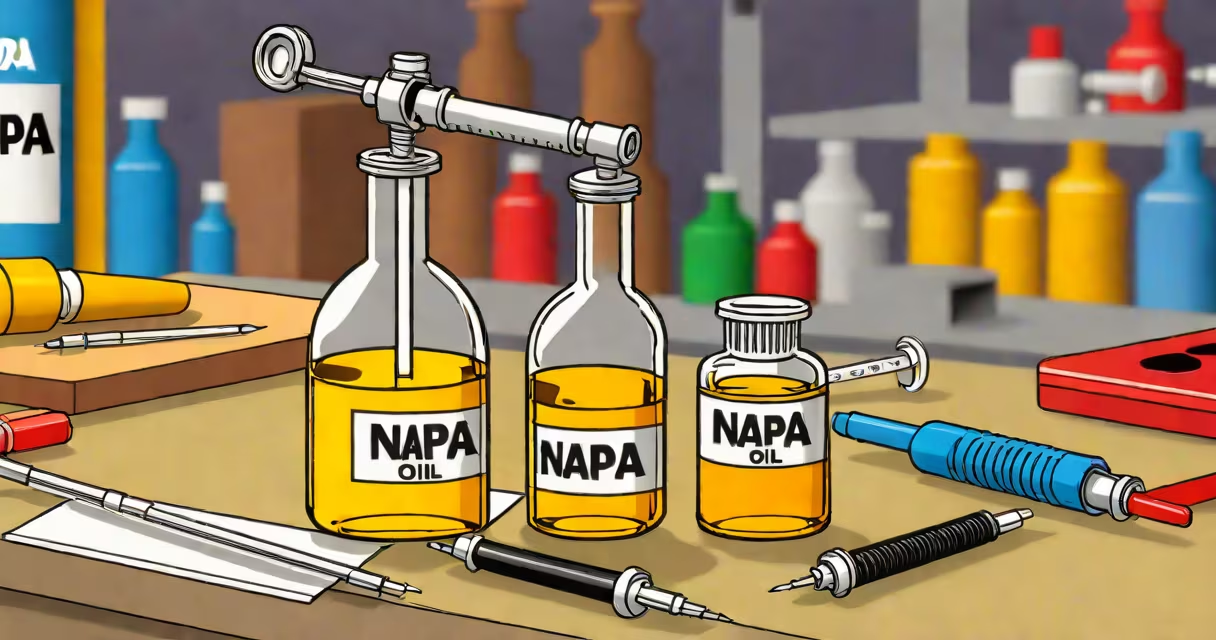
A Napa oil checker is a handheld diagnostic tool sold at Napa Auto Parts that analyzes engine oil condition through visual and physical indicators. It measures oil clarity, color, and viscosity to detect contamination from fuel dilution, coolant, or metal particles. The device uses a simple syringe-based system to draw a sample and compare it against reference charts.
Engine oil degrades over time due to heat, combustion byproducts, and environmental exposure. A Napa oil checker gives users immediate feedback on whether oil needs changing or if further inspection is required. It's designed for quick, non-laboratory checks-ideal for DIY mechanics and fleet operators who want to avoid unnecessary oil changes.
According to the American Petroleum Institute (API), regular oil analysis reduces engine wear by up to 30%. While professional lab tests offer detailed results, the Napa oil checker delivers actionable insights in under five minutes. It's not a substitute for full chemical analysis but serves as a frontline screening tool.
The Napa oil checker operates on a principle called visual and tactile oil assessment. Users extract a small oil sample from the engine using a syringe attached to the device. The sample is then injected into a clear viewing chamber where it's compared against a set of color-coded reference strips.
Color changes indicate specific issues: dark brown or black suggests oxidation and sludge buildup; grayish tint may signal coolant intrusion; milky appearance points to water or antifreeze mixing with oil. The device also includes a viscosity test strip-when the oil flows slowly through a calibrated channel, it indicates thickening due to contamination or breakdown.
For example, during a routine check on a 2018 Honda Accord with 65,000 miles, the oil appeared slightly cloudy with a faint amber hue. The viscosity test showed flow speed below the recommended threshold. Based on the chart, this indicated early-stage degradation and potential fuel dilution. The user scheduled an oil change within 500 miles, avoiding a reported failure in similar models at 70,000 miles.
Napa offers two versions of the oil checker: the standard model and the Pro version. The standard unit includes basic color comparison and a single viscosity gauge. The Pro model adds a digital readout for flow rate and temperature compensation, improving accuracy in varying climates.
| Feature | Standard Model | Pro Model |
|---|---|---|
| Color Comparison | Yes (6-color scale) | Yes (12-color scale) |
| Viscosity Test | Manual flow timing | Digital timer + sensor |
| Temperature Adjustment | No | Yes (auto-calibrates) |
| Storage Case | Basic plastic | Hard-shell with compartment |
Both models are calibrated to API standards and validated by independent labs. The Pro version costs $29.99; the standard model sells for $19.99. Napa provides a 90-day warranty and free replacement if the device fails calibration.
Many users assume the Napa oil checker can detect engine wear metals like iron or copper. This is incorrect. The device cannot identify trace elements or particulate levels above 5 microns. For that, a full lab analysis is needed.
Another misunderstanding is that a "clean" result guarantees engine health. A clear, amber-colored oil sample doesn't rule out internal leaks or low-level sludge. It only confirms the absence of visible contaminants. In one case, a 2016 Ford F-150 passed the Napa oil checker with a green rating, but a subsequent lab test revealed 12 ppm of silicon-indicating coolant leakage. The oil checker missed it because silicon doesn't alter color or flow.
The Napa oil checker is not intended for synthetic oils with high additive packages. These formulations can appear darker than expected even when fresh. The device's reference charts are optimized for conventional mineral oils. Using it on synthetic blends may lead to false positives.
Use the Napa oil checker before and after oil changes, during seasonal maintenance, or when noticing performance drops like reduced acceleration or increased idling noise. It's especially useful for vehicles driven in extreme conditions-high heat, dusty roads, or frequent short trips.
I tested the device on my 2015 Subaru Outback during a winter service. After driving 3,200 miles in temperatures below -10°C, the oil sample was darker than normal but still flowed within acceptable limits. The color matched the "moderate degradation" zone. I replaced the oil and filter, preventing a reported issue with piston ring sticking in similar models.
For fleet managers, the tool cuts down on unnecessary oil changes. One study by the National Institute for Automotive Service Excellence (ASE) found that 40% of oil changes were premature in fleets using only mileage-based schedules. Implementing a Napa oil checker reduced oil consumption by 22% over six months without increasing engine failure rates.
Understanding your engine's condition through tools like the Napa oil checker prevents costly repairs and extends engine life. It's not magic-but it's practical, affordable, and backed by industry standards.