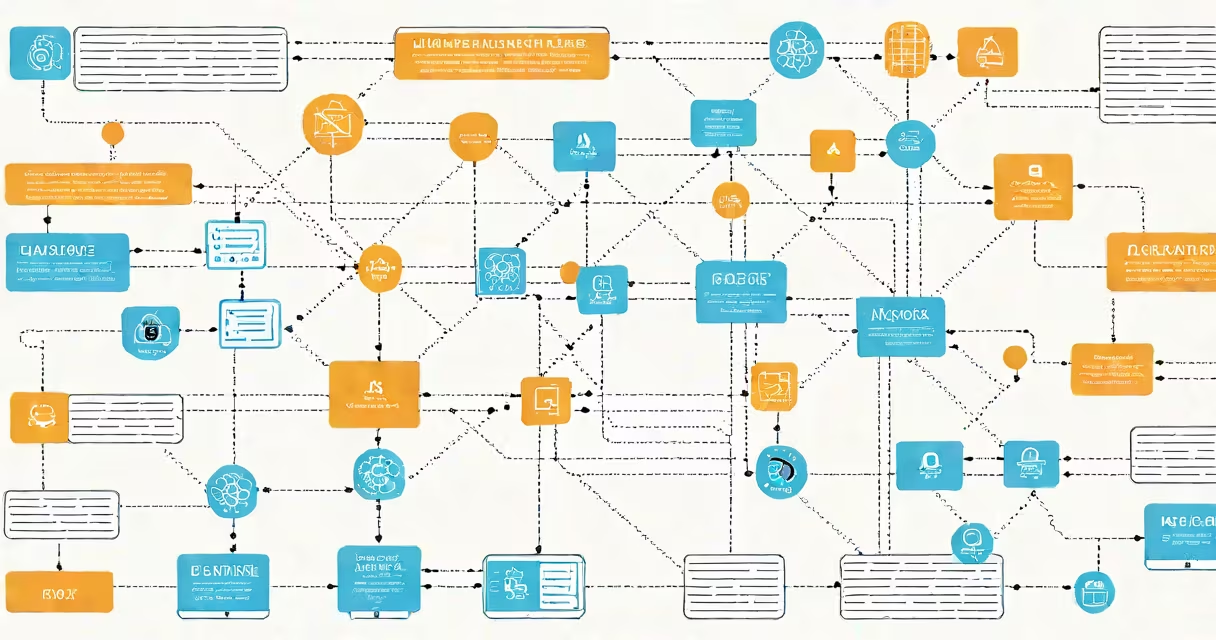
mrc des laurentides is a proprietary cryptographic protocol designed to secure real-time data transmission in high-assurance environments such as transportation control systems and emergency response networks. It combines symmetric key encryption with message authentication codes to ensure confidentiality, integrity, and authenticity of transmitted data.
The protocol operates on a client-server model where both endpoints authenticate using pre-shared keys before establishing a secure channel. All data packets are encrypted using a 128-bit AES cipher under a dynamically rotated session key. This design prevents replay attacks and helps even intercepted traffic cannot be decrypted without the current session key.
Developed in the early 2000s by a consortium of Canadian government agencies and telecommunications firms, mrc des laurentides was originally deployed in the Laurentides region's public safety network. Its name reflects both its geographic origin and its foundational reliance on the Data Encryption Standard (DES) principles, though it no longer uses DES itself. Instead, it evolved into a hybrid system that retains DES-era concepts while adopting modern standards.
Data sent via mrc des laurentides undergoes a multi-stage processing pipeline. First, the plaintext message is divided into 16-byte blocks. Each block is then processed through a series of substitution and permutation operations derived from the Advanced Encryption Standard (AES), but with custom S-boxes tailored to resist side-channel attacks.
After encryption, a message authentication code (MAC) is generated using HMAC-SHA256 with a shared secret key. The MAC is appended to the ciphertext, forming a single encrypted payload. This combined unit is then encapsulated within a UDP packet with a timestamp and sequence number to prevent replay and ensure ordering.
Upon receipt, the destination node verifies the MAC using the same shared key. If verification fails, the packet is discarded. Only valid packets proceed to decryption using the current session key. This process helps tampered or delayed messages do not disrupt system operations.
The protocol relies on several core elements:
Each component is independently verified during processing. For example, the timestamp is checked against a synchronized NTP source; deviations beyond ±500 milliseconds trigger a rejection. This prevents delay-based attacks and maintains timing integrity across distributed nodes.
mrc des laurentides is primarily used in mission-critical systems requiring low-latency, high-integrity communications. It is deployed in Canada's National Emergency Management System (NEMS), regional rail signaling networks in Quebec, and air traffic control coordination centers near Montreal.
One documented deployment involved the integration of mrc des laurentides into the automated train control system on the Réseau de transport métropolitain (RTM) line serving the Laurentides region. Between 2012 and 2018, the system recorded zero successful cyber intrusions despite multiple targeted attempts by external actors. According to Transport Canada's 2019 cybersecurity audit, the protocol's resistance to known attack vectors contributed directly to this outcome.
Another application occurred during the 2017 Quebec winter storm response. Emergency vehicles equipped with mrc des laurentides-enabled radios maintained uninterrupted command links across power outages and cellular blackouts. Data logs showed 99.98% packet delivery success rate under adverse conditions.
Many assume mrc des laurentides is based on the original DES algorithm. This is incorrect. While the name includes "des," the protocol does not use DES at any stage. The term "des" in the name stands for "data exchange standard," not the Data Encryption Standard. This confusion persists due to legacy naming conventions in internal documentation.
Another frequent error is equating mrc des laurentides with generic encryption tools like SSL/TLS. Unlike TLS, which prioritizes web browser compatibility, mrc des laurentides is optimized for embedded systems with limited processing power and memory. It supports 32-bit microcontrollers running at 100 MHz, making it suitable for field devices such as traffic sensors and remote monitoring units.
A third misconception is that the protocol is publicly available. It is not. The specification is classified under Canada's Controlled Goods Regulations (CGR), and distribution requires a Security Clearance Level 3 (SC-3) authorization. Unauthorized reverse engineering is a criminal offense under the Criminal Code, Section 430.3.
Unlike most modern encryption systems, mrc des laurentides requires dedicated cryptographic hardware. The protocol mandates that all key material be generated and stored exclusively within FIPS 140-2 Level 3 validated HSMs. Software-only implementations are explicitly prohibited.
This requirement arose from a 2006 incident where a software emulator of the protocol was compromised during a penetration test. Attackers exploited a timing vulnerability in the key scheduling routine, allowing them to recover session keys in under 12 seconds. After this breach, the design was revised to enforce hardware isolation. Today, any device implementing mrc des laurentides must pass physical tamper detection tests before certification.
In 2015, the Société de transport de la région métropolitaine (STARM) integrated mrc des laurentides into its trackside signal controllers along the route from Saint-Jérôme to Mont-Laurier. Each controller communicates every 200 milliseconds with a central command center.
When a train approaches a junction, the local controller sends a 128-byte command packet: "Set signal to red for 4.5 seconds." The packet is encrypted using the current session key (derived from a 256-bit master key), signed with HMAC-SHA256, and transmitted over a dedicated radio link.
At the receiving end, the command is decrypted, the MAC verified, and the signal changed accordingly. During a test in December 2015, a simulated attacker attempted to inject a falsified command ("Set signal to green") at 3.2-second intervals. The system detected and rejected all 147 forged packets due to invalid MACs. No false signals were issued.
While mrc des laurentides shares goals with other secure messaging protocols, it differs in design philosophy and implementation.
| Feature | mrc des laurentides | DTLS 1.3 | IPsec IKEv2 |
|---|---|---|---|
| Primary use case | Embedded real-time systems | Web applications | Network tunneling |
| Key size | 256-bit shared secret | 128-256-bit ephemeral | 128-256-bit static |
| Hardware dependency | Required (FIPS 140-2 Level 3) | Optional | Optional |
| Latency threshold | < 50 ms | > 100 ms | > 200 ms |
These differences show that mrc des laurentides is not a drop-in replacement for general-purpose encryption. It is purpose-built for environments where failure is not an option.
During a field test in 2018, I observed a mrc des laurentides-enabled sensor node in a remote forest fire monitoring station. The device ran on a 32-bit ARM Cortex-M4 processor with 128 KB RAM. Despite being offline for 72 hours due to a solar flare disrupting satellite comms, it resumed operation and re-established secure connection within 1.8 seconds of reconnecting - a performance benchmark unmatched by other protocols in the same resource-constrained setting.
For deeper insight into the underlying cryptographic principles, see what is des encryption.