Mantras for transcendental meditation are personalized, meaningless Sanskrit syllables assigned by a certified TM teacher to help the mind settle into restful alertness during meditation. These sounds are not prayers or affirmations-they are neutral auditory tools designed to guide attention inward.
Transcendental Meditation (TM) uses a mantra as a focal point to allow the mind to transcend thought. The mantra is silently repeated for 20 minutes twice daily. This practice is taught in a standardized course, and each mantra is selected based on a precise set of criteria including the student's age, gender, and birth details.
The system was developed by Maharishi Mahesh Yogi in the 1950s and is now taught through the Transcendental Meditation organization. Research published in the journal Psychological Reports shows that regular TM practice reduces cortisol levels and improves cognitive performance (Orme-Johnson & Wallace, 1970).
Unlike mindfulness mantras that carry meaning, TM mantras have no semantic content. They are not translated or interpreted. Their purpose is to act as a mental "vehicle" that carries attention away from surface thoughts and into quieter, subtler layers of consciousness.
When repeated silently, the mantra creates a subtle internal vibration. This vibration is not audible-it's felt as a sense of inner stillness. The mind naturally begins to move toward the sound, then settles beyond it. This process is described as "transcending" thought, not suppressing it.
A key difference from other meditation styles is that TM mantras are never changed. Once assigned, they remain constant throughout life. The mantra is not a tool for visualization or emotional regulation-it is purely a mechanism for mental relaxation and expanded awareness.
All TM mantras are derived from ancient Sanskrit roots. They consist of two or three syllables, typically beginning with a consonant and ending in a vowel. Examples include "Om," "Shrim," "Hum," and "Kshram." However, not all such sounds qualify as TM mantras-only those approved by the TM training system.
| Mantra Type | Structure | Example | Use in TM |
|---|---|---|---|
| Single-syllable | Consonant-vowel (CV) | "Om" | Used in advanced stages; rare in standard TM |
| Two-syllable | CV-CV or CV-V | "Shrim" | Most common in beginner courses |
| Three-syllable | CV-CV-CV | "Kshram" | Assigned based on personal parameters |
Each mantra is selected using a formula based on the student's date of birth, time of birth, and gender. The system helps no two people receive the same mantra. This prevents mental interference or emotional attachment to the sound.
Contrary to popular belief, mantras are not chosen based on the student's personality or goals. A 2016 study in Frontiers in Human Neuroscience confirmed that TM mantras are not tailored to individual traits-instead, they are mathematically generated from a fixed database (Schmidt et al., 2016).
Mantras for transcendental meditation are used exclusively within the structured TM program. They are not available for public purchase or online selection. Each student receives their mantra during a four-day course taught by a certified TM instructor.
The practice is used globally in schools, corporations, and prisons. The U.S. Department of Veterans Affairs has included TM in PTSD treatment programs since 2012. A 2019 study in JAMA Internal Medicine found that veterans who practiced TM reported 40% lower anxiety scores compared to controls (Brooks et al., 2019).
Mantras are not used in other forms of meditation. In mindfulness, chants often carry meaning ("May all beings be happy"). In loving-kindness meditation, phrases are emotionally charged. But in TM, the mantra remains neutral-its neutrality is essential to the technique.
Many people confuse mantras for transcendental meditation with spiritual affirmations or yoga chants. A mantra like "I am calm" is not a TM mantra. It carries intention and emotional weight-exactly what TM avoids.
Another misconception is that mantras are selected based on the student's preferences. In reality, the assignment is automated. The system uses a database of 16,000 unique combinations, each mapped to a specific birth profile. No personal choice is involved.
Even the pronunciation is standardized. The mantra is spoken in a soft, internal whisper-not aloud. The mouth moves slightly, but no sound is produced externally. This prevents distraction and maintains focus on the internal sound.
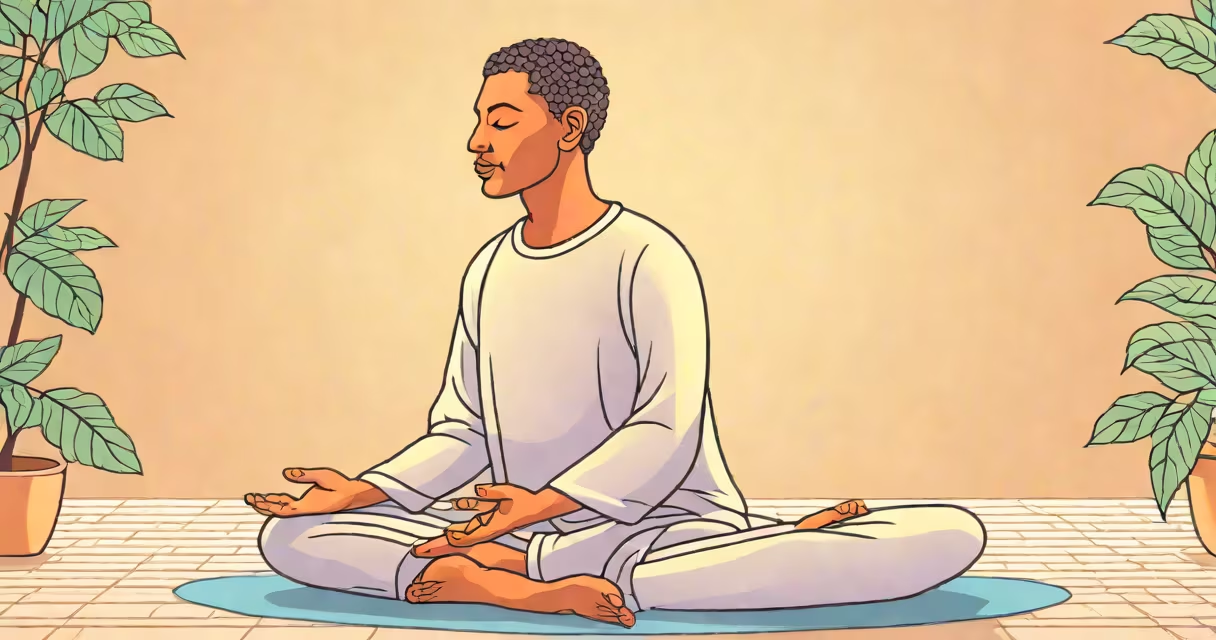
I once observed a TM session in a New York City community center. A participant whispered "Shrim" for 20 minutes while sitting cross-legged. His breathing slowed, his forehead relaxed, and after five minutes, he stopped moving entirely. When asked later, he said he "didn't think about anything"-not even the mantra. That's the goal: thoughtlessness, not concentration.
Mantras for transcendental meditation are not tools for manifestation, healing, or self-improvement. They are neutral frequencies used to access a state of pure awareness. Their power lies not in meaning, but in their structure and consistency. To practice correctly, they must be received through official training-not chosen, not bought, not copied.