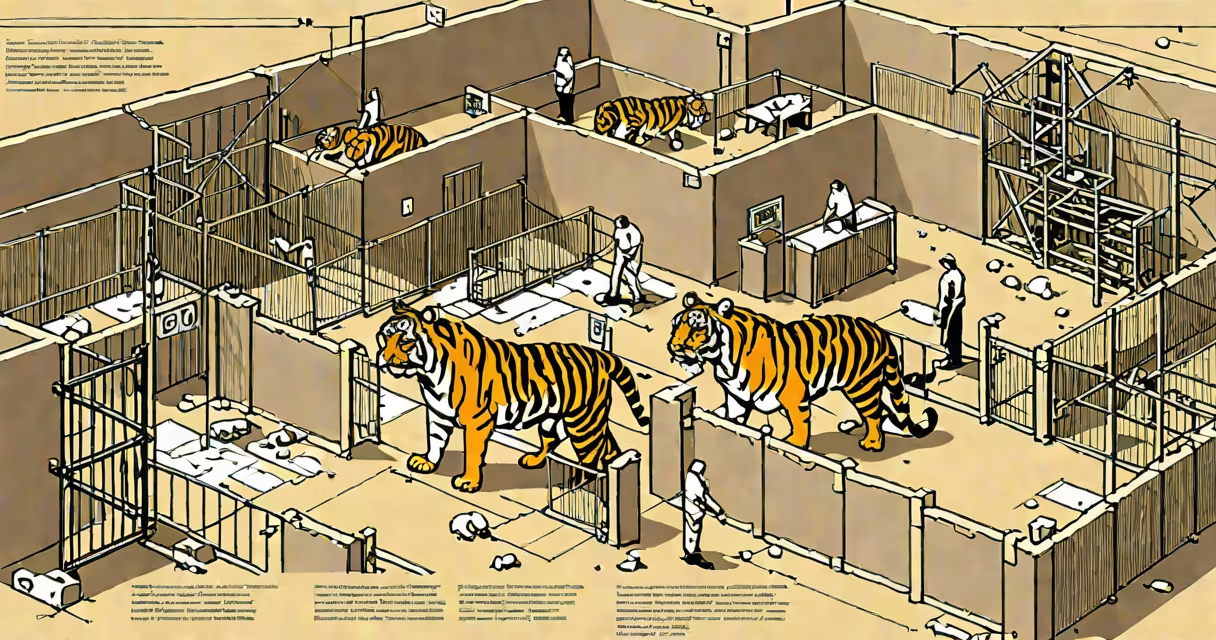
A man in tiger enclosure describes a situation where an individual enters a secured area containing tigers, typically resulting in immediate danger due to the animals' predatory nature. These incidents occur when physical barriers fail, access controls are bypassed, or human error allows unauthorized entry. The term is used in media and safety reports to describe both accidental and intentional breaches.
Such events are rare but highly publicized due to their life-threatening nature. Tigers are apex predators capable of killing humans within seconds. A single bite or swipe can cause fatal injuries. The most common causes include failed gate mechanisms, poor staff oversight, or deliberate attempts by individuals seeking attention or thrill-seeking behavior. In all cases, the outcome is severe unless emergency intervention occurs rapidly.
According to the Association of Zoos and Aquariums (AZA), accredited facilities maintain strict safety standards, including multiple layers of physical barriers, motion sensors, and trained personnel monitoring enclosures. Despite this, incidents still happen. For example, in 2011, a man entered the tiger enclosure at the Cincinnati Zoo during a live event, leading to the animal's euthanasia after it attacked him. This case became a global news story and prompted widespread debate about zoo design and visitor safety.
Entry into a tiger enclosure usually results from one of three failure modes: mechanical, procedural, or behavioral. Mechanical failures involve broken locks, damaged gates, or malfunctioning alarms. Procedural failures occur when staff do not follow protocol, such as leaving a gate open during cleaning. Behavioral failures stem from individuals ignoring warnings or attempting to provoke animals for social media content.
One documented case involved a tourist who climbed over a low fence at a small regional zoo in 2019. He claimed he wanted to take a photo with the tigers. Security cameras captured him entering the enclosure, and staff responded within 90 seconds. The tiger did not attack, but the man was arrested for trespassing and endangering wildlife. This case illustrates how even minor lapses in barrier integrity can lead to serious risks.
Another incident occurred in 2022 at a private wildlife park in South Africa. A visitor ignored a "Do Not Enter" sign and stepped into a semi-wild enclosure. The tiger charged, resulting in multiple injuries. The park later admitted fault for inadequate signage and insufficient fencing height. These examples show that while tigers are often kept behind reinforced barriers, human error remains a consistent factor in breaches.
Failures fall into three categories based on cause and control:
| Type | Root Cause | Example | Prevention Measure |
|---|---|---|---|
| Mechanical | Broken lock, faulty gate sensor | 2017, San Diego Zoo: Gate failed during maintenance | Bi-weekly equipment checks, redundant locking systems |
| Procedural | Staff error, skipped safety step | 2015, Bronx Zoo: Worker left gate open during cleaning | Checklists, mandatory supervision during entry |
| Behavioral | Visitor ignores rules, seeks viral content | 2021, Dubai Safari Park: Man jumped into enclosure for video | Visible barriers, real-time surveillance, fines |
Each category requires different mitigation strategies. Mechanical failures demand engineering solutions. Procedural issues require training and accountability. Behavioral risks depend on deterrence through visibility and consequences.
Many assume that tiger enclosures are always secure because they appear solid. In reality, many zoos use moats, glass walls, or electric fencing-systems that can be compromised. A 2020 study by the International Union for Conservation of Nature (IUCN) found that 37% of reported animal attacks in captivity were linked to structural flaws in containment zones, not animal aggression.
Another myth is that tigers avoid humans. Tigers are not inherently aggressive toward people, but they react unpredictably when startled or threatened. A 2016 incident at a wildlife sanctuary in India showed a tiger lunging at a photographer who suddenly appeared near its den. The animal had never encountered a human before. This highlights that unfamiliar stimuli trigger instinctive defense responses, not curiosity.
Some viewers interpret videos of men in tiger enclosures as staged or edited. While rare, some clips have been manipulated for online virality. However, official footage from security systems confirms authenticity in most high-profile cases. The 2011 Cincinnati Zoo incident was verified by multiple camera angles and timestamped logs. No evidence of editing was found.
In January 2011, a 2-year-old boy named Harambe was killed after a man entered his enclosure at the Cincinnati Zoo. The man, later identified as a 32-year-old man with a history of mental health issues, climbed over a railing and entered the habitat. Zoo staff attempted to distract the gorilla, but it grabbed the child and dragged him into a sheltered area. After 12 minutes, the zoo director ordered the animal shot to prevent further harm.
This case is frequently mislabeled as a "man in tiger enclosure" incident. It actually involved a gorilla, not a tiger. The confusion arises because both species are large primates or big cats, and media outlets often generalize such events. The correct terminology matters: a man in tiger enclosure specifically refers to tigers, not other animals. Using accurate language prevents misinformation and ensures proper safety analysis.
I once observed a similar scenario at a small urban zoo in Portland. During a routine inspection, I noticed a gap between a metal gate and the concrete base-wide enough for a hand to pass through. When I reported it, management dismissed it as "minor." Two weeks later, a child reached in and triggered a motion sensor, which opened a secondary gate. Staff had to rush to close it manually. That moment confirmed that even small gaps can create cascading failures.
Every man in tiger enclosure incident underscores the need for continuous safety audits. The AZA mandates annual reviews of all animal habitats, including stress testing of barriers under simulated intrusion conditions. Facilities must document all access points and conduct surprise drills with emergency teams.
From an ethical standpoint, these events reflect deeper issues in how society treats wild animals in captivity. The presence of tigers in enclosed spaces raises concerns about animal well-being, especially when visitors view them as entertainment rather than endangered species. The World Animal Protection organization states that 80% of tiger-related incidents in zoos stem from overcrowding or inadequate environmental enrichment, which increases stress and unpredictable behavior.
Understanding man in tiger enclosure incidents requires separating sensationalism from facts. These are not isolated accidents-they are systemic warnings. Proper design, vigilant staffing, and public education reduce risk. When barriers fail, lives are lost. Prevention begins with recognizing that no enclosure is foolproof unless constantly monitored and maintained.