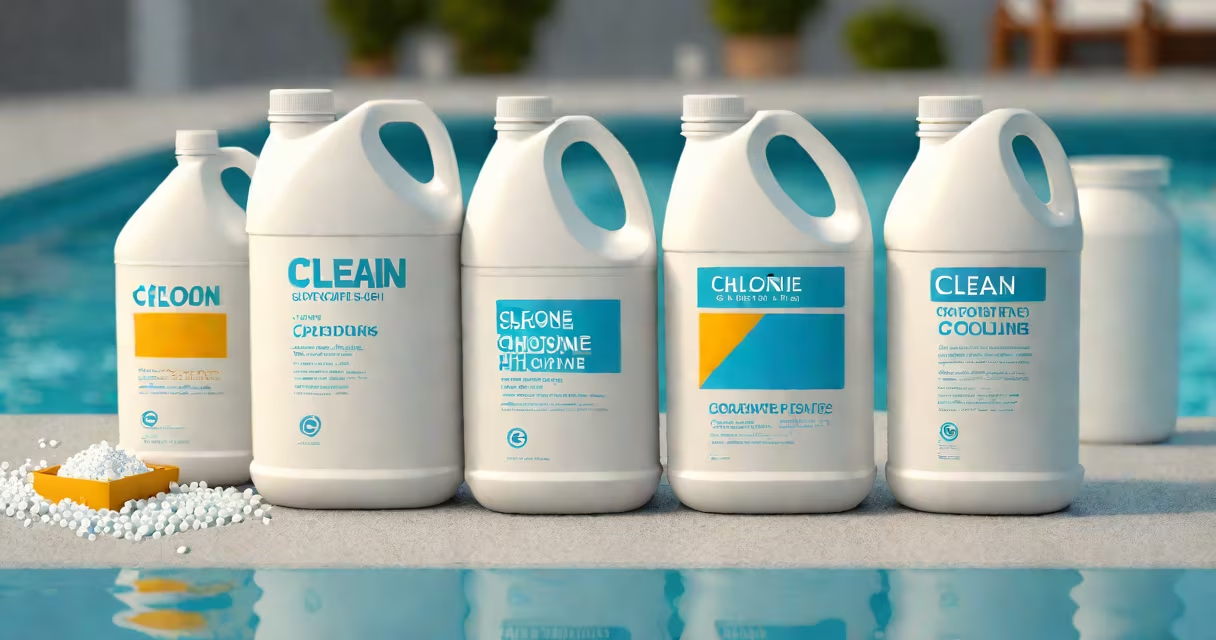
Chlorine used in pools is typically sodium hypochlorite (liquid bleach) or calcium hypochlorite (solid tablets or granules). These compounds release hypochlorous acid when dissolved in water, which disinfects by breaking down microbial cell walls.
Pool chlorine isn't elemental chlorine gas-it's a stabilized compound designed for safe handling and controlled release. The active ingredient is hypochlorous acid (HOCl), formed when chlorine dissolves in water. This molecule attacks pathogens by oxidizing their proteins and DNA.
For example, a standard 10-gallon bucket of liquid chlorine contains about 12.5% sodium hypochlorite. When added to a 20,000-gallon pool, it raises free chlorine levels to 1-3 ppm, the recommended range for sanitation. This concentration kills E. coli and other waterborne threats within minutes.
When sodium hypochlorite (NaOCl) enters water, it dissociates into sodium ions (Na⁺) and hypochlorite ions (OCl⁻). In acidic conditions, OCl⁻ converts to HOCl-the actual sanitizer. The reaction is pH-dependent: below pH 7.5, over 90% of available chlorine exists as HOCl.
HOCl penetrates bacterial membranes and disrupts internal enzymes. It also oxidizes organic waste like sweat and urine, preventing chloramines from forming. Without this oxidation, swimmers experience eye irritation and strong chemical odors-signs of poor chlorine management.
Calcium hypochlorite (Ca(OCl)₂) functions similarly but releases calcium ions into solution. Over time, this increases calcium hardness. A pool with 300 ppm calcium hardness may develop scale deposits on surfaces and filter clogs. Testing water weekly prevents this buildup.
There are three primary forms of chlorine used in residential and commercial pools:
| Type | Form | Active Chlorine | Best For |
|---|---|---|---|
| Sodium hypochlorite | Liquid (bleach) | 10-12.5% | Small pools, quick dosing |
| Calcium hypochlorite | Granules or tablets | 65-70% | Large pools, shock treatments |
| Trichloroisocyanuric acid | Tablets (slow-dissolve) | 90% | Automatic feeders, constant residual |
Trichlor tablets contain cyanuric acid (CYA), which stabilizes chlorine against UV degradation. However, CYA builds up over time. Above 50 ppm, chlorine effectiveness drops. The U.S. Centers for Disease Control and Prevention (CDC) recommends maintaining CYA between 30-50 ppm for optimal disinfection.
Many pool owners mistake trichlor for "pure" chlorine. It's not. Trichlor is a stabilized form designed for slow release. Using it exclusively without cycling in fresh water leads to CYA accumulation. A 20,000-gallon pool with 70 ppm CYA requires partial draining and refilling to reset levels.
People often assume chlorine is a single substance. It isn't. The term "chlorine" refers to a family of compounds that produce hypochlorous acid. Confusing them leads to improper dosing and equipment damage.
Another error: believing that high chlorine levels eliminate all risks. In reality, excessive chlorine causes skin and eye irritation. The American Red Cross notes that swimmers report discomfort when free chlorine exceeds 3 ppm, even if combined chlorine remains low.
I once observed a homeowner adding five gallons of liquid chlorine to a 15,000-gallon pool during a heatwave. The resulting spike to 12 ppm caused the pool's vinyl liner to degrade prematurely. The water cleared quickly, but the material failed after six months. This illustrates that higher isn't safer-balance is key.
The base compound determines solubility, stability, and side effects. Sodium hypochlorite degrades over time-especially when exposed to sunlight. A 3-month-old bottle of bleach may lose half its potency. Store it in a cool, dark place to preserve strength.
Calcium hypochlorite is more stable but corrosive. It can damage metal fittings and stainless steel components if not diluted properly. Always dissolve granules in a bucket of water before adding to the pool. Direct dumping causes localized high concentrations that eat through liners.
Trichlor tablets are convenient but introduce nitrogen compounds. These can contribute to chloramine formation if not balanced with regular shocking. The Environmental Protection Agency (EPA) warns that chloramines reduce disinfection efficiency and increase respiratory risk in indoor pools.
Understanding what chlorine is made of allows better decision-making. Choosing the right form based on pool size, usage frequency, and environmental factors prevents common issues like cloudy water, scaling, and equipment corrosion.