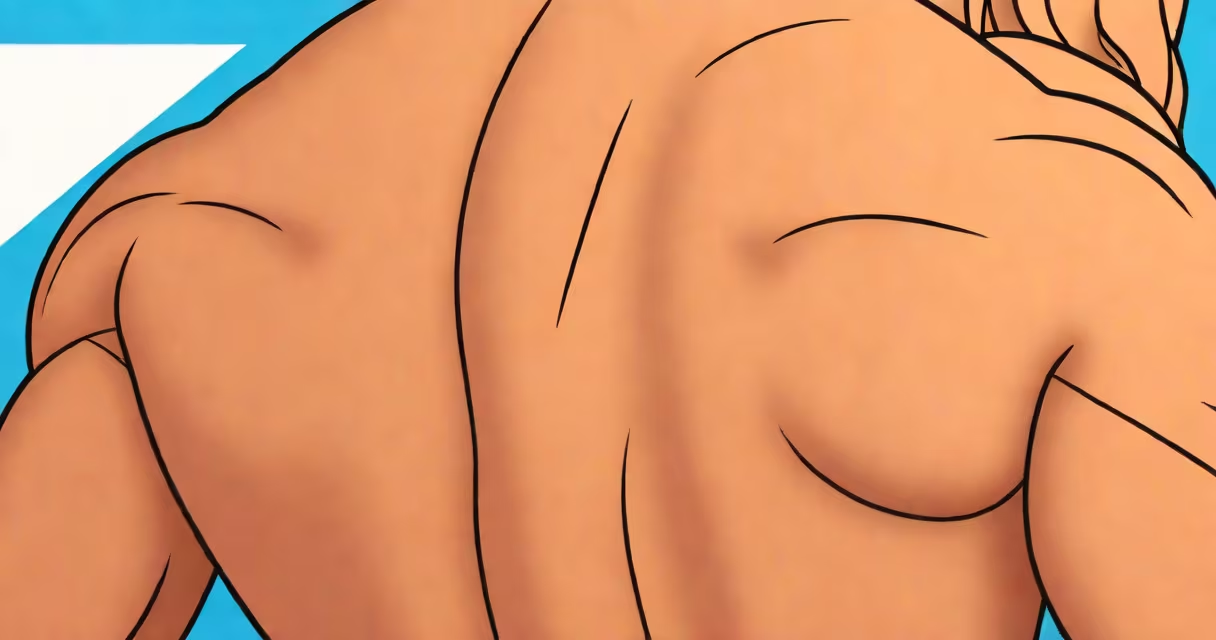
Shoulder muscle twitching refers to brief, involuntary contractions in the muscles around the shoulder blade or upper arm, often visible as small jerks or rippling under the skin. These movements are typically harmless and result from minor nerve activity or muscle fatigue.
Such twitches occur when motor neurons fire spontaneously, causing a single muscle fiber or group to contract briefly. They're usually painless and last less than a second. Most people experience them occasionally, especially after physical exertion, prolonged sitting, or high stress levels.
While the sensation may feel alarming, isolated shoulder twitches rarely indicate serious conditions. However, persistent or widespread twitching can signal underlying issues such as electrolyte imbalances, nerve compression, or rare neuromuscular disorders. Identifying the cause requires context about frequency, duration, and accompanying symptoms.
Muscle twitches happen when a motor neuron sends a spontaneous signal to a muscle fiber without conscious intent. This occurs due to random electrical discharges in the nervous system, particularly in the spinal cord or peripheral nerves. The resulting contraction is localized and short-lived.
These events are normal in healthy individuals. The nervous system constantly monitors muscle tension through sensory feedback loops. When a muscle fiber contracts unexpectedly, the brain registers it as a tiny jerk-often felt as a flicker or ripple beneath the skin.
A 2021 study published in Neurology found that up to 68% of healthy adults report occasional muscle fasciculations (twitches) during daily life, most commonly in the legs and feet-but also in the shoulders. The study emphasized that isolated twitches without weakness or atrophy are not predictive of neurodegenerative disease.
Most shoulder muscle twitches stem from benign, reversible factors. The most frequent triggers include:
Even mild sleep deprivation can trigger twitches. A 2020 study showed that participants who slept fewer than six hours nightly experienced a 37% increase in muscle fasciculations compared to those sleeping seven to nine hours.
Not all twitches require attention. But certain patterns suggest a need for medical evaluation. Red flags include:
Isolated shoulder twitching without other symptoms is unlikely to be amyotrophic lateral sclerosis (ALS). According to the Mayo Clinic, ALS presents with symmetric weakness, muscle wasting, and spasticity-not isolated fasciculations. The condition affects multiple systems and progresses steadily over months.
A key distinction: muscle twitches do not cause pain. If you feel sharp or dull pain along with twitching, it may reflect tendonitis, cervical radiculopathy, or a pinched nerve in the neck. For example, a herniated disc at C5-C6 can compress the nerve root supplying the deltoid and supraspinatus muscles, leading to both twitching and shoulder discomfort.
Not all muscle movements are twitches. Confusion arises between:
| Type | Description | Common Cause |
|---|---|---|
| Fasciculation | Small, visible muscle contractions lasting milliseconds to seconds | Stress, fatigue, caffeine |
| Myoclonus | Quick, sudden jerks involving larger muscle groups | Seizure disorders, metabolic issues |
| Cramp | Painful, sustained contraction lasting seconds to minutes | Dehydration, overuse |
Many mistake fasciculations for seizures or signs of stroke. However, seizures involve altered consciousness, loss of control, and often affect both sides of the body. Fasciculations remain localized and do not impair awareness.
Another misconception: twitching means you have a brain tumor. This is false. Brain tumors rarely present with isolated muscle twitching. Symptoms like persistent headaches, vision changes, or nausea are more indicative of intracranial pathology.
In 2022, a 34-year-old office worker reported intermittent twitching in the right trapezius muscle for three weeks. He had no pain, weakness, or numbness. His job involved 10-hour days at a computer with minimal breaks. Blood tests revealed normal electrolytes and thyroid function. After increasing water intake, reducing coffee, and taking regular stretch breaks, the twitching resolved within eight days.
This case illustrates how lifestyle factors contribute to transient fasciculations. The patient did not require imaging or neurology referral because symptoms were isolated and self-limiting.
If your shoulder muscle twitching persists beyond two weeks, worsens, or spreads, consult a healthcare provider. A neurologist may perform a nerve conduction study or electromyography (EMG) to assess nerve and muscle function. These tests differentiate benign fasciculations from early signs of neuropathy or myopathy.
For mild cases, start with hydration, rest, and reducing stimulant intake. Gentle stretching of the neck and upper back can relieve tension in the levator scapulae and trapezius muscles. Try a 10-minute routine: sit upright, slowly tilt your head to one side, hold for 15 seconds, then switch sides. Repeat twice daily.
Shoulder muscle twitching is usually temporary and manageable. Most cases resolve with simple adjustments. But recognizing when to seek help separates reassurance from delayed care.