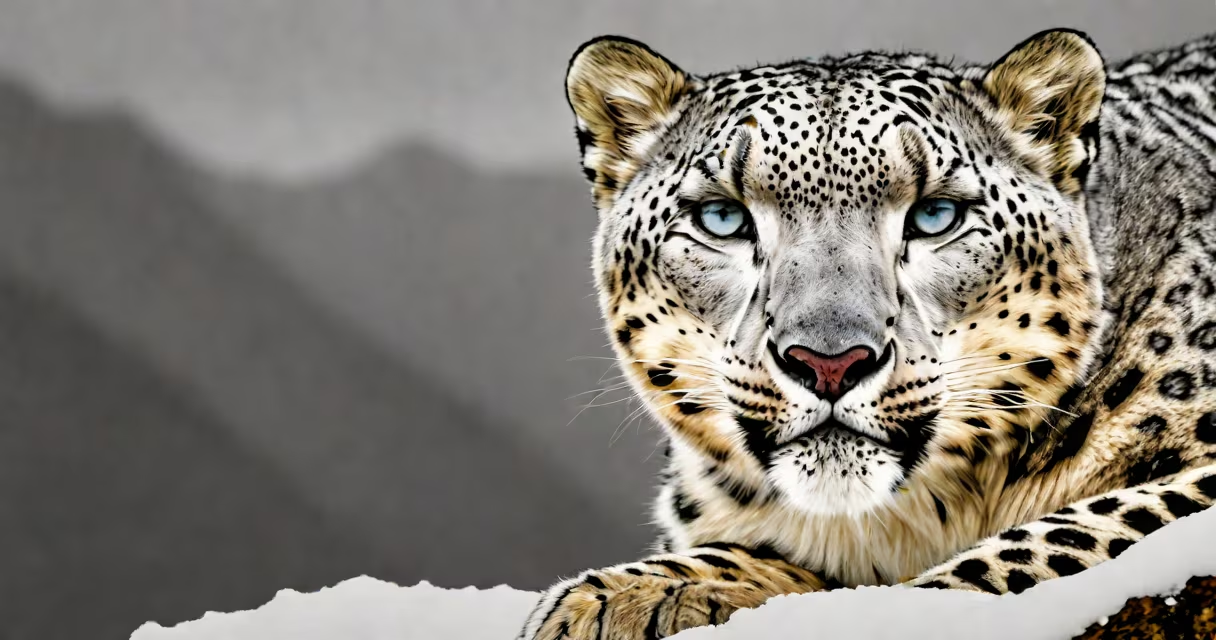
An endangered species is a population of organisms at high risk of extinction in the wild within the near future due to factors such as habitat destruction, climate change, poaching, or invasive species. The International Union for Conservation of Nature (IUCN) classifies species as endangered based on specific criteria including population decline, geographic range size, and breeding success rates.
The IUCN Red List of Threatened Species uses measurable thresholds to determine status. A species qualifies as endangered if its population has declined by at least 50% over ten years or three generations, whichever is longer. This threshold applies even if the decline is ongoing or expected. For example, the Amur leopard, with fewer than 100 individuals left in the wild, meets this criterion and is listed as critically endangered-its most severe category.
Endangered species are not always rare. Some, like the American puma, have wide ranges but face localized threats that reduce viable populations below sustainable levels. The distinction lies in survival probability, not sheer numbers. A species may still exist in large numbers globally but be functionally extinct in key regions due to fragmentation.
The IUCN categorizes species into nine levels: Not Evaluated, Data Deficient, Least Concern, Near Threatened, Vulnerable, Endangered, Critically Endangered, Extinct in the Wild, and Extinct. Only those in the last four categories are considered at significant risk of disappearing entirely.
Each assessment considers three core metrics: population size, geographic distribution, and rate of decline. For instance, the vaquita porpoise, found only in the northern Gulf of California, has fewer than 10 individuals remaining. Its range is less than 200 square kilometers, and its population has dropped by over 90% in the past decade. These figures place it in the Critically Endangered category.
Species are reassessed every few years. A species can move from endangered to vulnerable if recovery efforts succeed. Conversely, a species may be upgraded from threatened to endangered if new data shows accelerating decline. The IUCN's process is peer-reviewed and publicly accessible, ensuring transparency.
Habitat loss accounts for 85% of documented cases of species decline, according to the World Wildlife Fund (WWF). Conversion of forests to farmland, urban development, and dam construction fragment ecosystems and isolate populations. The Sumatran orangutan, whose forest home has shrunk by 70% since 1985, exemplifies this threat.
Climate change alters temperature and precipitation patterns, disrupting migration cycles and breeding seasons. Polar bears depend on sea ice to hunt seals. As Arctic ice melts earlier each year, their feeding window shortens, reducing cub survival. The U.S. Fish and Wildlife Service lists polar bears as threatened under the Endangered Species Act due to this trend.
Poaching remains a major driver. Rhinos are hunted for their horns, which are falsely believed to have medicinal properties. Despite no scientific evidence supporting this, demand persists. Between 2008 and 2018, rhino poaching in South Africa increased by 9,000%, leading to the white rhino being classified as near threatened and the black rhino as critically endangered.
| Threat Type | Example Species | Impact Level |
|---|---|---|
| Habitat loss | Sumatran orangutan | Severe (range reduced by 70%) |
| Climate change | Polar bear | High (feeding season shortened by 3 weeks) |
| Illegal hunting | Black rhino | Critical (population down 96% since 1970) |
Many assume "endangered" means a species is already gone. That's false. An endangered species still exists in the wild but faces imminent extinction without intervention. The IUCN clarifies that "endangered" does not imply immediate death-it signals a trajectory toward disappearance.
Another confusion arises between "endangered" and "rare." A rare species may occur in low numbers but not be declining. The IUCN does not list rarity alone as a reason for endangered status. For example, the Kirtland's warbler, though rare, has stable numbers and is therefore listed as threatened-not endangered-due to successful habitat management.
A lesser-known fact: some endangered species are not native to the region they inhabit. The Burmese python, introduced to Florida's Everglades, now threatens native wildlife. While not endangered itself, its presence drives local species toward extinction. This illustrates that endangerment isn't always about the organism being harmed-it can also result from external pressures.
In 1987, only 27 California condors remained in the wild. Their population had crashed due to lead poisoning from ammunition fragments, habitat loss, and egg collection. Biologists captured the remaining birds and launched a captive breeding program. By 2023, over 500 individuals existed, with more than half living in the wild.
This recovery demonstrates that endangered species can rebound with coordinated action. The U.S. Fish and Wildlife Service removed the California condor from the endangered list in 2016, downgrading it to threatened. However, the species remains vulnerable, requiring continued monitoring and lead-free ammunition laws.
I observed a nesting pair in the Sespe Wilderness in 2021. They were part of a reintroduction project funded by the National Park Service. Seeing a bird with a radio transmitter on its wing, flying over a canyon where none had been seen in decades, confirmed that recovery is possible-but only with sustained effort.
Defining endangered species is not just academic-it shapes policy, funding, and public awareness. When a species is officially listed as endangered, governments must develop recovery plans. In the U.S., the Endangered Species Act mandates federal agencies to consult on projects that could harm listed species.
For example, the U.S. Department of Transportation must assess whether highway expansions threaten the red wolf, a federally listed endangered species. If a project poses a risk, mitigation measures-like wildlife crossings-are required. Without formal listing, such protections wouldn't apply.
Understanding define endangered species correctly prevents misallocation of resources. A species labeled endangered without sufficient data may receive funding meant for truly at-risk populations. Conversely, failing to act on a rapidly declining species risks irreversible loss. Accurate classification ensures science guides conservation, not emotion.
Conservation outcomes improve when people grasp the difference between a species that is rare and one that is declining. The IUCN's structure provides clarity. It's not about sentiment-it's about measurable risk. Knowing how to define endangered species helps prioritize actions where they matter most.