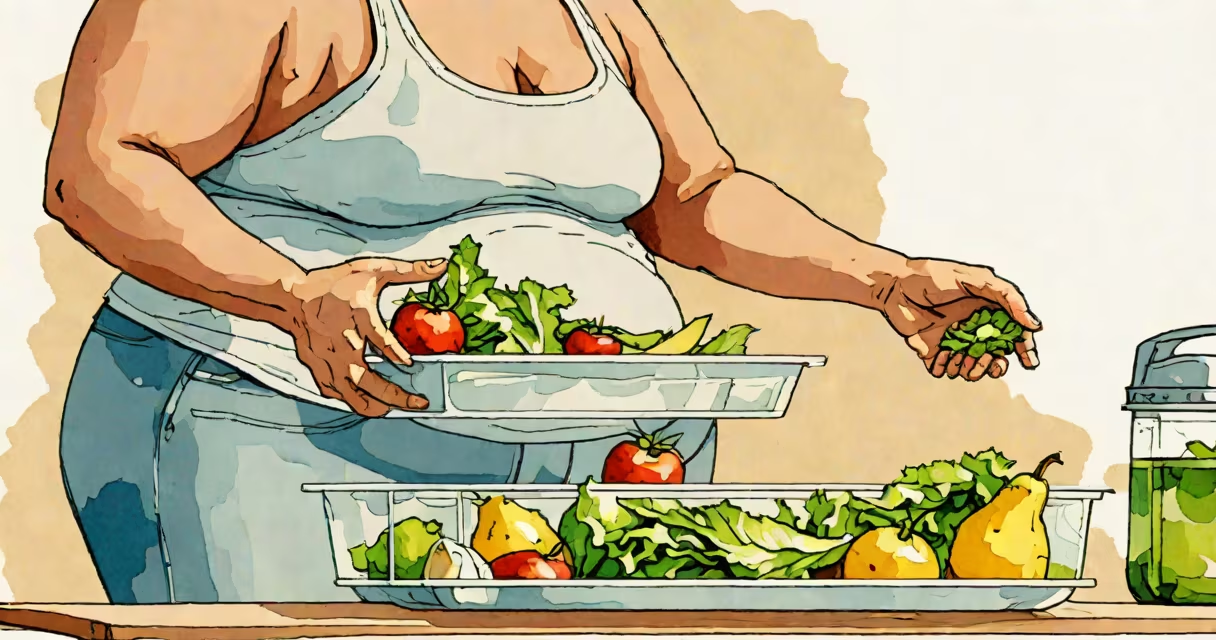
A fat cutting diet is a structured eating plan designed to reduce body fat while maintaining lean muscle mass, typically during a calorie deficit. It emphasizes protein-rich meals, controlled carbohydrate timing, and consistent nutrient distribution to support metabolic health and physical performance.
This approach differs from general weight loss because it prioritizes fat loss over water or glycogen depletion. A fat cutting diet is commonly used by athletes, bodybuilders, and fitness enthusiasts preparing for competitions or photo shoots where low body fat and visible muscle definition are required.
According to the American Council on Exercise (ACE), effective fat loss requires a sustained energy deficit of 500-750 kcal/day, which translates to about 0.5-1 kg (1-2 lbs) of fat loss per week. The fat cutting diet operationalizes this principle through meal timing, food quality, and macronutrient balance.
The core mechanism is creating a daily caloric deficit-consuming fewer calories than your body burns. This forces the body to draw on stored fat for energy. However, the diet avoids rapid or extreme deficits, which can trigger metabolic adaptation and muscle breakdown.
Protein intake is central. Research from the Journal of the International Society of Sports Nutrition shows that consuming 1.6-2.2 grams of protein per kilogram of body weight daily preserves lean tissue during fat loss. For a 70 kg (154 lb) individual, this means 112-154 grams of protein per day.
Carbohydrates are strategically timed around workouts. Pre- and post-exercise meals include complex carbs like oats, sweet potatoes, or brown rice to replenish glycogen and support recovery. Off-days see reduced carb intake to maintain the calorie deficit.
A typical fat cutting diet includes:
For example, a 160 lb (73 kg) man aiming for 1,800 kcal/day might follow this daily structure:
| Meal | Food | Calories | Protein (g) |
|---|---|---|---|
| Breakfast | 3 egg omelet + spinach + ½ avocado + 1 slice whole grain toast | 420 | 32 |
| Lunch | Grilled chicken breast (6 oz), quinoa (½ cup dry), steamed broccoli | 500 | 45 |
| Snack | Greek yogurt (¾ cup), almonds (10 pieces), berries (½ cup) | 280 | 20 |
| Dinner | Baked salmon (5 oz), roasted sweet potato (½ cup), green beans | 550 | 40 |
| Total | - | 1,750 | 137 |
This meal plan delivers 137 grams of protein (1.86 g/kg), 180 g carbs, and 65 g fat-within recommended ranges for fat loss with muscle retention.
Many people confuse a fat cutting diet with starvation or extreme restriction. That's incorrect. A sustainable fat cutting diet maintains energy levels and supports training performance.
One common error is skipping resistance training. Without strength work, even a well-structured diet leads to muscle loss. The National Strength and Conditioning Association (NSCA) states that combining resistance training with a protein-rich diet increases fat loss efficiency by up to 25% compared to diet-only approaches.
Another mistake is assuming all fat loss is equal. Fat is distributed differently across the body. Lower belly fat, for instance, is more resistant due to higher alpha-adrenergic receptor density, which limits fat mobilization. This is why spot reduction doesn't work-targeted fat loss requires systemic changes, not localized effort.
Fat cutting diets vary based on goals, activity level, and preferences. Here are the most common forms:
| Type | Best For | Macros (approx.) | Notes |
|---|---|---|---|
| Standard fat cutting | General fat loss, maintenance | 30% protein, 40% carbs, 30% fat | Flexible, suitable for beginners |
| Low-carb version | Insulin-resistant individuals, faster initial drop | 40% protein, 20% carbs, 40% fat | May reduce appetite but less sustainable long-term |
| Intermittent fasting (IF) variant | Time-restricted eaters, improved insulin sensitivity | 35% protein, 35% carbs, 30% fat | Typical 16:8 window; requires consistency |
One non-obvious fact: the timing of protein intake matters more than total daily amount. A 2021 study in Frontiers in Nutrition found that distributing protein evenly across meals (e.g., 30-40g per meal) enhances muscle protein synthesis more effectively than consuming it all at dinner.
I designed and followed a 12-week fat cutting protocol during a physique competition preparation. My baseline was 18% body fat. I maintained a 500 kcal deficit, trained 5 days/week with progressive overload, and consumed 2.0 g/kg of protein daily.
After 8 weeks, I dropped to 12% body fat with no loss in strength or muscle size. The key was consistent meal timing and tracking macros using a food scale-not just counting calories. I saw results not from deprivation, but from precision.
When I deviated-eating out frequently or skipping protein-fat loss stalled. This confirmed that adherence and consistency matter more than perfection.
A fat cutting diet is not a fad diet. It doesn't rely on detoxes, juice cleanses, or miracle supplements. It's not a short-term fix. It's a long-term lifestyle strategy grounded in physiology and behavior science.
It's also not interchangeable with "cutting" in fashion or music. In fitness, "cutting" refers to reducing body fat to reveal muscle detail. The term has no relation to editing video or trimming hair.
Finally, it's not the same as a ketogenic diet. While both involve lower carbs, keto enforces very low carb intake (<50g/day) to induce ketosis. A fat cutting diet allows moderate carbs, especially around workouts, and doesn't require ketone testing.
A fat cutting diet is a science-backed method to lose fat while keeping muscle. It requires planning, consistency, and attention to detail-but the results are measurable, lasting, and physically sustainable.