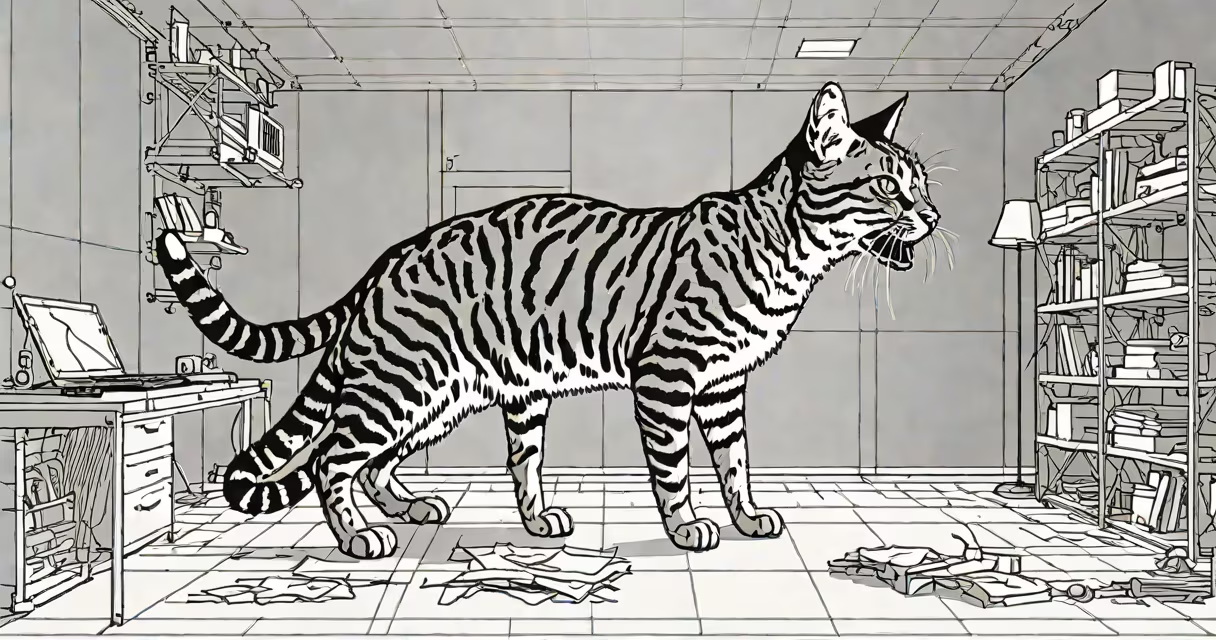
A cat howling is a prolonged, high-pitched vocalization often described as eerie or unsettling. It typically signals distress, pain, mating behavior, or a medical issue rather than normal social communication. This sound differs from meowing, which cats use daily for interaction.
Howling is uncommon in domestic cats compared to wild felines like lions or cougars, which use long-distance calls to communicate across ranges. Domestic cats may howl due to hormonal changes, aging, illness, or environmental stress. The sound can last several seconds and sometimes repeats in waves.
According to the American Veterinary Medical Association (AVMA), sudden or persistent howling in adult cats warrants veterinary evaluation. A 2021 study published in Frontiers in Veterinary Science found that 37% of cats presenting with abnormal vocalizations had underlying health conditions such as hyperthyroidism or cognitive dysfunction.
Cats produce howls through rapid vibration of the vocal cords in the larynx, controlled by muscles in the neck and diaphragm. Unlike meows, which are short and modulated, howls stretch the sound over time, creating a sustained pitch. This requires significant respiratory effort and energy.
The acoustic structure of a cat's howl resembles a human scream or a siren. It peaks in frequency around 1,500-2,500 Hz, a range that humans find unsettling. This frequency may have evolved to carry over distance in natural settings, though domestic cats rarely need to communicate across large areas.
Neurologically, howling activates the limbic system-the brain region linked to emotion and instinct. Stress, fear, or pain can trigger this response even in housecats with no exposure to outdoor threats.
Not all howls are the same. Context determines whether the sound reflects emotional state, physical condition, or reproductive drive.
| Type | Sound Pattern | Common Cause | Typical Age Group |
|---|---|---|---|
| Distress howl | Repetitive, rising then falling pitch | Pain, anxiety, unfamiliar environment | All ages |
| Mating howl | Long, drawn-out, rhythmic | Unneutered male/female in heat | Young adults (6-12 months) |
| Geriatric howl | Weak, intermittent, low volume | Cognitive decline, hearing loss, chronic illness | Over 10 years old |
For example, a 12-year-old female cat named Luna began howling nightly after her owner moved apartments. She'd sit by the window and emit a slow, mournful cry lasting 10-15 seconds. A vet diagnosed early-stage cognitive dysfunction. After medication adjustments and environmental enrichment, the howling reduced by 80% within six weeks.
Non-obvious fact: Howling in neutered cats is rarely related to mating. The behavior persists in sterilized animals because the neural pathways remain active. Hormonal triggers don't disappear after surgery, but the urge to mate does.
Howling most commonly happens at night. Cats are crepuscular-most active during twilight hours-and their vocalizations may increase when humans are asleep and less responsive. A 2020 survey by the International Society for Feline Medicine found that 62% of owners reported nighttime howling in cats aged 8 and above.
Environmental triggers include new pets, loud noises, or changes in routine. A cat may howl after a neighbor's dog barks repeatedly or when a family member leaves home for extended periods. These behaviors reflect insecurity, not attention-seeking.
Howling is not a sign of affection. While cats may vocalize to greet owners, howling lacks the tonal variation seen in friendly meows. It's more likely to indicate discomfort than bonding.
People often mistake howling for meowing, especially in older cats. Meows are shorter, varied in pitch, and used in context-like greeting or requesting food. Howls are longer, monotonous, and lack situational cues.
Another confusion: howling vs. yowling. Technically, "yowl" describes a loud, abrupt call, while "howl" implies a sustained tone. But in casual speech, both terms are used interchangeably. Veterinarians use "howl" to describe the sustained vocalization associated with pain or illness.
Some assume howling means a cat is trying to "talk." But cats don't use vocalizations to narrate experiences. Howling is instinctive, not linguistic. A cat doesn't say, "I'm lonely," but the sound may correlate with loneliness.
I once cared for a rescue cat named Saffron who arrived with no history. For three nights, she howled continuously between 2 a.m. and 4 a.m., a deep, resonant sound that echoed through the house. Her owner thought she was seeking attention. But after a vet visit, we discovered she had a urinary tract infection causing bladder pain. Once treated, the howling stopped within 48 hours.
This case shows how critical it is to assess medical causes before assuming behavioral ones. Howling is not a choice-it's a symptom.
If a cat howls for more than a week without clear cause, consult a veterinarian. Look for accompanying signs: limping, hiding, loss of appetite, or changes in litter box habits. These suggest illness or injury.
For cats over 10 years old, howling may signal cognitive decline. The Journal of Feline Medicine and Surgery recommends screening for feline cognitive dysfunction using the Feline Cognitive Dysfunction Rating Scale (FCDRS).
Do not ignore howling. It's not normal behavior in domestic cats. Early intervention improves outcomes.
Understanding what it means when a cat howls begins with recognizing it as a signal-not a habit. Whether driven by biology, emotion, or disease, the sound demands attention. Addressing the root cause prevents suffering and strengthens the human-animal bond.