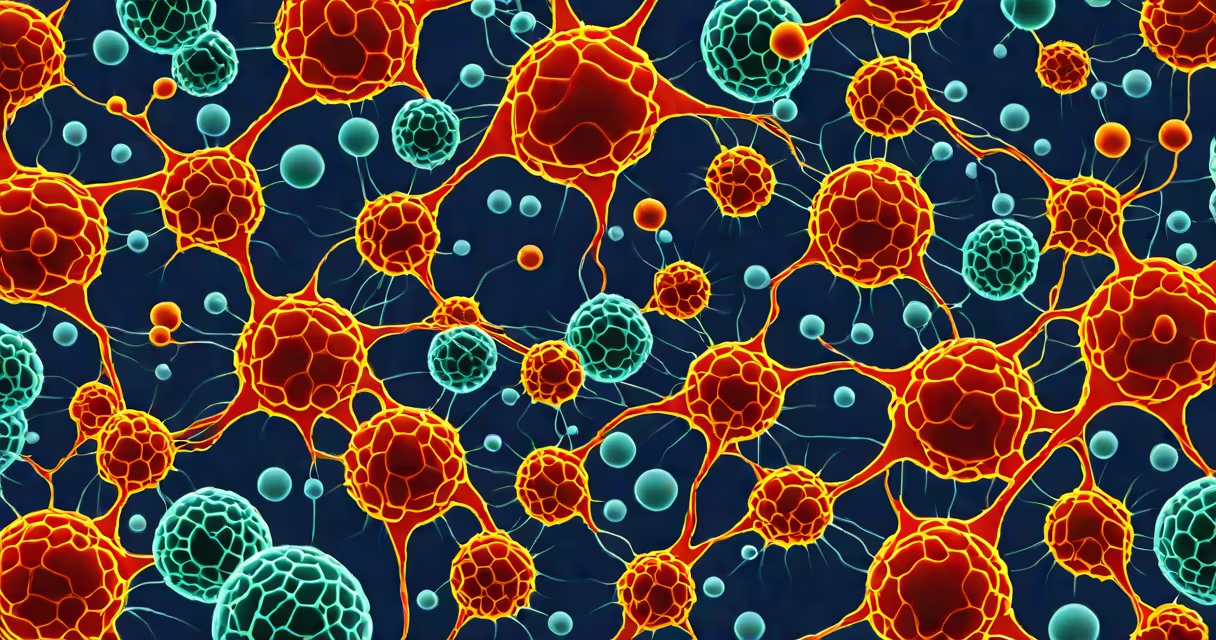
Specialised cells biology studies how generic cells develop specific structures and functions to perform precise roles in multicellular organisms. This process, called differentiation, transforms stem cells into highly adapted types such as neurons, red blood cells, and muscle fibres.
Cells begin life as unspecialized progenitors-often stem cells capable of becoming many different types. During development, genetic signals activate specific gene sets while silencing others. This reshapes the cell's internal machinery, altering its shape, organelle composition, and surface proteins to match its assigned task.
For example, a single embryonic stem cell can give rise to over 200 distinct cell types in the human body. The liver's hepatocytes filter toxins, nerve cells transmit electrical signals, and skin keratinocytes form protective barriers-all through tailored molecular programs.
Cell differentiation is driven by internal gene regulation and external cues. Signaling molecules from neighboring cells, hormones, and mechanical forces guide a cell toward a particular fate. These signals trigger transcription factors-proteins that bind DNA and switch genes on or off.
Once a cell commits to a lineage, it typically cannot revert. A mature heart muscle cell won't become a neuron even if placed in the brain. This irreversibility ensures stability in complex systems like the nervous system or immune network.
A key mechanism is epigenetic modification. Chemical tags like methyl groups attach to DNA or histone proteins, altering access to genes without changing the underlying sequence. These marks can be inherited during cell division, locking in identity across generations of daughter cells.
Specialised cells fall into broad categories based on function and location. Here are major types with their defining traits:
| Cell Type | Primary Function | Key Structural Features | Example Location |
|---|---|---|---|
| Neuron | Transmit electrical impulses | Long axon, dendrites, synapses | Cerebral cortex, spinal cord |
| Erythrocyte | Carry oxygen via hemoglobin | Disc-shaped, no nucleus | Bloodstream |
| Muscle fiber | Contract to enable movement | Abundant mitochondria, sarcomeres | Skeletal, cardiac, smooth muscle |
| Pancreatic beta cell | Produce insulin in response to glucose | Granules containing insulin, glucose receptors | Islets of Langerhans |
Each cell type performs a unique role. Neurons send signals across long distances using action potentials. Red blood cells lack nuclei to maximize space for hemoglobin, allowing efficient oxygen transport. Muscle cells contain organized contractile units called sarcomeres, enabling force generation.
Specialisation enables complex life. Without it, tissues couldn't maintain homeostasis, respond to stimuli, or repair damage. For instance, the small intestine relies on absorptive enterocytes to take up nutrients and goblet cells to secrete mucus that protects the lining.
Defects in differentiation lead to disease. In leukemia, blood stem cells fail to mature properly, producing abnormal white blood cells that crowd out healthy ones. In diabetes, pancreatic beta cells lose function or are destroyed by the immune system.
Even in regeneration, specialisation plays a critical role. When a salamander regrows a limb, its cells dedifferentiate into a mass of progenitor cells, then re-specialise into bone, muscle, and skin. This process is rare in mammals but under active study for medical applications.
Many assume that all cells in the body have the same DNA. That's true-every somatic cell contains identical genetic material. But what differs is which genes are expressed. A liver cell uses genes for detoxification, while a retinal photoreceptor activates light-sensitive opsins.
Another myth is that specialised cells can easily revert to stem-like states. While induced pluripotent stem cells (iPSCs) can be created by reprogramming adult cells, this requires artificial manipulation using viral vectors and specific transcription factors. Natural reversal does not occur in most tissues.
A lesser-known fact: some specialised cells retain limited plasticity. For example, certain neurons in the adult brain can form new connections, and some skin cells can temporarily dedifferentiate during wound healing. However, these changes are constrained and do not restore full developmental potential.
Red blood cells provide a clear model of specialisation. They originate in bone marrow from hematopoietic stem cells. Over five days, they progress through stages: proerythroblast → basophilic erythroblast → polychromatophilic erythroblast → orthochromatic erythroblast → reticulocyte → mature erythrocyte.
During this process, the cell synthesizes hemoglobin, expels its nucleus, and develops a biconcave shape. The final cell lacks mitochondria and a nucleus-traits that reduce metabolic demand and increase flexibility for going through capillaries. A single drop of blood contains about 5 million red blood cells, each living 120 days before being replaced.
This precision highlights how biology optimizes performance through structural adaptation. No other cell type transports oxygen as efficiently, and no other design allows passage through capillaries narrower than the cell itself.
Specialised cells biology reveals how life builds complexity from simplicity. Through tightly controlled gene expression, cells achieve notable efficiency in their roles. Understanding this process informs medicine, regenerative therapies, and our grasp of human development.