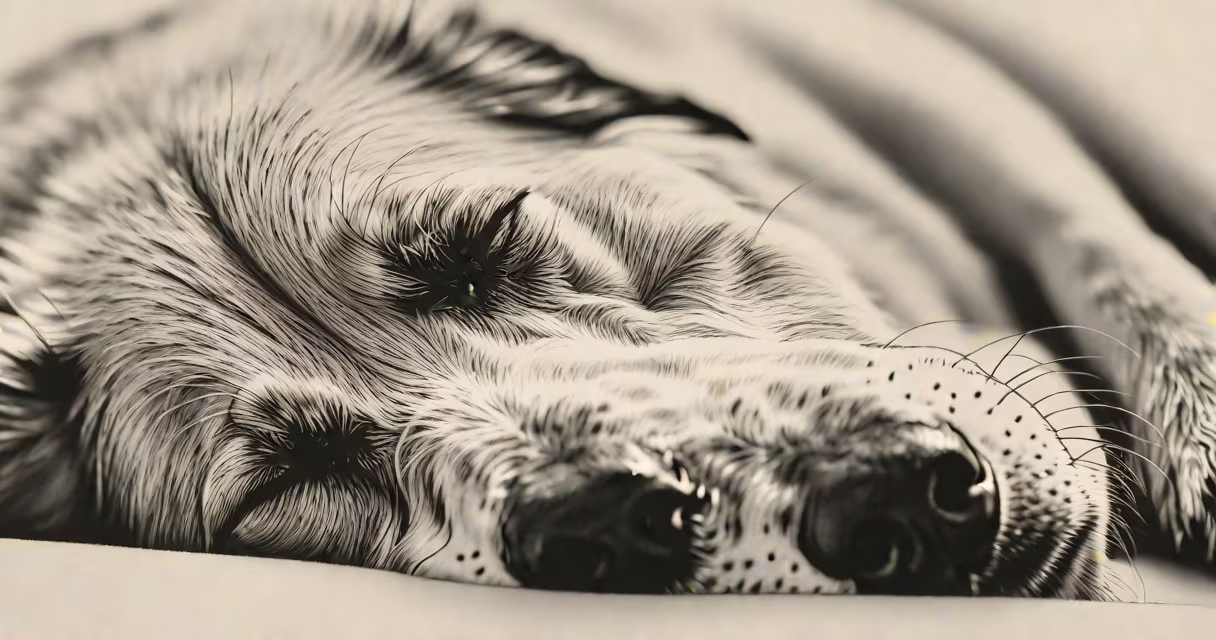
Dog is twitching in sleep refers to brief, involuntary muscle contractions-often in legs or face-that occur during sleep, especially in the REM phase. These movements are typically harmless and part of normal canine sleep physiology.
During REM sleep, a dog's brain remains highly active, mimicking wakeful states. This activity triggers motor signals that cause small twitches, jerks, or paddings. The movements often appear synchronized with dream content, such as chasing or running. Twitching usually lasts seconds and occurs intermittently throughout the night.
Most twitching in sleep results from neural signaling, not physical discomfort. The nervous system sends impulses to muscles even when the body is at rest. This process is evolutionarily conserved across mammals, including humans. A dog may twitch while dreaming of hunting, playing, or exploring-just as people move their limbs during vivid dreams.
REM sleep accounts for about 20% of a dog's total sleep time. During this stage, brainwave patterns resemble those seen in waking animals. The brainstem suppresses motor neuron output to prevent full-body movement-this is called atonia. However, some signals still reach peripheral muscles, causing localized twitches.
Neuroimaging studies show increased activity in the hippocampus and motor cortex during REM. These areas process memory and coordinate movement. When a dog recalls a past event-like catching a ball-the brain may replay the motion through micro-movements. This suggests twitching is linked to memory consolidation, not random noise.
A 2021 study published in Frontiers in Neurology found that dogs with higher REM density showed more frequent limb twitches. The researchers concluded that twitching correlates with dream intensity and cognitive processing during sleep. This supports the idea that twitching is a sign of mental engagement, not neurological distress.
Twitching varies in location, frequency, and duration. Common patterns include:
| Type | Location | Duration | Typical Cause |
|---|---|---|---|
| Single-jerk twitch | Leg, paw, or ear | 0.5-2 seconds | REM-related neural burst |
| Repetitive paddling | Back legs | 3-10 seconds | Active dreaming (e.g., running) |
| Facial spasm | Muzzle, jaw | 1-3 seconds | Subconscious sensory recall |
Not all twitching is benign. Sudden, prolonged, or whole-body movements may indicate seizure activity or neurological disorders. True seizures involve loss of consciousness, rigid posture, and prolonged muscle contraction lasting 30 seconds or more. Twitching during sleep rarely exceeds 10 seconds and stops when the dog wakes.
One non-obvious distinction: twitching during REM sleep is usually asymmetrical and isolated. Seizures during sleep often affect both sides of the body simultaneously and may progress to convulsions. If a dog falls to the side, drools, or shows signs of confusion after the episode, seek veterinary evaluation.
Occasional twitching during sleep is normal. But persistent or worsening episodes warrant attention. Signs that may indicate a problem include:
I observed this firsthand with a 6-year-old Border Collie who began twitching violently during sleep. Episodes lasted 15-20 seconds and occurred nightly. After a vet visit, blood tests revealed elevated liver enzymes. Further imaging showed a small brain lesion. The dog was diagnosed with early-stage epilepsy. Treatment with levetiracetam reduced twitching within two weeks.
According to the American College of Veterinary Internal Medicine, seizures in dogs under 5 years old are more likely to have structural causes (e.g., tumors, malformations). In older dogs, metabolic issues like low blood sugar or kidney disease are common triggers. Always rule out underlying conditions when twitching becomes frequent or severe.
Many owners assume twitching means their dog is having a nightmare or is in pain. This is incorrect. Pain-related movements during sleep are usually accompanied by vocalization, whimpering, or restlessness. Twitching in sleep is silent and isolated.
Another myth: "Twitching means my dog is dreaming." While twitching often coincides with dreaming, it is not proof of dream content. A dog may twitch during non-REM sleep or even in deep unconsciousness. Dreaming requires specific brainwave patterns, not just movement.
Some believe that all twitching should be stopped with medication. This is dangerous. Suppressing normal REM activity can impair learning and emotional regulation. The American Veterinary Medical Association warns against using anticonvulsants without confirmed diagnosis.
First, observe. Note frequency, duration, and associated behaviors. Record a video if possible. Most twitching is normal and requires no intervention.
If twitching increases in frequency or severity, consult a veterinarian. The vet may recommend blood work, urinalysis, or a neurological exam. In rare cases, an MRI or EEG may be needed to assess brain function.
For mild cases, ensure your dog has a quiet, dark sleeping environment. Avoid loud noises or sudden awakenings. A consistent bedtime routine supports healthy sleep cycles. Dogs thrive on predictability-this reduces stress-related sleep disturbances.