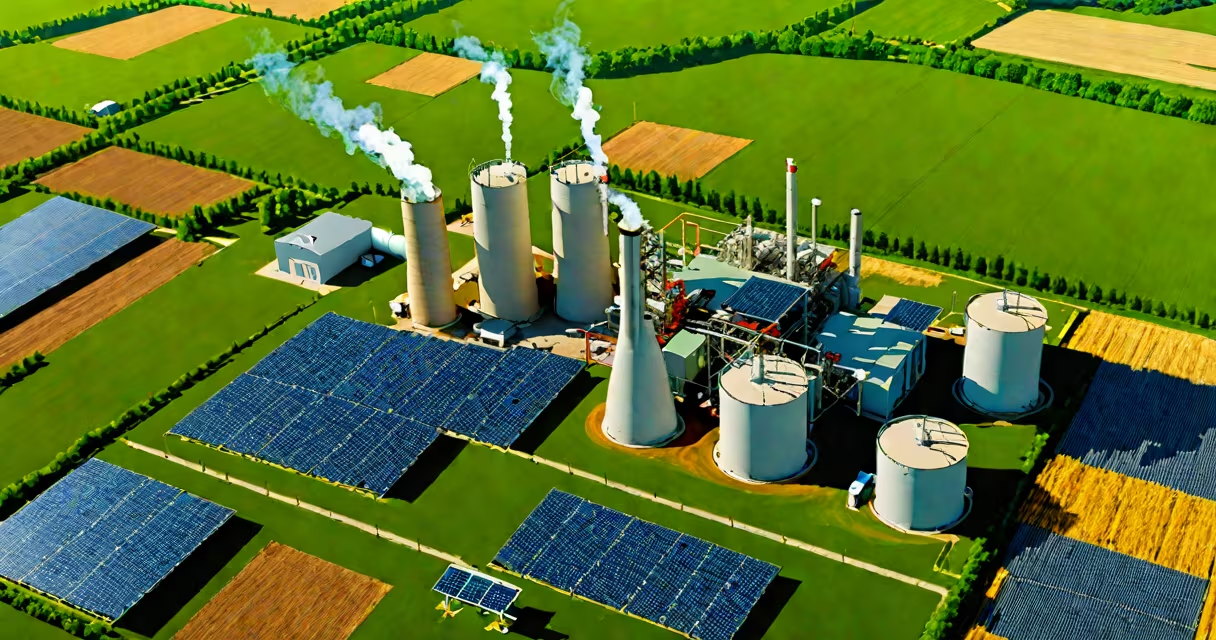
Biomass energy is a form of renewable power generated by burning organic materials such as wood, crop residues, animal waste, and dedicated energy crops. It converts stored chemical energy in biological matter into heat, electricity, or fuel. This process releases carbon dioxide, but the emissions are offset by the CO₂ absorbed during the growth of the feedstock, making it carbon neutral over its lifecycle.
Biomass energy is not a single technology but a category of processes that convert organic matter into usable energy. The most common method involves direct combustion in a boiler to produce steam, which drives a turbine to generate electricity. Other pathways include gasification, anaerobic digestion, and pyrolysis, each suited to different feedstocks and output needs. These methods allow biomass to serve as a flexible energy source across industrial, residential, and transportation sectors.
The International Energy Agency (IEA) reports that biomass accounts for about 55% of global renewable energy consumption, making it the largest renewable energy source worldwide. In the United States, biomass provides roughly 5% of total primary energy supply and contributes to rural economies through agricultural waste utilization. Despite its scale, biomass remains underutilized compared to wind and solar due to logistical challenges in feedstock collection and processing.
Biomass energy relies on the natural carbon cycle. Plants absorb CO₂ during photosynthesis. When they are harvested and burned, the stored carbon is released-but only as much as was taken in during growth. This closed-loop system distinguishes biomass from fossil fuels, which release ancient carbon not part of current atmospheric exchange.
For electricity generation, biomass is typically processed in a thermal conversion unit. Wood chips or pellets are fed into a combustion chamber where they burn at high temperatures. The resulting heat produces steam that spins a turbine connected to a generator. Modern plants achieve thermal efficiencies between 25% and 35%, comparable to coal plants but with lower net emissions.
An alternative route uses anaerobic digestion, where microorganisms break down wet organic matter-like manure or food waste-in oxygen-free tanks. The process yields biogas, primarily methane and CO₂, which can be burned to generate electricity or upgraded to renewable natural gas (RNG). A single dairy farm in California processes 100,000 gallons of manure daily, producing enough RNG to power 1,200 homes annually.
Biomass feedstocks fall into four categories based on origin and processing requirements:
| Type | Source Material | Energy Output (MJ/kg) | Common Use |
|---|---|---|---|
| Residues | Wood chips, sawdust, bagasse | 16-19 | Power plants, district heating |
| Crop-based | Soybeans, corn stover, switchgrass | 15-18 | Transportation biofuels, co-firing |
| Waste streams | Food waste, sewage sludge, municipal solid waste | 10-14 | Biogas, landfill gas recovery |
| Dedicated energy crops | Pine, eucalyptus, miscanthus | 18-22 | Large-scale power stations, export fuel |
Each type presents trade-offs in land use, water demand, and greenhouse gas intensity. For example, using corn stover (the stalks left after harvest) avoids competing with food production, while growing switchgrass on marginal land reduces pressure on arable areas. However, converting land to grow energy crops can lead to indirect emissions if forests or grasslands are cleared.
A key distinction often missed is that not all biomass is sustainable. The European Commission's Renewable Energy Directive (RED II) mandates strict sustainability criteria, including limits on land-use change and biodiversity impact. A 2021 study by the Joint Research Centre found that 30% of EU biomass imports failed to meet these standards, highlighting risks of greenwashing in the sector.
Biomass energy is frequently confused with biofuels like ethanol or biodiesel, but the two differ in application and scale. Biofuels are liquid transportation fuels derived from oils or sugars, while biomass energy focuses on bulk thermal or electrical output. A single biomass power plant in Oregon generates 50 megawatts-enough for 50,000 homes-whereas a biofuel refinery might produce 10 million gallons of ethanol annually.
Another misconception is that biomass is always carbon neutral. While the theoretical model assumes balance between uptake and release, real-world factors disrupt this. Harvesting trees faster than regrowth leads to net carbon debt. A 2020 analysis by the University of Michigan showed that burning whole trees for energy in the southeastern U.S. resulted in a 20-year carbon debt before neutrality was achieved.
I once visited a small biomass facility in Vermont that runs on locally sourced hardwood chips. The plant supplies heat to a community center and school. During peak winter, it burns 15 tons of wood per day. What stood out wasn't the efficiency-it was the local job creation. Seven full-time workers manage the feedstock, operations, and maintenance. This shows biomass energy isn't just about emissions; it's about regional resilience.
Biomass energy is widely deployed in countries with abundant forest or agricultural resources. Sweden uses biomass for 30% of its domestic heat and 10% of its electricity, supported by national policies promoting district heating networks. In India, biomass cookstoves serve over 200 million people in rural households, reducing indoor air pollution and deforestation linked to firewood collection.
On a larger scale, biomass is critical for grid stability. Unlike solar and wind, which depend on weather, biomass plants can operate continuously. They provide baseload power and can ramp up quickly to balance variable renewables. In Germany, biomass plants are integrated into the grid as backup during low-wind periods, helping maintain reliability.
Despite its benefits, biomass faces competition from cheaper alternatives. Solar PV costs have dropped below $0.03 per kWh in many regions, undercutting biomass-generated electricity priced at $0.06-$0.10/kWh. Still, biomass remains essential for decarbonizing hard-to-electrify sectors like cement manufacturing and heavy transport, where battery storage is impractical.
Biomass energy is a proven, scalable solution for clean power and waste reduction. When managed sustainably, it supports climate goals, local economies, and energy security. Its role in the global energy mix continues to grow, especially in regions where renewable infrastructure is expanding.