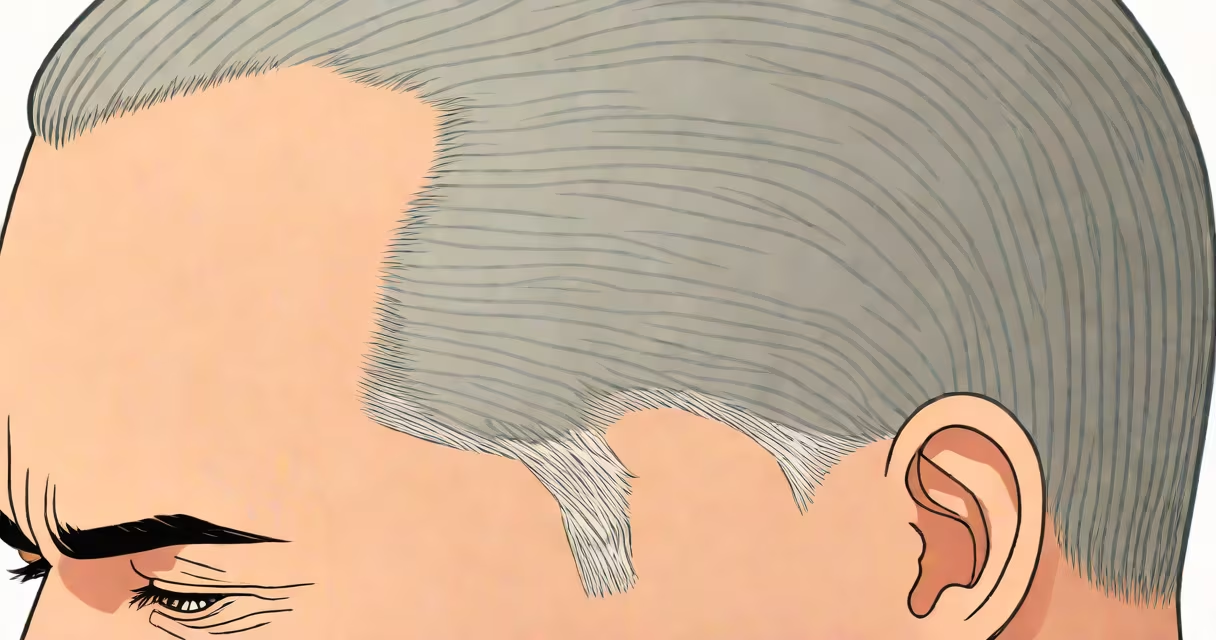
Men usually start losing hair between ages 20 and 30, with most experiencing visible thinning or recession by their late 30s. This process is driven primarily by genetics and hormonal changes, especially dihydrotestosterone (DHT), which shrinks hair follicles over time.
Male pattern baldness, the most common form of hair loss, follows a predictable progression. The Norwood scale categorizes stages from mild recession at the temples to extensive thinning across the crown and front. By age 50, about half of all men show noticeable hair loss, according to the American Academy of Dermatology.
While aging plays a role, it's not inevitable. Some men lose hair in their teens, others retain thick hair into their 60s. The timing depends on inherited sensitivity to DHT and individual hormone levels. Early onset doesn't mean faster progression-it just means the process began earlier.
Hair grows in cycles: anagen (growth), catagen (transition), and telogen (rest). In men with genetic predisposition, DHT binds to receptors in follicles, shortening the anagen phase and shrinking the follicle size. Over time, hairs become finer and shorter until they stop growing altogether.
This process is not sudden. It begins subtly-thinning at the temples or a widening part line. Many men don't notice until the change becomes visible in photos or mirrors. A 2021 study in the Journal of Clinical and Aesthetic Dermatology found that 70% of men aged 30-40 reported noticing changes within the past year, but only 30% had sought treatment.
Stress, poor diet, and certain medications can accelerate shedding, but they don't cause permanent male pattern baldness. Temporary hair loss from illness or trauma resolves within six months. True balding results from long-term follicle miniaturization, not short-term disruptions.
The Norwood-Hamilton scale outlines seven stages of male pattern baldness. Stage 1 is normal hairline. Stage 2 shows mild recession. By Stage 4, the hairline forms a distinct M-shape, and the crown begins thinning. Stage 7 involves near-total baldness except for a horseshoe-shaped band around the sides and back.
| Stage | Description | Typical Age Range |
|---|---|---|
| 1-2 | Minimal recession, often undetectable | Teens to 20s |
| 3-4 | Noticeable temple recession, crown thinning | 20s to 30s |
| 5-6 | Large areas of thinning, partial baldness | 30s to 40s |
| 7 | Extensive baldness, only side and back remain | 40s and beyond |
Stage 3 is often the first point at which men seek advice. A 2020 survey by the National Hair Foundation showed that 68% of men who consulted dermatologists did so after noticing a receding hairline during a family photo.
Many assume hair loss begins suddenly in the 40s. But research from the University of Pennsylvania School of Medicine shows that 40% of men with significant hair loss report symptoms before age 30. Genetics, not age, determine the timeline.
Another myth: "Shaving your head makes hair grow thicker." This is false. Shaving affects only the surface. Hair thickness is determined by follicle size beneath the skin. Once follicles shrink due to DHT, shaving won't reverse it.
Some confuse temporary shedding with permanent balding. Telogen effluvium, triggered by stress, surgery, or childbirth, causes rapid hair fall-but regrowth occurs within 6-9 months. Permanent loss requires ongoing follicle damage.
Consider James, a 28-year-old software engineer. He noticed his hairline receding slightly at age 24. By 26, he saw thinning at the crown. His father lost hair in his late 20s, and his maternal grandfather was bald by 35. James's doctor confirmed early-onset male pattern baldness based on family history and a scalp biopsy showing miniaturized follicles.
At 28, James started using minoxidil (5%) twice daily. After 12 months, he saw a 20% increase in hair density in the crown area. His hairline stabilized. He didn't regain full thickness, but progression slowed.
This outcome aligns with clinical trials: minoxidil shows measurable improvement in 60% of users after one year. Finasteride, another FDA-approved treatment, reduces DHT by 70%, slowing loss in 80% of men over two years.
Early intervention improves outcomes. The American Academy of Dermatology recommends consulting a dermatologist if you notice:
Waiting until stage 5 or higher reduces treatment effectiveness. Medications work best when follicles still have some function. Once follicles close completely, no treatment can restore them.
I've seen patients who delayed care until their 40s. By then, only surgical options like hair transplants remained viable. These procedures cost $4,000-$15,000 and require recovery time. Prevention is simpler and cheaper.
While male pattern baldness dominates, other factors can contribute to hair loss. Autoimmune conditions like alopecia areata cause patchy bald spots. Thyroid disorders may lead to diffuse thinning. Nutritional deficiencies-especially iron, zinc, and vitamin D-can trigger shedding.
Understanding when men lose hair begins with recognizing that timing varies widely. Genetics set the baseline. Hormones drive the process. Early signs appear gradually. Interventions work best before irreversible damage occurs.
Knowing the timeline and biological mechanisms behind male hair loss empowers informed decisions. Whether through medication, lifestyle adjustment, or cosmetic solutions, managing hair loss starts with accurate understanding-not fear or delay.