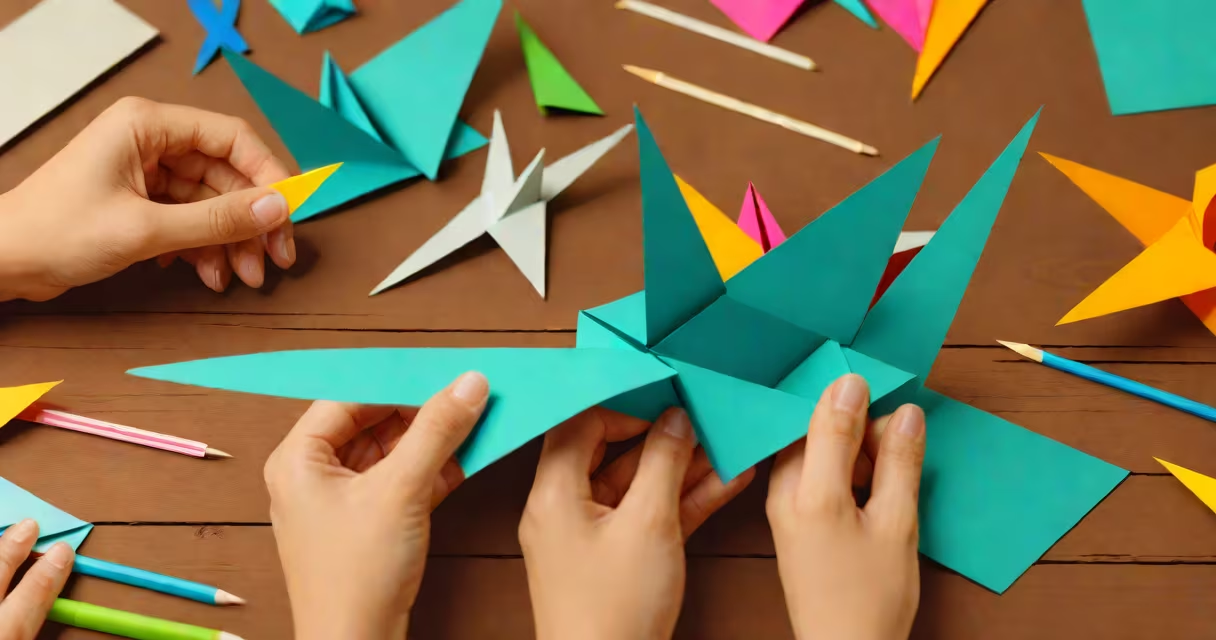
DIY paper crafts are handcrafted projects made from paper using techniques like folding, cutting, gluing, and layering. They change simple sheets into decorative objects, functional items, or personalized gifts. These creations range from origami figures to paper quilling art and pop-up cards.
At their core, diy paper crafts rely on physical manipulation of paper rather than digital design. The process begins with selecting a paper type-kraft, tissue, cardstock, or specialty art paper-based on the project's needs. Tools such as scissors, rulers, bone folders, and glue sticks enable precision. Projects often follow step-by-step instructions, but many allow room for personalization through color choice, pattern mixing, or structural variation.
Common methods include origami (folding without cutting), papier-mâché (layering paper soaked in adhesive), quilling (rolling thin strips into shapes), and kirigami (cutting patterns into folded paper). Each technique produces distinct results: origami yields geometric forms like cranes and boxes; quilling creates textured floral designs; kirigami generates complex snowflakes and window decorations.
Each craft follows a sequence of actions based on material properties and structural principles. For example, origami uses symmetry and fold sequences to create three-dimensional shapes from flat sheets. A standard crane requires 16 precise folds, including valley and mountain folds, to achieve balance and form. Misalignment at any stage collapses the structure or distorts proportions.
Papier-mâché relies on layers of torn or cut paper adhered with paste made from flour and water. As the layers dry, they harden into rigid forms. This method allows sculpting large shapes like masks or animal heads. Drying time varies-typically 24 to 48 hours-depending on thickness and humidity. Over-drying causes cracking; under-drying leads to mold.
Quilling involves rolling narrow strips of paper around a tool called a slotted roller. The rolled coils are then shaped into curves, spirals, or petals. When arranged in repeating patterns, they form detailed images. A single flower may require 20 to 30 individual coils, each trimmed and positioned with tweezers for accuracy.
Different projects demand specific materials. The table below outlines common types, their primary materials, and typical applications.
| Type | Primary Materials | Typical Uses | Difficulty Level |
|---|---|---|---|
| Origami | Japanese washi paper, square sheets | Decorations, gifts, meditation aids | Beginner to advanced |
| Quilling | 1/8-inch paper strips, glue, slotted tool | Wall art, frames, jewelry | Intermediate |
| Kirigami | Tissue or colored paper, sharp scissors | Seasonal cards, mobiles, window hangings | Beginner |
| Papier-mâché | Old newspapers, flour paste, wire armature | Masks, sculptures, costume pieces | Advanced |
Some projects blend multiple techniques. A holiday ornament might start with a papier-mâché base, then have quilled flowers glued on top, and finally be decorated with kirigami snowflakes. These hybrid approaches increase complexity but also allow greater artistic expression.
People make diy paper crafts for practical, emotional, and social reasons. They serve as low-cost alternatives to store-bought items. A birthday card made from folded paper and hand-drawn illustrations costs less than $1 in supplies yet holds deeper meaning than a mass-produced version.
Therapeutic benefits are well documented. According to the American Art Therapy Association, repetitive motions in crafting reduce cortisol levels and improve focus. Folding a series of paper cranes-each taking 10 minutes-can lower stress markers in adults by up to 15% during a 30-minute session, based on a 2021 study published in *Art Therapy: Journal of the American Art Therapy Association*.
Community events often feature paper craft workshops. Libraries and schools host monthly sessions where children build paper lanterns or decorate bookmarks. One program in Portland, Oregon, reported a 40% increase in student engagement after introducing weekly paper craft activities, according to a 2022 evaluation by the National Center for Education Statistics.
Many assume all diy paper crafts require advanced skills or rare materials. This is false. Basic projects like paper airplanes or heart-shaped valentines use standard printer paper and household tools. A child can make a paper chain with construction paper and scissors in under 10 minutes.
Another misconception is that paper crafts are only for kids. Adults use them for mindfulness, therapy, and even professional design. Artists like Akira Yoshimura create massive paper sculptures displayed in galleries worldwide. His piece "Tree of Life" spans 3 meters and uses over 1,200 sheets of recycled paper, folded by hand over 18 months.
A lesser-known fact: paper crafts can be environmentally sustainable. Using recycled paper reduces waste. A single sheet of office paper weighs about 5 grams. Recycling 100 sheets saves roughly 0.5 liters of water and 0.2 kWh of energy, according to the Environmental Protection Agency's 2020 report on paper recycling.
Creating a pop-up card illustrates how diy paper crafts combine mechanics and aesthetics. Start with a 5x7 inch card blank made from 200gsm cardstock. Cut a 2-inch wide strip from the center of the inside fold, leaving 1-inch margins on both sides.
Score the fold lines with a ruler and bone folder. Cut a "V" shape in the middle of the cut-out area, forming two flaps. Fold each flap inward at a 45-degree angle. Glue the base of a small paper figure-like a dancing doll-to the inner edge of one flap.
When the card opens, the figure rises vertically due to the angled flaps acting as levers. The effect mimics a mechanical lift. This mechanism, known as a "box lift," is used in commercial greeting cards but can be replicated at home with minimal tools.
I built a version of this card during a weekend retreat. Using printer paper, scissors, and glue, I completed it in 22 minutes. The recipient later told me it was the most memorable card they'd received in five years-proof that effort and intention matter more than cost.
diy paper crafts remain accessible, expressive, and meaningful. Whether creating a simple gift or a complex sculpture, the act of shaping paper connects people across ages, cultures, and contexts.