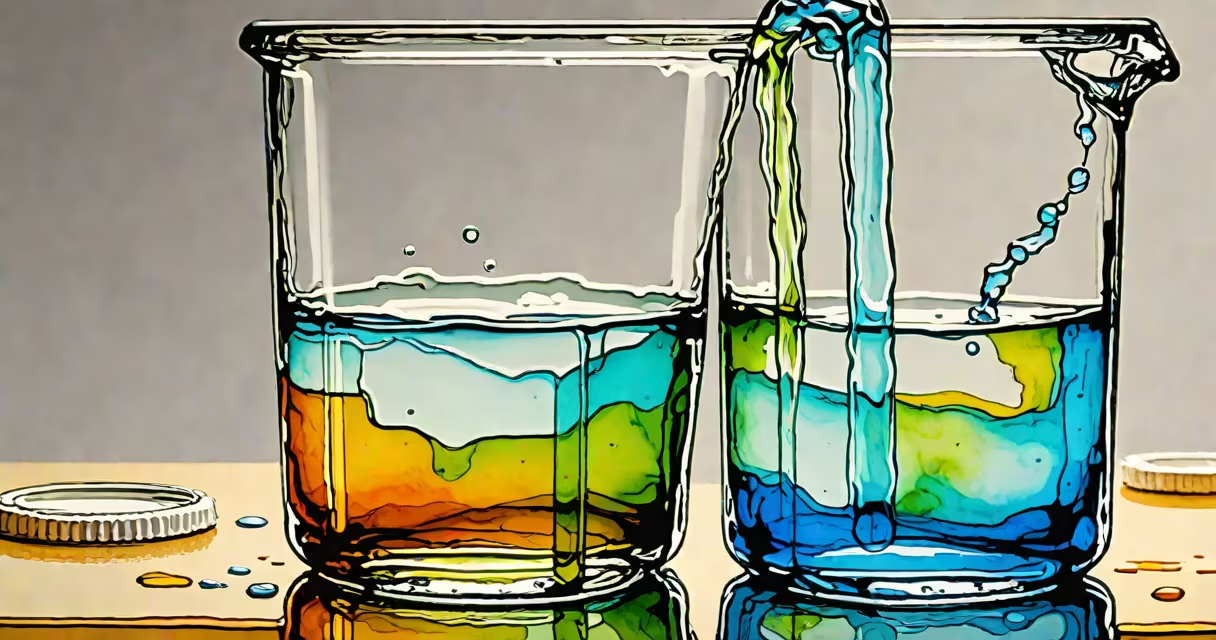
Acetone is a colorless, volatile organic compound that dissolves many plastics and organic materials, including nail polish, adhesives, and epoxy resins. It acts as a potent solvent in both household and industrial settings, breaking down molecular bonds in sticky or solid substances.
Acetone's primary function stems from its ability to disrupt intermolecular forces-specifically dipole-dipole interactions and hydrogen bonding-between molecules in solids and viscous liquids. This allows it to dissolve materials such as polystyrene foam, which is why it's used in model-making and plastic repair. Its low boiling point (56°C) enables rapid evaporation, making it ideal for quick-drying applications.
Commonly found in household products like nail polish remover and cleaning agents, acetone also serves in laboratories and manufacturing for degreasing metal parts and preparing surfaces for coating. It's effective at removing oils, greases, and residues without leaving behind a film.
Acetone belongs to the ketone family, with the chemical formula (CH₃)₂CO. Its structure features a central carbonyl group (C=O) flanked by two methyl groups. This arrangement gives acetone strong polarity while remaining non-ionic, allowing it to interact with both polar and non-polar substances.
When applied to a material like dried glue or cured resin, acetone molecules insert themselves between polymer chains. The carbonyl oxygen forms weak hydrogen bonds with electron-rich atoms in the polymer, weakening the structure. As the chains separate, the material liquefies and can be wiped away.
For example, applying acetone to a dried epoxy residue on a workbench causes the surface to soften within seconds. After 10-15 seconds of contact, the residue lifts easily with a cloth. This process relies on acetone's low surface tension and high diffusivity, enabling rapid penetration into tight spaces.
Acetone appears in several forms based on purity and intended use:
| Type | Purity Level | Typical Use | Example Application |
|---|---|---|---|
| Reagent grade | 99.5%+ | Laboratory and pharmaceutical processing | Extracting compounds from plant material |
| Industrial grade | 98-99% | Manufacturing and cleaning | Removing paint from metal tools |
| Consumer grade | 90-95% | Household cleaning and cosmetics | Nail polish removal, adhesive cleanup |
Reagent-grade acetone is essential in scientific research due to its consistency and minimal impurities. Industrial-grade acetone is often used in factories for cleaning machinery or preparing surfaces before painting. Consumer-grade acetone is sold in drugstores and hardware stores, typically labeled as "nail polish remover" or "cleaner."
One non-obvious fact: acetone is not effective on all plastics. While it dissolves polystyrene and ABS plastic, it has little effect on polyethylene or polypropylene. Attempting to clean a polyethylene container with acetone may result in no visible change, even after prolonged exposure.
Many assume acetone is safe because it's used in nail polish removers. However, it's highly flammable and can cause skin irritation or respiratory distress with repeated exposure. The National Institute for Occupational Safety and Health (NIOSH) classifies acetone as a hazardous substance when inhaled in concentrations above 250 ppm.
A common mistake is using acetone on painted or coated surfaces. It can strip finishes, damage lacquered wood, or degrade rubber seals. I once tested acetone on a vintage camera lens housing made of polycarbonate-it caused micro-cracks after just five minutes of contact, rendering the part unusable.
Another misconception is that acetone can be safely disposed of down the drain. The Environmental Protection Agency (EPA) warns against pouring large quantities of acetone into plumbing systems due to its volatility and potential to form explosive vapors in enclosed spaces.
Acetone is often confused with other solvents like isopropyl alcohol (rubbing alcohol) or ethyl acetate. While all three dissolve certain organic materials, their mechanisms differ.
| Solvent | Boiling Point (°C) | Effect on Polystyrene | Flammability Risk | Use Case |
|---|---|---|---|---|
| Acetone | 56 | Dissolves rapidly | Very high | Plastic welding, degreasing |
| Isopropyl alcohol | 82 | Minimal effect | Moderate | Disinfecting, cleaning electronics |
| Ethyl acetate | 77 | Slow dissolution | High | Paint thinners, food flavoring |
Isopropyl alcohol, despite being a common household cleaner, does not dissolve polystyrene. Ethyl acetate can slowly break down plastic but requires longer contact time and higher temperatures. Acetone remains the fastest and most effective option for dissolving rigid plastics.
For those working with polystyrene models or repairing plastic components, acetone solvent cleaner is the preferred choice. It's available in formulations specifically designed for precision tasks, such as smoothing joints in model kits or removing excess resin from 3D prints.
When handling acetone, always work in a well-ventilated area and wear nitrile gloves. Store it in a sealed, metal container away from heat sources. Never mix acetone with bleach or ammonia-they produce toxic gases.
Understanding what acetone does prevents misuse and ensures safe, effective results. preparing a surface for coating, knowing its capabilities and limitations is essential.