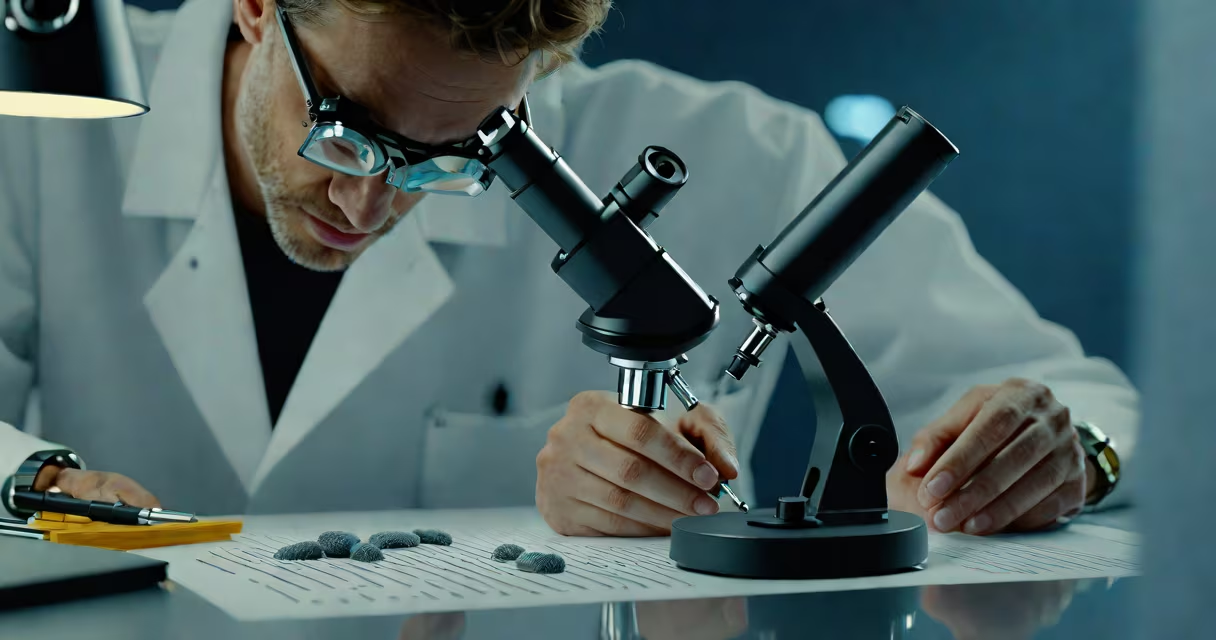
A criminal justice and forensic science degree is an interdisciplinary undergraduate program that integrates principles of law enforcement, legal systems, and scientific methods to analyze physical evidence in criminal investigations. Students gain hands-on training in DNA analysis, fingerprint identification, toxicology, and digital forensics while studying criminal behavior, constitutional law, and investigative procedures.
This degree blends two distinct fields: criminal justice, which focuses on the structure and function of law enforcement, courts, and corrections; and forensic science, which applies chemistry, biology, and physics to solve crimes. Graduates are prepared for roles such as crime scene technicians, forensic analysts, probation officers, and intelligence specialists in agencies like the FBI, DEA, and local police departments.
According to the U.S. Bureau of Labor Statistics, employment for forensic science technicians is projected to grow 14% from 2021 to 2031-faster than average. The median annual wage was $60,590 in May 2022, with higher pay in federal government positions.
Courses in a criminal justice and forensic science degree typically include core classes in both disciplines. Students take foundational courses such as Introduction to Criminal Justice, Criminology, and Constitutional Law alongside laboratory-based subjects like Forensic Chemistry, Serology, and Digital Evidence Collection. Many programs require a capstone project involving a simulated crime scene reconstruction using real-world protocols.
Students often complete internships with local police departments, medical examiners' offices, or state crime labs. These placements provide direct exposure to evidence handling, chain-of-custody documentation, and courtroom testimony procedures. For example, a student at the University of New Haven completed a 12-week internship at the Connecticut State Police Crime Lab, where they processed trace evidence from a burglary case using gas chromatography-mass spectrometry (GC-MS).
Programs may require specific lab hours-typically 10 to 15 per week-and mandate proficiency in software such as Adobe Photoshop for image enhancement, NIST's Digital Evidence Investigator, and forensic databases like CODIS (Combined DNA Index System).
While most criminal justice and forensic science degrees are offered as Bachelor of Science (BS) programs, some institutions offer a Bachelor of Arts (BA) variant with a stronger emphasis on social sciences and policy. The BS track typically includes more math and science credits, making it better suited for lab-focused careers.
| Program Type | Focus Areas | Common Career Paths |
|---|---|---|
| BS in Criminal Justice & Forensic Science | Lab techniques, advanced instrumentation, statistics | Forensic analyst, crime scene investigator, toxicologist |
| BA in Criminal Justice & Forensic Science | Legal theory, ethics, policy development | Probation officer, parole administrator, compliance officer |
| Hybrid/Double Major | Both tracks with additional electives | Federal agent, security consultant, academic researcher |
Some universities offer dual-degree pathways. For instance, the University of Central Florida allows students to earn a BS in Criminal Justice and a BS in Forensic Science simultaneously through coordinated course planning. This reduces time to graduation by aligning prerequisites and allowing shared credits between departments.
One non-obvious distinction: not all forensic science programs are accredited by the Forensic Science Education Programs Accreditation Commission (FSEPC). Only 17 programs in the U.S. held FSEPC accreditation as of 2023. Students should verify accreditation status, as it affects eligibility for certification exams such as those administered by the American Board of Criminalistics.
Many assume that a criminal justice and forensic science degree leads directly to a role like those seen on TV shows such as *CSI* or *NCIS*. In reality, most forensic scientists work in laboratories, not at crime scenes. Fieldwork is limited to basic evidence collection-photography, packaging, labeling-while detailed analysis occurs later in controlled environments.
Another misconception is that all forensic evidence is conclusive. In fact, forensic results are subject to peer review and statistical interpretation. A 2021 National Academy of Sciences report emphasized that error rates in fingerprint analysis can exceed 1%, highlighting the need for rigorous training and quality control in forensic labs.
I once observed a mock trial during a university seminar where a forensic biologist testified about mitochondrial DNA match probabilities. The defense attorney challenged the 99.7% confidence level by asking whether the sample had been cross-contaminated during storage. The expert admitted the risk existed-proof that even high-confidence results depend on proper procedure.
Graduates of criminal justice and forensic science programs play a critical role in ensuring fair outcomes in the justice system. Their work supports the prosecution of offenders and protects the innocent by validating or refuting claims based on objective data. In 2022, the Innocence Project reported that DNA evidence overturned wrongful convictions in 34% of cases reviewed-many of which were resolved thanks to forensic testing conducted by trained professionals.
For students considering this path, the curriculum demands strong attention to detail, ethical judgment, and technical precision. Success requires consistent practice in lab safety, data integrity, and written reporting. A single misstep in evidence handling can compromise an entire investigation.
A criminal justice and forensic science degree equips individuals with the tools to apply scientific rigor to the pursuit of justice. It is not a shortcut to fame or instant expertise-it is a disciplined, evidence-based pathway to meaningful public service.