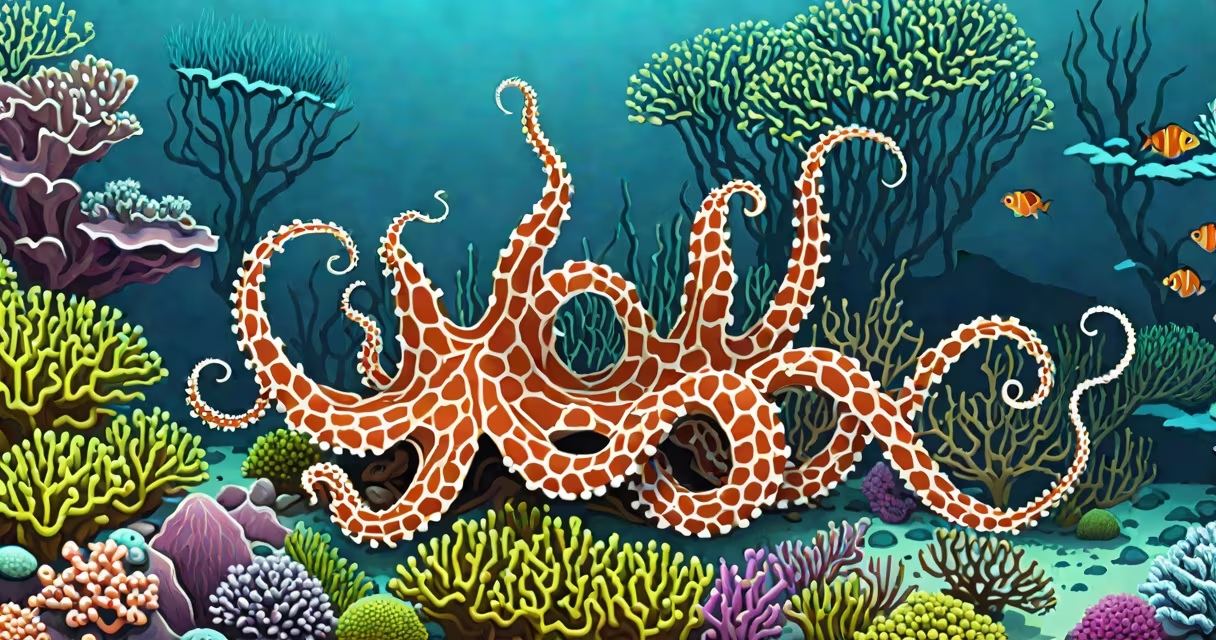
Unusual facts about animals reveal how evolution shapes life in unexpected ways-like octopuses that change color to match their surroundings, or birds that learn to mimic human voices. These traits aren't quirks; they're survival tools honed over millions of years.
Animals adapt in ways that defy common sense. A single species may display behaviors that seem almost human-cooperative hunting, tool use, even mourning. But these aren't signs of intelligence alone; they're responses to environmental pressures, social complexity, or neurological design shaped by natural selection.
For example, the greater honeyguide bird leads humans to wild bee nests. The bird cannot eat the wax itself, but it knows that humans can crack open the hive and leave behind the honeycomb. In return, the bird gets access to the larvae inside. This mutualism has been documented in parts of sub-Saharan Africa for over 10,000 years, according to research published in Nature.
Evolution doesn't plan ahead. Traits emerge through random mutation and selective pressure. What seems strange today may have been essential yesterday. A trait only persists if it increases reproductive success-survival isn't enough.
Take the axolotl, a salamander native to Mexico's lakes. Unlike most amphibians, it retains its larval features into adulthood-a condition called neoteny. It keeps external gills, lives underwater, and never undergoes full metamorphosis. Scientists believe this adaptation evolved because the lakes were too cold or low in oxygen for full transformation.
Another example: the platypus. Its duck-like bill, webbed feet, and venomous spur make it look like a cartoon. But each feature serves a purpose. The bill detects electric fields from prey in murky water. The spur delivers venom during mating season, likely used to fend off rivals. These traits weren't designed for novelty-they're functional solutions to ecological challenges.
Not all unusual traits involve physical form. Some are behavioral. Here's how different categories manifest:
| Type | Description | Example |
|---|---|---|
| Camouflage | Physical or behavioral mimicry to avoid predators | Mimic octopus changes color and shape to resemble lionfish, flatfish, or even crabs |
| Tool use | Using objects to achieve goals | Sea otters use rocks to crack open shellfish while floating on their backs |
| Communication mimicry | Reproducing sounds of other species | Lyrebirds in Australia copy chainsaws, car alarms, and human speech |
| Reproductive oddity | Uncommon mating or parenting strategies | Male seahorses carry and give birth to offspring in a specialized pouch |
These behaviors aren't random. They reflect trade-offs between energy cost, risk, and reproductive gain. For instance, male seahorses invest heavily in gestation-up to 40 days-and can carry hundreds of embryos. This shifts parental investment from female to male, a rare reversal in vertebrates.
People often assume strange animal traits are signs of intelligence or emotion. That's misleading. An octopus changing color isn't "feeling" something-it's responding to visual cues and neural signals. Color change is a reflexive defense mechanism, not emotional expression.
Another myth: animals with unusual traits are always rare. The opposite is true. Many widespread species exhibit odd behaviors. The common raven, for example, solves complex puzzles, uses tools, and remembers faces. It's not a curiosity-it's a survival skill developed over generations.
Even more confusing: some traits appear in multiple unrelated species due to convergent evolution. The eyes of octopuses and humans evolved independently, yet both produce high-resolution vision. The structure differs-octopuses have camera-like eyes with retinas facing forward, unlike ours-but the function is similar. This shows that evolution finds similar solutions under similar pressures.
In the Galápagos Islands, the vampire finch feeds on the blood of nesting seabirds. It pecks at wounds or peels open skin to drink. This behavior is rare among birds and not instinctual-it's learned. Observations show young finches watch adults and copy the technique.
Researchers from the University of Utah studied this behavior in the 1980s. They found that the finch population declined during droughts when host birds reduced nesting activity. Blood-feeding increased during dry seasons, suggesting it's a response to food scarcity-not a default diet.
This illustrates a key point: unusual traits don't exist in isolation. They emerge under stress, opportunity, or resource limitation. The vampire finch isn't "weird" for being a blood-drinker-it's adapted to survive in a harsh environment.
These facts aren't trivia. They inform conservation, medicine, and robotics. Octopus camouflage inspired adaptive materials for military uniforms. Bird vocal learning contributes to AI models for speech recognition. The study of animal behavior continues to yield practical applications.
I once observed a group of meerkats in the Kalahari Desert. When one stood guard, it raised its tail and emitted a high-pitched alarm call. The others froze. This wasn't random-it was coordinated. The sentry had a clear view of predators. It signaled danger not just to its kin, but to neighboring groups. This behavior, documented by researchers at Oxford, shows that communication networks in wild animals are far more sophisticated than assumed.
Understanding unusual facts about animals reveals how life adapts. It shows that nature isn't random-it's efficient, inventive, and deeply logical. These traits aren't anomalies. They're evidence of relentless evolutionary pressure shaping forms and behaviors we still struggle to fully explain.