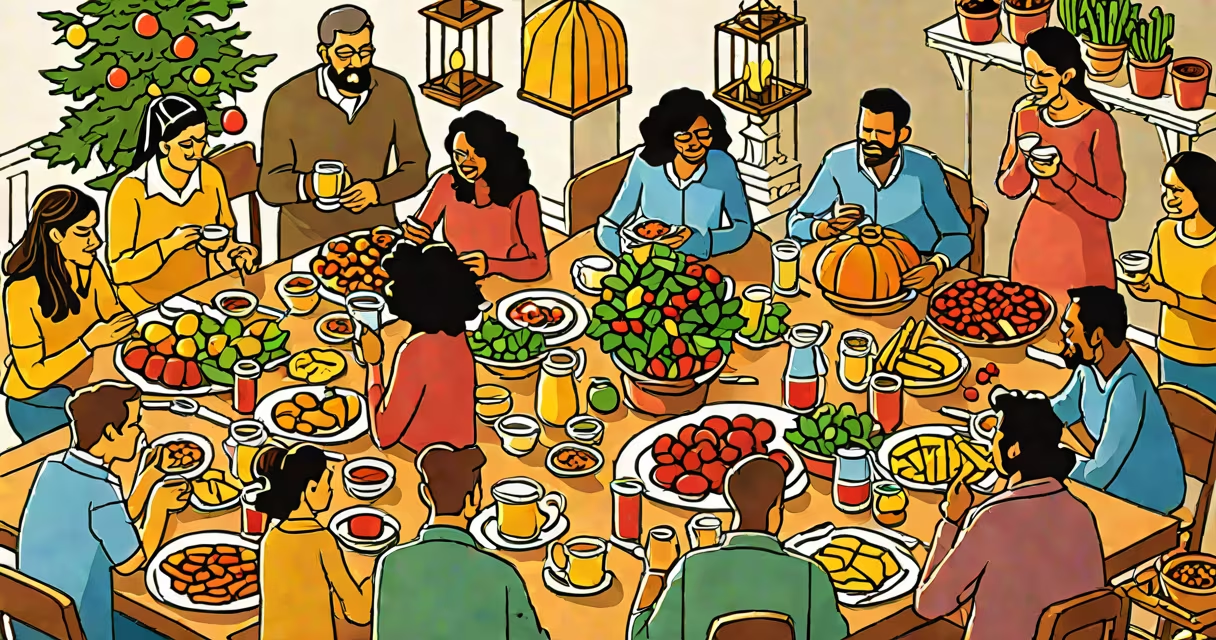
creative ways to celebrate holidays are intentional, personalized activities that go beyond standard rituals like gift exchanges or store-bought decorations. They center on meaningful connection, cultural expression, or shared creativity during seasonal or religious occasions.
These approaches often involve crafting, storytelling, food preparation, or community participation. Instead of repeating inherited customs, people design new traditions based on personal values, heritage, or current interests. For example, a household might replace a single gift exchange with a collaborative art project that each member contributes to over several weeks.
According to the American Psychological Association, engaging in novel holiday rituals improves emotional well-being by increasing a sense of control and belonging. People who create unique holiday routines report higher satisfaction than those who follow traditional scripts year after year.
They function by replacing passive consumption with active creation. Rather than receiving gifts or watching TV specials, participants contribute to the event's meaning through effort, imagination, or collaboration. This shifts focus from material outcomes to shared experience.
For instance, a group of friends might host a "holiday swap" where each person brings a handmade item they made during the month-like a knitted scarf, a poem, or a photo album-and trades them anonymously. The act of making something personal and giving it away fosters deeper connection than exchanging store-bought presents.
Research from the University of California, Berkeley shows that people remember experiences longer than possessions. When celebrations emphasize doing over buying, memories form faster and last longer. A 2022 study found that families using creative holiday practices reported stronger emotional bonds and lower stress levels during December compared to those following conventional routines.
Not all creative approaches are the same. Some prioritize novelty, others authenticity, and some blend both. The table below outlines common categories:
| Type | Description | Example |
|---|---|---|
| Art-Based | Involves creating visual, musical, or performance art as part of the holiday. | A neighborhood hosts a winter solstice light parade using handcrafted lanterns shaped like animals. |
| Culinary | Centers on preparing and sharing food with cultural or symbolic significance. | Families cook a dish from a country they've never visited, researching its history first. |
| Storytelling | Uses narrative to explore identity, memory, or shared values. | Each guest shares a short story about a holiday they experienced as a child. |
| Community Exchange | Focuses on giving and receiving within a local network. | Neighbors trade homemade preserves, baked goods, or garden seeds. |
One non-obvious distinction: creative ways to celebrate holidays aren't always original. Many draw from existing folk traditions, but reinterpret them through a modern lens. A Hanukkah-themed escape room based on the Maccabean revolt, for example, uses historical themes but applies puzzle mechanics from video games-a fusion of old and new.
These methods appear most frequently in urban households, multigenerational homes, and multicultural communities. They're especially common among people who feel disconnected from mainstream holiday narratives or whose backgrounds don't align with dominant cultural celebrations.
A 2023 Pew Research Center survey found that 62% of adults aged 25-44 in the U.S. have modified at least one holiday tradition in the past five years. Reasons included wanting to reduce consumerism, honor diverse identities, or make holidays more inclusive for children with neurodivergent needs.
For example, a teacher in Portland created a "Winter Festival of Voices" at her school. Students from 12 different language backgrounds presented holiday stories in their native languages, accompanied by handmade illustrations. The event drew parents from over 20 countries and became an annual tradition.
People often assume creative ways to celebrate holidays require elaborate planning or significant expense. In reality, many effective versions use minimal resources. A simple potluck where everyone brings a dish tied to a childhood memory costs little but creates lasting impact.
Another misconception is that these methods lack spiritual depth. But research from the Journal of Positive Psychology confirms that rituals involving creativity increase feelings of transcendence and purpose-even in secular settings. One participant in a mindfulness-based holiday workshop said, "I felt more connected to my ancestors during our silent candle-making session than I did during any church service."
Some also confuse creative celebrations with performance. A family might think hosting a holiday play requires acting skills or costumes. But even a 10-minute skit written by kids using paper bags and flashlights counts as a valid creative expression.
In 2021, a small town in Vermont introduced the Silent Light Walk-a 90-minute evening event held on the longest night of the year. Participants walked through a forest trail lit only by handmade paper lanterns. No music, no speeches-just quiet movement and shared presence.
Organizers asked attendees to bring one item representing a personal hope or memory. These were placed along the path. Over 300 people attended. Afterward, 87% said they felt calmer and more connected to others than at any previous holiday gathering.
This event wasn't about spectacle. It was about stillness, intention, and collective presence. It required no budget beyond paper and glue. Yet it became a model for similar events in six other states.
Not all modifications qualify as creative ways to celebrate holidays. Avoid turning them into social media performances. A Christmas tree covered in branded ornaments may look impressive online but lacks personal meaning.
Also avoid assuming that unfamiliar traditions are "weird" or "too much work." A family in Texas began celebrating Diwali after adopting a child from India. They learned the symbolism behind the oil lamps and hosted a small ceremony. The child later wrote, "For the first time, I felt seen."
Finally, don't equate creativity with complexity. A handwritten letter to a distant relative, mailed on the eve of a holiday, holds more emotional weight than a custom-designed digital card sent to 100 people.
I once helped organize a holiday dinner where guests brought nothing but a story. We served soup and bread. No decorations. No music. Just conversation. The silence between stories was the most useful part. That night, someone said, "This is the first holiday I've felt truly present."
When done with care, creative ways to celebrate holidays deepen connection and renew meaning. They aren't replacements for tradition-they're extensions of it. They allow people to shape holidays around who they are, not just what they've inherited.