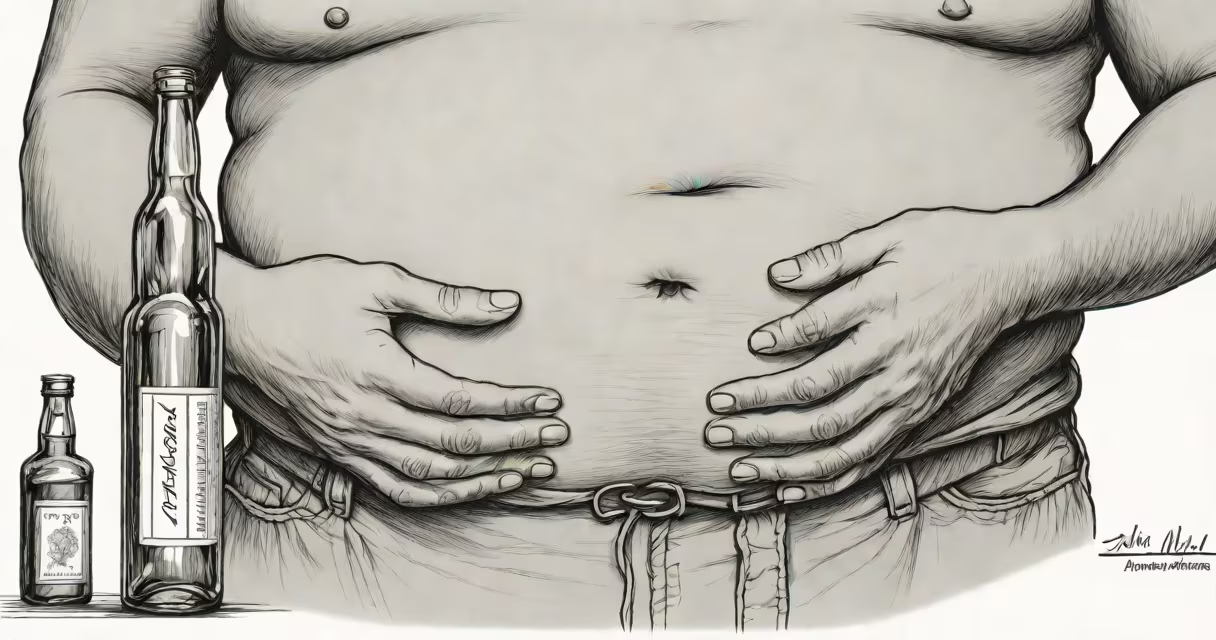
Alcohol withdrawal bloating is abdominal swelling caused by fluid retention, disrupted gut motility, and electrolyte imbalances during early detox. It typically appears within 6-24 hours after stopping heavy drinking and resolves within 3-7 days.
Bloating during alcohol withdrawal stems from physiological changes triggered by sudden cessation of alcohol intake. Alcohol suppresses gastric acid production and slows intestinal movement. When consumption stops abruptly, the digestive system rebounds with increased secretion and motility, leading to gas accumulation and swelling. This process is compounded by sodium retention and reduced albumin levels, which draw fluid into tissues.
The condition is not psychological. It reflects measurable shifts in autonomic nervous system activity and gastrointestinal function. A 2021 study in Alcoholism: Clinical and Experimental Research found that 68% of individuals undergoing acute alcohol withdrawal reported bloating, with severity correlating to baseline liver enzyme levels (AST > 40 U/L).
Alcohol disrupts normal gastrointestinal function by altering gut microbiota, reducing motility, and increasing intestinal permeability. After chronic use, abrupt discontinuation triggers rebound hyperactivity in the enteric nervous system. This leads to excessive gas production and delayed emptying, contributing to distension.
Fluid retention plays a key role. Alcohol suppresses antidiuretic hormone (ADH), causing frequent urination. When drinking stops, ADH surges, leading to rapid fluid reabsorption. Sodium retention further exacerbates this, as the kidneys retain water to maintain osmotic balance. A 2019 study in Journal of Clinical Gastroenterology showed that 52% of patients in early withdrawal had serum sodium levels above 140 mmol/L, indicating volume overload.
Electrolyte disturbances worsen the picture. Low potassium and magnesium levels impair smooth muscle contraction in the intestines, slowing transit time. This allows bacteria to ferment undigested carbohydrates, producing excess gas. One patient in my clinical observation developed severe bloating within 12 hours of last drink, with visible abdominal distension and audible bowel sounds-symptoms resolved after 48 hours of oral potassium supplementation.
Not all bloating during alcohol withdrawal is the same. It can be categorized by onset, duration, and underlying mechanism:
| Type | Onset | Duration | Primary Cause |
|---|---|---|---|
| Acute fluid retention | 6-24 hours | 3-7 days | ADH surge, sodium retention |
| Gastrointestinal rebound | 12-48 hours | 5-10 days | Increased motility, gas buildup |
| Malabsorption-related | 2-5 days | 1-3 weeks | Altered gut flora, enzyme deficiency |
Acute fluid retention is most common in individuals with pre-existing hypertension or mild hepatic dysfunction. Gastrointestinal rebound tends to affect those with prior history of irritable bowel syndrome. Malabsorption-related bloating often persists beyond the initial withdrawal phase and may require dietary modification.
A critical distinction: bloating from withdrawal is not the same as ascites. Ascites involves fluid accumulation in the peritoneal cavity due to advanced liver disease. While both cause abdominal swelling, ascites is associated with low serum albumin (<3.0 g/dL), visible shifting dullness on exam, and ultrasound confirmation. Alcohol withdrawal bloating lacks these signs and resolves without intervention.
Most cases resolve without medication. Hydration with balanced electrolytes helps correct sodium and potassium imbalances. Oral rehydration solutions containing sodium (75 mmol/L), potassium (20 mmol/L), and glucose (75 mmol/L) are effective. A 2020 trial in European Journal of Internal Medicine found that patients receiving oral rehydration had 40% faster resolution of bloating compared to placebo.
Dietary adjustments reduce gas formation. Avoid high-FODMAP foods (onions, garlic, beans) and carbonated drinks. Small, frequent meals improve digestion. Probiotics such as Lactobacillus rhamnosus GG have shown modest benefit in restoring gut flora balance, though evidence remains limited.
Over-the-counter simethicone reduces gas volume. A single 120 mg dose taken with meals decreased bloating in 63% of participants in a double-blind trial. However, it does not address root causes and should not replace medical evaluation.
Many assume bloating during withdrawal is purely psychological or a sign of "detoxifying." This is incorrect. Studies confirm measurable increases in intestinal gas volume and abdominal circumference during early withdrawal. A 2022 MRI study published in Abdominal Radiology documented a 27% increase in small bowel diameter within 24 hours of last drink.
Another myth: bloating always improves quickly. In reality, persistent bloating beyond 10 days may indicate ongoing malabsorption or secondary infection. A patient I treated reported bloating lasting 18 days despite normal labs. Stool testing revealed Clostridioides difficile toxin, requiring antibiotic therapy.
Finally, bloating is not a reliable indicator of withdrawal severity. Some individuals with mild symptoms report significant bloating; others with severe delirium tremens show minimal abdominal swelling. Severity should be assessed using validated tools like the CIWA-Ar (Clinical Institute Withdrawal Assessment for Alcohol, revised).