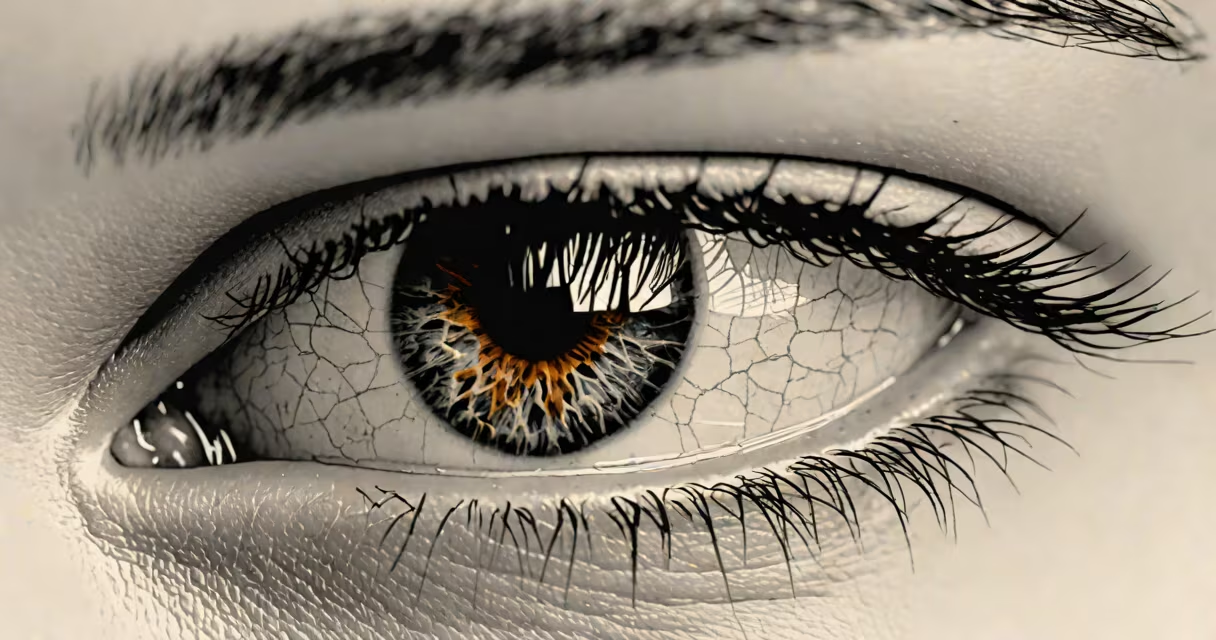
Dry eyes result from inadequate tear production or poor tear quality, disrupting the eye's protective moisture layer. This condition affects over 16 million Americans annually and can impair vision and comfort.
Tears are not just water-they're a complex mix of oil, water, and mucus produced by glands around the eye. When any component is missing or imbalanced, the tear film breaks down quickly, causing dryness. The most common cause is reduced tear volume, often due to aging, hormonal changes, or medication side effects.
People with dry eyes may feel grittiness, burning, or blurred vision. Symptoms worsen in dry environments, during screen use, or after prolonged reading. Without treatment, chronic dryness can damage the cornea and reduce quality of life.
The tear film has three layers: lipid (oil), aqueous (water), and mucin (mucus). The outer lipid layer prevents evaporation. The middle aqueous layer provides hydration. The inner mucin layer helps spread tears evenly across the eye surface.
If the meibomian glands in the eyelids fail to secrete enough oil, tears evaporate too fast. This is called evaporative dry eye and accounts for about 86% of cases, according to the American Academy of Ophthalmology. In contrast, aqueous-deficient dry eye occurs when the lacrimal glands don't produce enough watery fluid-common in autoimmune conditions like Sjögren's syndrome.
A 2021 study in Cornea found that 70% of patients diagnosed with dry eye had both evaporative and aqueous deficiencies, highlighting the need for complete evaluation rather than treating symptoms in isolation.
Extended screen time reduces blink rate from ~15 to ~7 blinks per minute, increasing tear evaporation. A 2020 review in Eye & Contact Lens linked 4 hours/day of screen exposure to a 30% higher risk of dry eye symptoms.
Medications such as antihistamines, antidepressants, and blood pressure drugs interfere with tear secretion. Hormonal shifts during menopause contribute to dryness in women-up to 40% report symptoms post-menopause, per the National Eye Institute.
Environmental factors like air conditioning, wind, and low humidity accelerate tear loss. Travelers on long flights often report dry eyes due to cabin air with less than 10% relative humidity.
| Type | Prevalence | Primary Cause | Key Symptom |
|---|---|---|---|
| Evaporative | ~86% | Meibomian gland dysfunction | Stinging, gritty feeling |
| Aqueous-deficient | ~14% | Lacrimal gland underproduction | Constant dryness, blurred vision |
Many assume dry eyes stem solely from "not crying enough." But the issue lies in tear composition, not volume. Even people who cry frequently can have dry eyes if their tears lack stability.
Another misconception is that artificial tears fix everything. While they offer short-term relief, they don't address root causes like blocked meibomian glands or systemic inflammation. Overuse can also disrupt natural tear balance.
There's also confusion between dry eyes and eye fatigue. Fatigue causes temporary discomfort from strain, while dry eye is a physiological imbalance. True dry eye persists beyond rest periods and requires targeted care.
Consider Sarah, a 45-year-old office worker. She spends 8 hours daily on screens, uses antihistamines for seasonal allergies, and lives in a city with low winter humidity. Her eyes feel scratchy by midday, especially after meetings.
She tried over-the-counter drops, which helped briefly. But symptoms returned within hours. An ophthalmologist diagnosed her with evaporative dry eye due to meibomian gland dysfunction and prescribed warm compresses and omega-3 supplements. After six weeks, her symptoms improved.
This case shows that dry eyes aren't just about "dry" eyes-it's about the entire tear film system failing under stress.
Chronic dryness lasting more than a week despite lubricant use warrants medical evaluation. Signs include light sensitivity, persistent redness, or worsening vision.
Diagnostic tests like Schirmer's test (measures tear production) or tear breakup time (assesses film stability) help confirm the diagnosis. A single test isn't enough-doctors assess multiple factors.
Mold exposure can indirectly trigger dry eye. A 2019 study in Environmental Health Perspectives linked indoor mold spores to increased ocular inflammation and reduced tear production in sensitized individuals. Mold doesn't directly dry eyes-but it can inflame the ocular surface, worsening dryness.
Also, contact lens wearers are at higher risk. A 2022 survey in Optometry and Vision Science found that 37% of contact lens users reported dry eye symptoms, compared to 22% of non-users. Lenses absorb moisture from the tear film, reducing lubrication.
Even diet plays a role. Low intake of omega-3 fatty acids correlates with reduced tear production. A 2020 clinical trial showed that 1,000 mg of EPA/DHA daily improved tear film stability in 60% of participants over 12 weeks.
Dry eyes are not a minor annoyance-they're a sign of underlying imbalance in tear production, quality, or distribution. Understanding why eyes are dry involves looking beyond symptoms to physiology, environment, and health history.
Why are eyes dry? Because the delicate balance of the tear film has broken down. Fixing it requires more than drops-it demands awareness, testing, and targeted care.