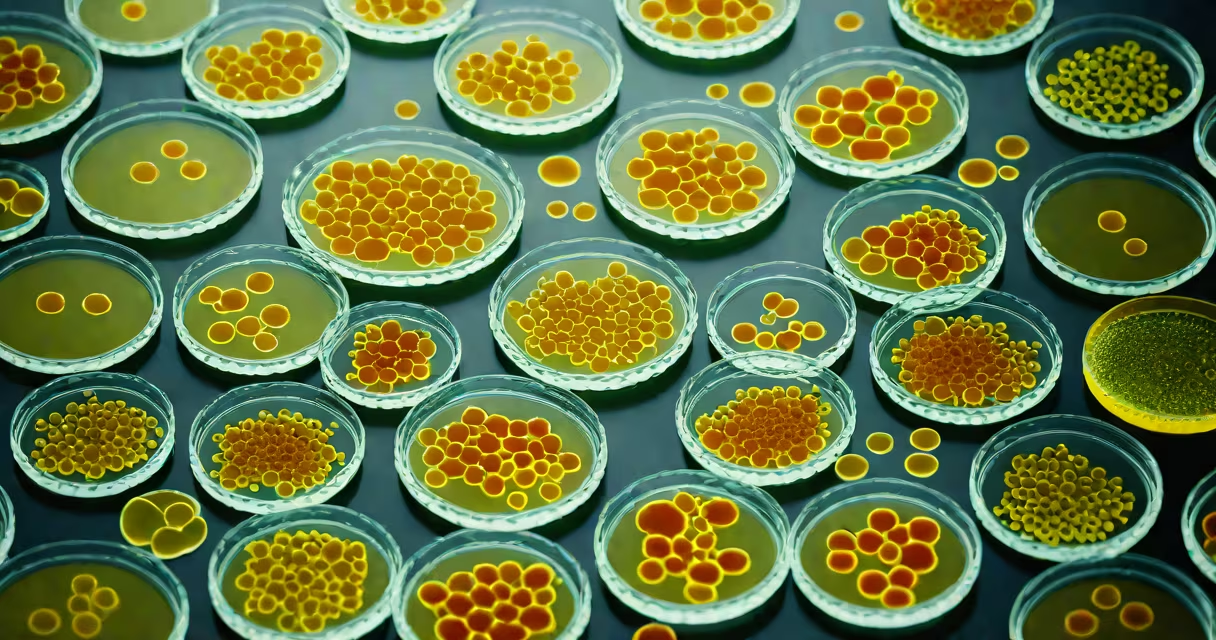
Media in microbiology are standardized nutrient formulations designed to grow and maintain microorganisms in controlled laboratory environments. These substrates provide essential nutrients such as carbon, nitrogen, vitamins, and minerals required for microbial proliferation.
Microbiologists use media to isolate, identify, and study bacteria, fungi, viruses, and other microbes. The composition varies based on the organism's nutritional needs and the experimental goal-whether it's detecting pathogens, testing antibiotic sensitivity, or preserving cultures.
Media must be sterile to prevent contamination. They are prepared using distilled water and sterilized via autoclaving at 121°C for 15 minutes. Once cooled, they are poured into petri dishes or flasks for use. Failure to sterilize results in mixed cultures and unreliable data.
Microbes require specific environmental conditions to grow. Media supply these by offering a balanced mix of energy sources, building blocks, and trace elements. For example, glucose provides carbon and energy, while peptone supplies amino acids and nitrogen.
Some media are selective-containing inhibitors that suppress unwanted organisms. MacConkey agar, for instance, includes bile salts and crystal violet to inhibit Gram-positive bacteria, allowing only Gram-negative species like *Escherichia coli* to grow. This enables targeted analysis of specific microbial groups.
Other media are differential-containing indicators that reveal metabolic activity. Blood agar detects hemolysis: when *Streptococcus pyogenes* grows, it lyses red blood cells, creating clear zones around colonies. This visual cue helps distinguish between pathogenic and non-pathogenic strains.
Microbiological media fall into several categories based on physical form and purpose. The most common types are liquid (broth), solid (agar-based), and semi-solid forms.
| Type | Form | Common Use | Example |
|---|---|---|---|
| General-purpose | Solid | Isolation of unknown microbes | nutrient agar |
| Selective | Solid | Enrichment of specific microbes | MacConkey agar |
| Differential | Solid | Visual differentiation of colony traits | blood agar |
| Enrichment | Liquid | Boosting low-abundance organisms | brain heart infusion broth |
| Indicator | Solid | Revealing metabolic products | EMB agar (eosin methylene blue) |
Each type serves a distinct role. Nutrient agar supports broad microbial growth and is often used in teaching labs. EMB agar, containing dyes that stain lactose fermenters, turns colonies green with metallic sheen-indicating *E. coli* presence. This feature allows rapid screening during food safety testing.
For anaerobic organisms like *Clostridium difficile*, special media are needed. Thioglycollate broth maintains low oxygen levels through reducing agents like cysteine. Without this, obligate anaerobes die upon exposure to air.
Media are not interchangeable. Using a non-selective medium for a clinical sample may result in overgrowth by normal flora, masking the pathogen. A stool sample from a patient with suspected *Salmonella* infection requires selective media like XLD agar, which inhibits competing bacteria and highlights *Salmonella* colonies by their red color.
Another misconception is that all media contain agar. Agar is a gelling agent derived from seaweed, but many liquid media-like tryptic soy broth-do not. Agar is only added when a solid surface is needed for colony formation or streaking.
A critical distinction: media are not the same as culture. Media refer to the nutrient formulation; culture refers to the actual living microorganism grown on it. Confusing the two leads to errors in reporting-for example, saying "I grew my culture on MacConkey" instead of "I cultured the isolate on MacConkey agar."
In public health laboratories, media are used daily to detect foodborne pathogens. During a 2018 outbreak of *Listeria monocytogenes* linked to deli meats, investigators used Fraser broth for enrichment, followed by selective plating on Oxford agar. This process isolated the strain within 48 hours, enabling a recall that prevented further illness.
I once observed a student mislabel a batch of Mueller-Hinton agar as "for yeast," leading to poor fungal growth. The medium lacks sufficient carbohydrates for filamentous fungi. Correcting this required switching to Sabouraud dextrose agar-a medium specifically formulated for fungi with high glucose and low pH to inhibit bacterial growth.
According to the Centers for Disease Control and Prevention (CDC), proper media selection reduces false negatives in diagnostic testing by up to 30%. The World Health Organization (WHO) emphasizes standardized media protocols in global surveillance programs to ensure consistent results across countries.
Understanding what is media in microbiology means recognizing it as a precise tool-not a generic growth substrate. Its design reflects years of research into microbial nutrition and detection methods. Choosing the right medium ensures accurate results in diagnostics, research, and quality control.
When working with microbes, always match the medium to the organism's requirements and the test's objective. Whether isolating a rare bacterium or confirming a viral infection, the foundation lies in selecting the correct medium.