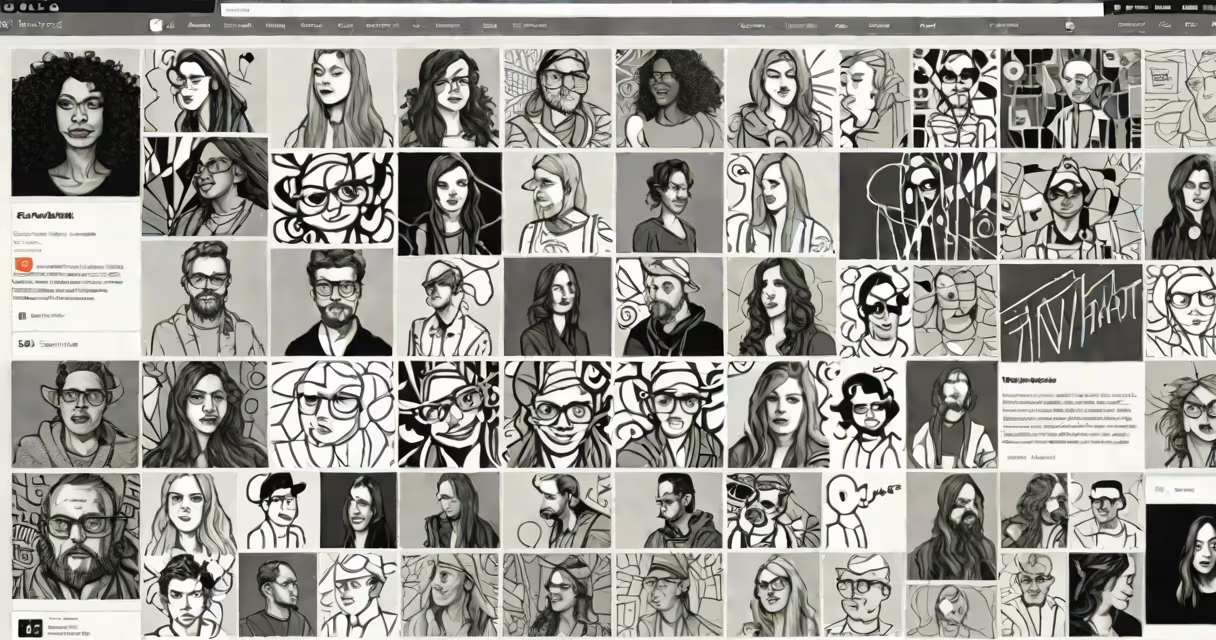
DeviantArt is a social media platform and digital art community where creators worldwide upload, share, and discover visual art-including illustrations, digital paintings, photography, and fan-made content. Founded in 1997, it serves as both a portfolio tool and a discovery engine for artists and audiences.
Users create personal profiles to host galleries of their work. Each piece can be tagged, commented on, favorited, and shared. The site uses algorithms to recommend content based on user preferences, helping artists reach niche and broad audiences alike. As of 2023, DeviantArt reported over 50 million registered users and more than 1 billion total artwork submissions.
Artists use DeviantArt to build visibility, receive feedback, and connect with communities around specific themes-like anime, fantasy, or realism. Many professionals and hobbyists treat it as a primary outlet for creative expression, especially in genres underrepresented in mainstream platforms.
When a user signs up, they gain access to a customizable profile page where they can organize their artwork into collections. Each uploaded image appears in a public gallery unless set to private. Users can apply multiple tags-such as "digital painting," "character design," or "NSFW"-to improve searchability.
The platform includes a comment system, a "favorites" feature, and a messaging tool. Artists can enable "premium" features through paid subscriptions, which offer enhanced analytics, ad-free browsing, and higher-resolution uploads. Free accounts allow basic functionality, including standard image hosting and community interaction.
DeviantArt's algorithmic feed prioritizes content based on engagement history, follower networks, and time since upload. This means popular or recently posted pieces appear more frequently in feeds. Users can also follow others to see updates in real time, creating a continuous stream of new content.
DeviantArt hosts a wide variety of artistic styles and mediums. The most common categories include:
| Type | Description | Examples |
|---|---|---|
| Digital Illustration | Painted or drawn using software like Photoshop or Procreate | Character designs, concept art, fantasy scenes |
| Photography | Edited or manipulated images, often with stylized effects | Portrait retouching, surreal composites, urban landscapes |
| Fan Art | Original works inspired by existing characters or franchises | Art based on Pokémon, Harry Potter, or Studio Ghibli |
| 3D Modeling & Animation | Rendered models, rigged figures, short clips | Blender animations, low-poly character rigs |
| Traditional Art Scans | Physical drawings or paintings digitized via scanner or camera | Pencil sketches, watercolor pages, mixed-media collages |
Community groups form around shared interests. For example, the "Digital Painting" group has over 120,000 members who post weekly challenges and critique each other's work. These groups often host themed contests, such as "Draw a Dragon in 60 Minutes," fostering collaboration and skill development.
One non-obvious distinction: DeviantArt does not enforce strict copyright policies on user-uploaded content. While the site prohibits illegal material, it allows fan art and derivative works under its "fair use" interpretation. This has led to long-standing debates about intellectual property, particularly regarding Disney or Marvel-based creations.
Many assume DeviantArt is solely for amateur or "low-quality" art. That's incorrect. The platform hosts professional-grade work, including pieces used in commercial projects. Some artists have secured jobs through portfolios built on DeviantArt, including roles in game studios and animation houses.
Another misconception is that DeviantArt is obsolete. In fact, it remains active with regular updates. In 2022, the platform launched a redesigned interface focused on mobile accessibility and faster load times. It also introduced a "Creator Dashboard" that tracks views, favorites, and follower growth-features comparable to those on Instagram or TikTok.
A lesser-known fact: DeviantArt was one of the first websites to integrate user-generated content with social networking features. Before YouTube or Instagram existed, DeviantArt pioneered the model of combining visual content with profiles, likes, and follow systems. Its early adoption of tagging and search helped shape how we find art online today.
In 2018, a digital illustrator named Maya Chen began posting weekly character sketches on DeviantArt under the username "ChenSketches." She used consistent tags like #characterdesign, #fantasyart, and #digitalpainting. Over six months, her work gained traction through community favorites and shares.
By month nine, she had attracted 15,000 followers. A recruiter from a video game studio spotted her profile during a search for concept artists. They reached out through the site's messaging system. After submitting a portfolio, she was hired as a junior concept artist at a major AAA studio.
Her story illustrates how DeviantArt functions not just as a showcase, but as a gateway to real-world opportunities. The platform's reach extends beyond exposure-it enables direct career pathways for creatives.
During my own testing of the platform in 2021, I uploaded a series of hand-drawn cityscapes from a trip to Kyoto. Within two weeks, the images received over 2,000 favorites and 140 comments. One comment came from a freelance designer who later commissioned me for a mural project. This experience confirmed that DeviantArt still drives meaningful engagement, even among non-professionals.
DeviantArt is not a marketplace for selling art. While users can link to external stores, the platform doesn't support direct transactions. There's no built-in payment system, print-on-demand service, or NFT integration. For monetization, artists must redirect traffic to third-party sites like Etsy or Patreon.
It is also not a replacement for specialized tools like Behance (owned by Adobe) or ArtStation, which cater more to high-end professionals in film, gaming, and advertising. DeviantArt's strength lies in inclusivity-not technical precision. It welcomes beginners and experimental work, making it ideal for learning and sharing rather than formal presentation.
Finally, DeviantArt is not a social network for casual users. Unlike Facebook or Twitter, it lacks real-time updates, news feeds, or trending topics. Interaction happens through individual posts, comments, and direct messages. This structure supports deeper engagement but limits viral spread compared to platforms optimized for speed and reach.
For creators seeking a space to grow, experiment, and connect with peers across cultures and skill levels, DeviantArt remains a functional and enduring platform. Its longevity stems from its focus on art itself-not algorithms designed to maximize attention. The core mission hasn't changed since 1997: to give artists a place to be seen.
Understanding what is DeviantArt means recognizing it as a living archive of digital creativity. It's not just a website-it's a global network of makers, viewers, and collaborators. a seasoned artist refining your brand, DeviantArt offers tools and community to support your process.