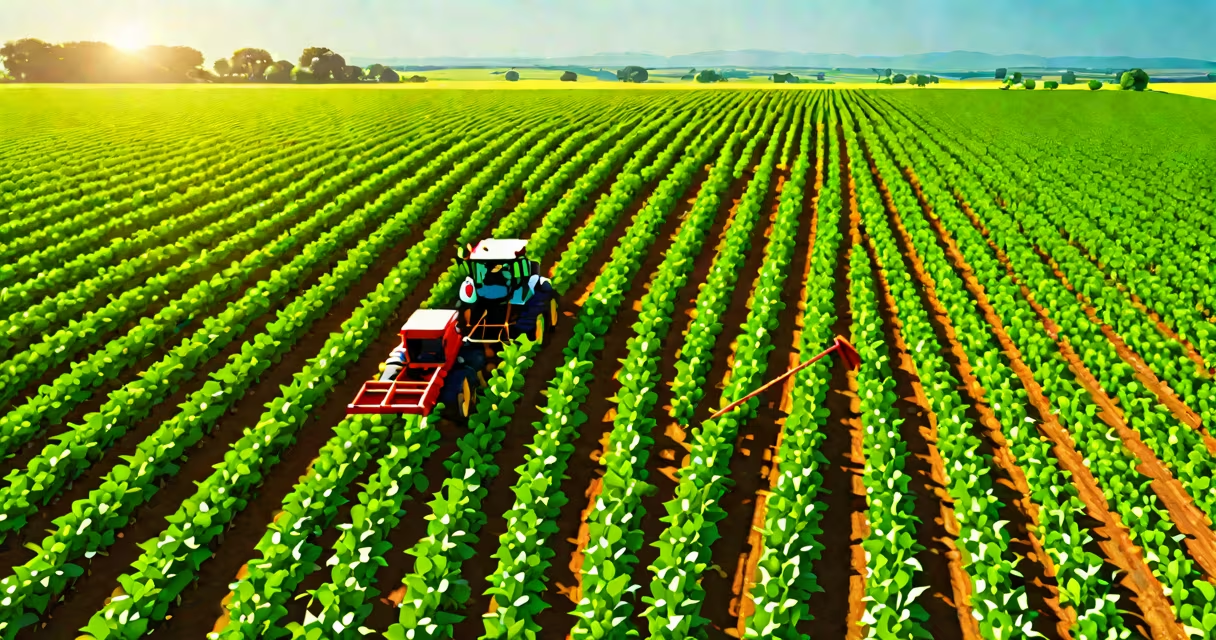
Food sustainability means producing, distributing, and consuming food in ways that meet current needs without compromising future generations' ability to do the same. It integrates environmental protection, economic viability, and social equity across the entire food system.
The concept emerged from global concerns about climate change, soil degradation, water scarcity, and rising food insecurity. The United Nations Food and Agriculture Organization (FAO) defines sustainable food systems as those that ensure food security while preserving natural resources and supporting livelihoods. A system is sustainable if it maintains productivity over decades, not just years.
For example, a farm growing wheat using cover crops, crop rotation, and reduced tillage preserves soil health and reduces carbon emissions. This contrasts with conventional monoculture farming that depletes nutrients and relies heavily on synthetic fertilizers. The difference lies in long-term resilience versus short-term yield gains.
Food sustainability operates through interconnected cycles: production, processing, distribution, consumption, and waste management. Each stage must minimize ecological harm and support fair labor practices.
At the production level, sustainability involves managing water use, protecting biodiversity, and reducing reliance on fossil fuels. For instance, drip irrigation systems cut water use by up to 60% compared to flood irrigation. In contrast, industrial livestock operations contribute 14.5% of global greenhouse gas emissions-more than all forms of transport combined, according to the FAO.
Processing and distribution depend on energy efficiency and low-waste logistics. Refrigerated trucks powered by biodiesel reduce emissions. Local food hubs shorten supply chains, cutting transportation emissions by 30-50% in urban areas. A study from the University of Michigan found that moving food within 100 miles reduces carbon footprint by 15% on average.
Food sustainability rests on three pillars: environmental stewardship, economic fairness, and social inclusion. These are not optional add-ons-they define whether a system is truly sustainable.
| Pillar | Key Elements | Real-World Example |
|---|---|---|
| Environmental | Soil conservation, water efficiency, low emissions | Regenerative farms in Iowa use no-till methods and diverse crop rotations, increasing soil organic matter by 1.2% annually. |
| Economic | Farmer income stability, fair trade pricing | Coffee farmers in Colombia earn 30% more under Fair Trade certification due to guaranteed minimum prices. |
| Social | Worker safety, community access to nutritious food | Urban gardens in Detroit provide fresh produce to neighborhoods with limited grocery access, improving diet quality among residents. |
These pillars interact. A farm may use minimal pesticides (environmental), but if workers are paid below living wage (social), the system fails sustainability criteria. True sustainability requires balance across all dimensions.
Many assume that organic farming equals sustainable farming. While organic practices often reduce chemical inputs, they don't guarantee sustainability. A large-scale organic tomato farm using intensive irrigation in a drought-prone region can deplete groundwater faster than conventional farms.
Another myth is that plant-based diets are automatically sustainable. While shifting toward legumes and vegetables lowers carbon footprints, imported avocados from Chile or almonds from California require high water inputs. A 2021 study in *Nature Food* showed that almond production uses 1.1 gallons of water per nut-equivalent to 1,000 gallons per pound.
Some confuse sustainability with "greenwashing." A company labeling its packaging as "eco-friendly" while sourcing ingredients from deforested land isn't sustainable. Transparency matters. Third-party certifications like USDA Organic, Rainforest Alliance, or B Corp verify claims through audits.
In 2018, the city of Milan launched the Milan Urban Food Policy Pact, a network of 200+ cities committed to sustainable food systems. They set targets: reduce food waste by 50%, increase local food procurement in public institutions, and expand urban agriculture. By 2023, participating cities reported a 37% drop in food waste and a 22% rise in urban garden plots.
On a farm scale, the Rodale Institute's 30-year trial comparing organic and conventional farming found that organic systems sequestered 1,000 pounds of carbon per acre annually. Conventional systems released carbon due to synthetic fertilizer use. This proves that sustainability isn't idealistic-it's measurable and replicable.
I once visited a small-scale dairy in Vermont where the cows grazed on rotational pastures. The farmer used manure compost to fertilize fields, eliminating synthetic inputs. He sold milk directly to consumers via a CSA program. Over five years, his herd size stayed stable, soil health improved, and net profit rose 18%. His model aligns with the definition of food sustainability: resilient, profitable, and ecologically sound.
Without a shared understanding of food sustainability, policies fail. A government subsidizing corn ethanol may boost biofuel output but drive up food prices and degrade farmland. The definition prevents such trade-offs.
According to the Intergovernmental Panel on Climate Change (IPCC), transforming food systems is essential to limiting warming to 1.5°C. Sustainable practices-including agroecology, reduced meat consumption, and circular waste models-could cut food-related emissions by 49% by 2050.
Understanding the definition of food sustainability enables better choices. Consumers can assess labels. Farmers can adopt proven methods. Governments can design effective incentives. The goal isn't perfection-it's continuous improvement across all levels of the food chain.