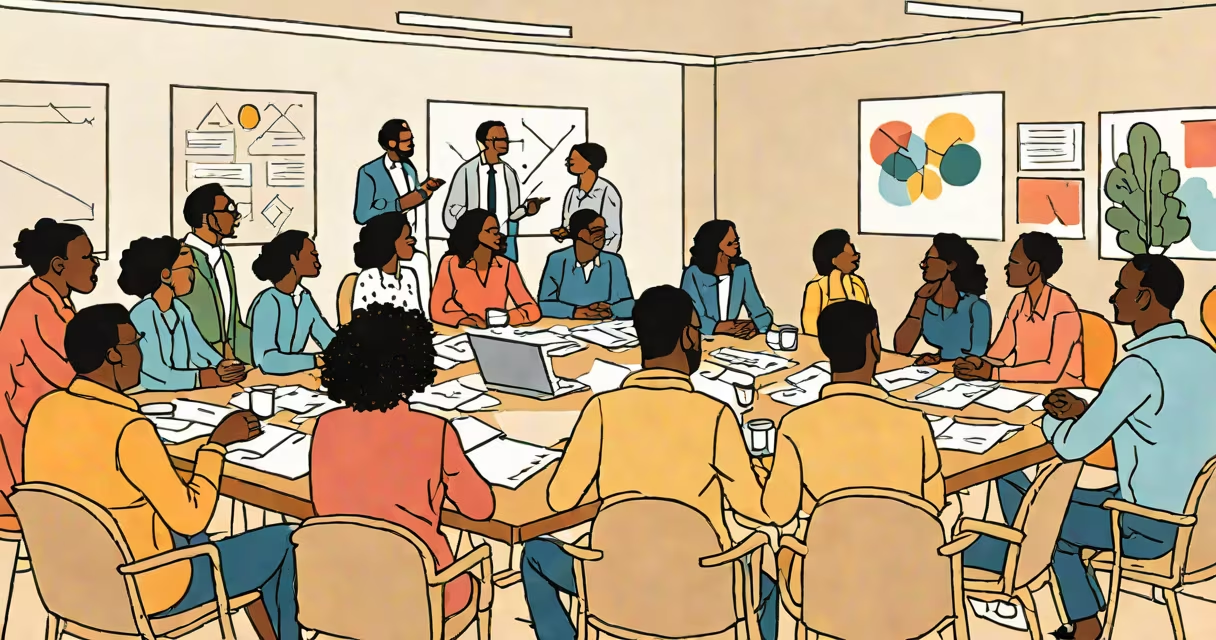
Cultural bias is the tendency to interpret behaviors, values, and beliefs through the lens of one's own cultural background, often leading to inaccurate judgments about others. It operates unconsciously, shaping how people perceive competence, communication styles, and social appropriateness. This bias influences decisions in workplaces, schools, healthcare settings, and everyday interactions.
It arises from shared assumptions embedded in language, customs, and social structures. For example, someone raised in a culture that values direct eye contact may view a person who avoids eye contact as dishonest-even if that behavior stems from respect in another culture. These differences aren't inherently wrong, but they become problematic when one standard is treated as universal.
According to the American Psychological Association, cultural bias contributes to disparities in education and employment by affecting how individuals are evaluated. A 2021 study published in *Nature Human Behaviour* found that resumes with culturally specific names received fewer callbacks than those with Western-sounding names, even when qualifications were identical.
Cultural bias functions through automatic mental shortcuts shaped by early exposure to group norms. People internalize expectations about speech patterns, personal space, punctuality, and emotional expression. When encountering someone whose behavior deviates from these norms, the brain interprets the difference as a threat or flaw-often without awareness.
For instance, in many East Asian cultures, indirect communication is valued to maintain harmony. A manager from a Western background might misinterpret this as lack of confidence or poor leadership, while the individual sees their approach as respectful and effective. The mismatch isn't about ability-it's about differing cultural frameworks.
Neuroscience research shows that the brain processes unfamiliar cultural cues more slowly and with higher activation in regions linked to threat detection. This explains why people react negatively to unfamiliar behaviors even when they're not consciously prejudiced.
Cultural bias appears in several forms, each rooted in distinct social practices:
| Type | Definition | Example |
|---|---|---|
| Communication Style Bias | Assuming directness equals honesty, indirectness equals deception. | A team member from a high-context culture gives feedback subtly. A colleague assumes they're avoiding conflict. |
| Time Perception Bias | Viewing punctuality as essential, while other cultures prioritize relationship-building over schedules. | An employee arrives 15 minutes late to a meeting. A supervisor assumes disorganization, unaware the delay was due to family obligations common in the person's culture. |
| Appearance and Dress Bias | Interpreting religious or traditional attire as inappropriate or unprofessional. | A woman wearing a hijab is passed over for a promotion despite strong performance. Her appearance is unconsciously associated with "otherness" in a predominantly secular workplace. |
These biases are not always intentional. They emerge from repeated exposure to dominant cultural standards in media, education, and institutions.
Workplaces are frequent sites of cultural bias. In hiring, interviewers may favor candidates who speak similarly, dress like them, or share similar backgrounds-even when objective criteria are applied. A 2020 report by the Society for Human Resource Management found that 63% of HR professionals admitted to unintentionally favoring candidates from familiar cultural backgrounds during interviews.
Education systems also reflect cultural bias. Standardized tests often measure knowledge tied to dominant cultural narratives. Students from minority groups may struggle not because of lower ability, but because the material reflects a narrow worldview. Research from the National Center for Education Statistics shows that Black and Hispanic students score lower on average in reading assessments-not due to innate differences, but because test content underrepresents their lived experiences.
In healthcare, cultural bias leads to unequal treatment. A 2019 study in *The New England Journal of Medicine* revealed that Black patients were less likely to receive pain medication than White patients, even when reporting the same level of pain. Researchers attributed this disparity partly to stereotypes about pain tolerance rooted in cultural misconceptions.
Many assume cultural bias is limited to overt racism or sexism. But it's deeper-it's embedded in everyday routines and accepted norms. A common error is equating cultural bias with individual prejudice. While prejudice involves conscious dislike, cultural bias operates below awareness, making it harder to detect and correct.
Another misconception is that cultural bias only affects minorities. In reality, members of dominant cultures are equally affected-and often less aware of their own blind spots. For example, a White manager may not recognize that their preference for "teamwork" in meetings reflects a Western ideal that excludes collaborative models common in Indigenous or collectivist societies.
Cultural bias is not the same as cultural differences. Differences exist across groups-language, food, holidays-but bias occurs when one culture is judged as superior or more valid. The key distinction lies in evaluation: acknowledging differences is neutral; ranking them is biased.
Consider a tech company in Silicon Valley hiring for a software engineering role. Two candidates apply:
The hiring committee, composed mostly of people from Western educational and professional backgrounds, rates James higher. They cite his "strong communication skills," "networking experience," and "fit with company culture." Maya is rejected despite comparable technical skills.
Why? Because the committee unconsciously associates "professionalism" with certain speech patterns, institutional prestige, and extracurriculars common in dominant cultural circles. Maya's achievements are valid-but her background doesn't match the unspoken model of success.
This scenario illustrates how cultural bias distorts merit-based evaluation. It's not about intent. It's about the invisible filters that shape judgment.
Self-awareness is the first step. Ask: "Whose norms am I using as the default?" Challenge assumptions by seeking input from people with different cultural experiences. For example, when reviewing a job candidate, ask: "Would I make the same decision if this person had a different name or background?"
I once facilitated a workshop where participants reviewed video clips of job interviews. One participant, a senior executive, initially rated a candidate highly based on "confidence" and "presence." After analyzing the clip with a cultural lens, we discovered the candidate spoke softly and avoided eye contact-behaviors common in Japanese business culture. The executive admitted he'd misjudged the candidate's professionalism due to familiarity with Western norms.
Recognizing cultural bias isn't about blaming individuals. It's about creating systems that account for diversity. When organizations audit processes-hiring, promotions, evaluations-they uncover hidden patterns of exclusion.
Cultural bias is not a moral failing. It's a human pattern shaped by environment. Acknowledging it allows for better decisions, fairer outcomes, and richer collaboration across differences.