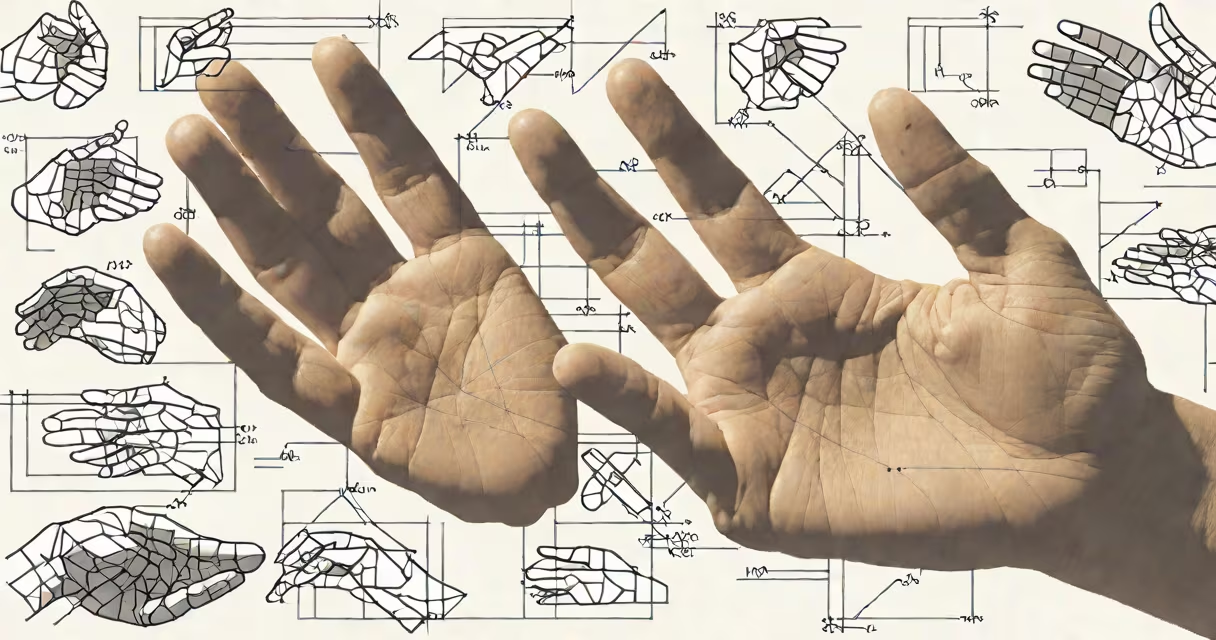
"And in asl" describes how the conjunction "and" is signed in American Sign Language using specific handshapes, movement, and spatial grammar rather than mimicking English syntax. ASL uses visual-gestural grammar, not word-for-word translation.
ASL is a complete, natural language with its own grammar, syntax, and vocabulary. It is not a signed version of English. The sign for "and" in ASL is formed by bringing both hands together in front of the chest, palms facing each other, then moving them apart slightly while rotating the wrists. This motion is not equivalent to saying "and" in English-it functions as a connector between ideas, clauses, or signs in a sentence.
For example, when signing "I like apples and oranges," the signer does not sign "like apples and oranges." Instead, they sign "I like apples" and then use the "and" sign to connect the idea of "oranges" as a separate clause. The sign for "and" appears between the two concepts, showing that they are linked but distinct. This reflects ASL's topic-comment structure, where new information follows established context.
English relies on linear word order-subject-verb-object. ASL uses space, facial expression, and movement to convey meaning. The sign for "and" does not appear at the beginning or middle of a sentence like in English. It occurs between two ideas, often with a pause or shift in direction.
Consider the sentence: "She went to school and then she studied." In English, "and" connects two actions in sequence. In ASL, the signer would first sign "she go school," then use the "and" sign, followed by "study." The sign for "and" is not repeated. Instead, the signer uses spatial marking-pointing to a location in space to represent "then"-to show time progression.
According to the University of Washington's Office of Disability Services, ASL has a subject-verb-object structure only in certain contexts. More often, it uses topic-comment organization, where the topic is introduced first, followed by commentary. The sign for "and" helps link related topics, but its placement depends on the flow of ideas, not rigid syntax.
While "and" is a common connector, ASL uses several signs to link ideas. These signs vary based on the relationship between clauses-addition, contrast, cause, or sequence.
| Sign | Meaning | Usage Example |
|---|---|---|
| AND | Addition | She likes dogs and cats. |
| SO | Cause or result | It rained, so we stayed inside. |
| BUT | Contrast | I wanted to go, but it was too late. |
| THEN | Sequence | First I woke up, then I ate breakfast. |
The sign for "and" in ASL is not always visible. Sometimes, the connection is implied through facial expression, eye gaze, or spatial positioning. For example, if a signer points to a location in space to represent "school" and then moves their eyes toward another area to indicate "home," the audience understands the sequence without needing a connecting sign.
Many people assume that ASL signs are direct translations of English words. This leads to errors like signing "and" between every two words, even when it's not needed. In reality, ASL does not require a sign for every English conjunction.
For instance, the sentence "I love you and I miss you" may be signed as "I love you" followed by "I miss you" with a pause. The signer doesn't use the "and" sign because the two ideas are separate and clear without it. Using "and" here would be redundant and unnatural.
A key distinction is that ASL signs are not gestures-they are linguistic units. The sign for "and" is not a waving motion. It is a precise movement involving both hands, rotation, and timing. According to the National Institute on Deafness and Other Communication Disorders (NIDCD), ASL signs are processed in the brain similarly to spoken language, with regions responsible for grammar and syntax activated during comprehension.
In a classroom setting, a student signs: "The teacher gave us homework and we had to finish it by Friday." The signer begins with "teacher give us homework," then performs the "and" sign-both hands meet at the chest, then move outward with a slight twist. After that, they sign "we have to finish it by Friday."
Notice how the "and" sign separates two independent clauses. The signer pauses slightly after "homework" and before "we had to finish." This pause is not filler-it's part of the grammar. It signals a shift in topic and allows the audience to process the information.
When I taught ASL to college students, I noticed that many tried to sign "and" between every two words. One student signed "I eat food and drink water and go to class." The sentence became cluttered and hard to follow. I corrected it by demonstrating how to group ideas: "I eat food. Drink water. Go to class." The meaning remained clear, but the flow improved.
Understanding "and in asl" requires knowing how ASL handles coordination. Unlike English, which uses coordinating conjunctions (and, but, or), ASL often uses spatial marking, repetition, or facial expressions to show logical relationships.
For example, to express "I want to go to the store and buy milk," a signer might sign "I want go store" and then repeat the sign for "buy" while looking at a location in space representing "milk." The connection is shown through gesture and eye gaze, not a verbal connector.
Mastering "and in asl" means learning to think visually and spatially, not translating word-by-word. The sign is not a substitute for English grammar-it's a tool for building meaning in a language that operates on different principles.