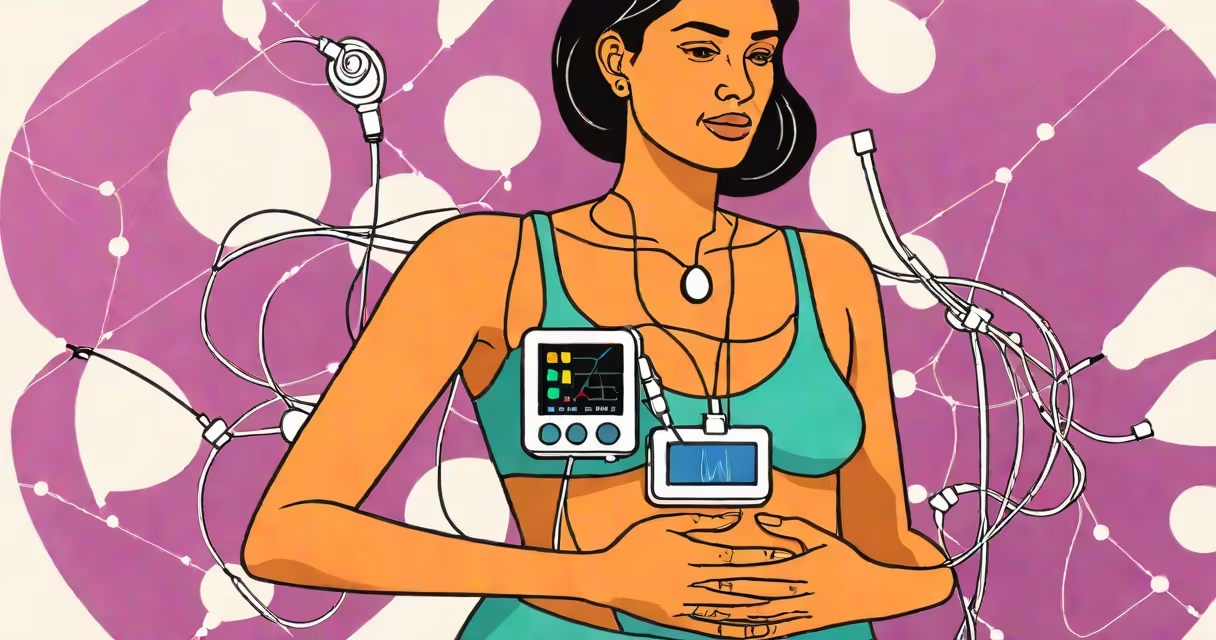
A holter monitor is a portable electrocardiogram (ECG) device worn for 24 to 48 hours to record continuous heart rhythm data, helping diagnose intermittent arrhythmias not visible on a standard ECG.
Unlike a single-lead ECG performed in a clinic, which captures heart activity for about 10 seconds, a holter monitor tracks every beat over a full day. This extended recording increases the chance of catching rare or sporadic heart rhythm disturbances such as skipped beats, pauses, or episodes of tachycardia.
The device consists of a small recorder, typically about the size of a deck of cards, connected via wires to 3 to 5 adhesive electrodes placed on the chest. The patient wears it during normal daily activities, including sleep, exercise, and stress, to capture real-world heart behavior.
The holter monitor uses electrodes to detect tiny electrical signals generated by the heart with each contraction. These signals are converted into waveforms displayed on a screen or stored digitally. The device samples heart rate and rhythm approximately every 0.5 seconds, producing a detailed timeline of cardiac activity.
Data is stored on a memory card or transmitted wirelessly to a central system. After the wear period, a cardiologist reviews the entire recording, often using specialized software to flag abnormal patterns. Some systems automatically detect atrial fibrillation, ventricular ectopy, or bradycardia, reducing manual review time.
Patients are usually asked to keep a diary during the monitoring period, noting symptoms like dizziness, palpitations, or chest pain alongside timestamps. When a symptom coincides with an abnormal rhythm on the recording, it confirms a clinical link.
There are two primary types of holter monitors: traditional and event-based. Traditional holter monitors record continuously throughout the wear period. Event monitors activate only when the patient presses a button during symptoms or when the device detects an abnormal rhythm.
| Type | Recording Duration | Best For | Example Use Case |
|---|---|---|---|
| Traditional Holter | 24-48 hours | Frequent or unpredictable symptoms | Capturing faint episodes of atrial fibrillation in a patient with occasional dizziness |
| Event Monitor | Up to 30 days | Infrequent symptoms | Tracking isolated palpitations occurring once a week |
Some newer models offer Bluetooth connectivity and smartphone apps that allow real-time transmission of data to a physician's dashboard. These are particularly useful for patients managing chronic conditions like long QT syndrome or those recovering from a heart attack.
According to the American Heart Association, holter monitoring improves diagnostic accuracy for arrhythmias by 30% compared to standard ECGs in symptomatic patients. A 2021 study published in JAMA Cardiology found that event monitors detected asymptomatic atrial fibrillation in 12% of patients who had previously received negative results on routine ECGs.
Many people assume a holter monitor diagnoses heart attacks. It does not. It detects rhythm abnormalities, not blockages or structural damage. A heart attack requires imaging tests like echocardiography or coronary angiography.
Another misconception is that the device causes discomfort. Most patients report mild skin irritation from electrodes, especially if they have sensitive skin. The device itself is lightweight and unobtrusive. I wore one during a weekend trip and barely noticed it until I checked my symptom log.
Some confuse holter monitors with wearable fitness trackers like smartwatches. While devices like the Apple Watch Series 8 can detect atrial fibrillation, they lack the clinical-grade accuracy required for diagnosis. A 2022 study in European Heart Journal - Digital Health showed that consumer wearables missed 22% of true arrhythmia events compared to a medical-grade holter monitor.
Consider a 62-year-old woman with episodic lightheadedness. Her clinic ECG was normal. She wore a 48-hour holter monitor while continuing her usual routine. During the recording, she noted feeling dizzy at 3:17 PM on Day 2. The monitor captured a 12-second episode of complete heart block followed by a return to sinus rhythm. This confirmed a diagnosis of intermittent third-degree AV block, leading to pacemaker implantation.
This case illustrates why continuous monitoring matters. A single ECG would have missed the issue entirely. The holter monitor linked symptom timing with a life-threatening rhythm disturbance.
Doctors prescribe holter monitors for patients experiencing unexplained dizziness, fainting spells, palpitations, or fatigue. They're also used post-heart surgery to assess recovery, or to evaluate medication side effects like proarrhythmic changes from certain antiarrhythmics.
Patients with known arrhythmias may wear them to adjust treatment. For example, someone on amiodarone therapy might wear a holter monitor monthly to check for drug-induced QT prolongation.
According to the National Institutes of Health, approximately 1.5 million holter monitors are used annually in the U.S., with most prescribed to adults over 50. Women are slightly more likely to receive them due to higher rates of paroxysmal atrial fibrillation in older age groups.
After the recording is reviewed, the doctor discusses findings and recommends treatment. Options range from lifestyle changes and medications to procedures like ablation or implantable defibrillators.
If the results are inconclusive, a longer-term monitor such as a loop recorder may be implanted under the skin for months of continuous surveillance. These are used in cases of unexplained syncope where standard testing fails.
For patients managing heart health, understanding what a holter monitor is-and what it isn't-is essential. It's not a test for blocked arteries. It doesn't replace an echocardiogram. But it's a critical tool for diagnosing rhythm problems that could lead to stroke or sudden cardiac death.