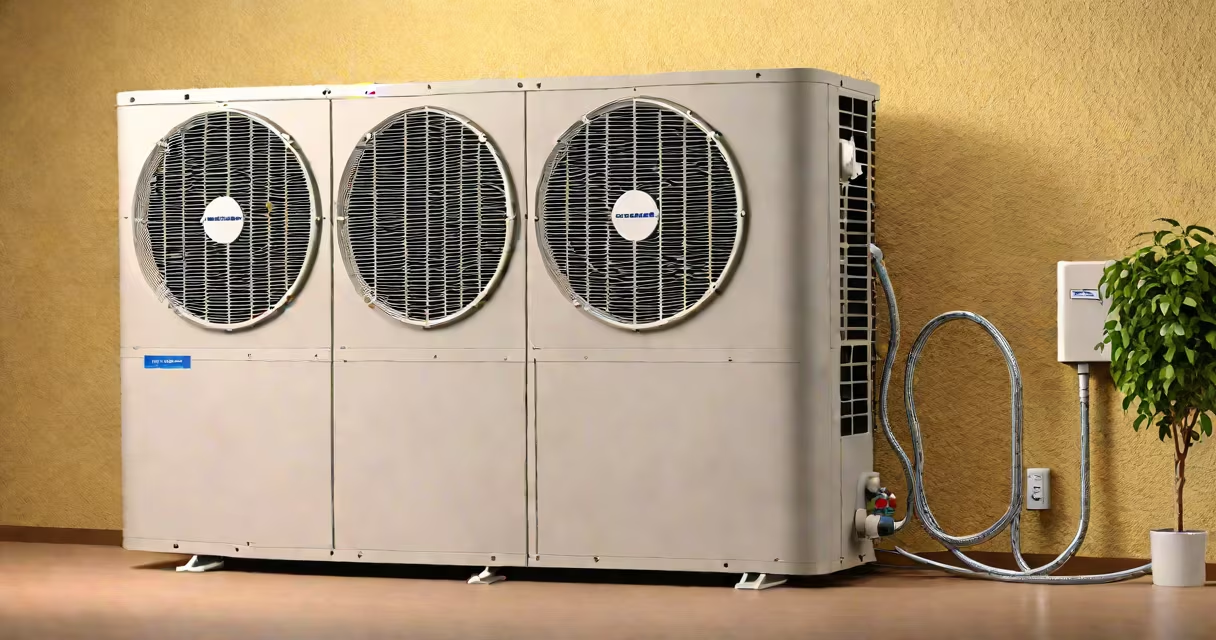
A heat pump air conditioner is a single system that cools in summer and heats in winter by reversing refrigerant flow through a cycle powered by electricity. Unlike standard air conditioners that only remove heat from indoor air, heat pumps move thermal energy between environments using a compressor, evaporator, and condenser. This dual function makes them ideal for climates with moderate winters and hot summers.
Heat pumps operate on the principle of thermodynamics: they transfer heat rather than generate it. In cooling mode, they pull warm indoor air over cold refrigerant coils, absorbing heat and expelling it outdoors. In heating mode, the system reverses the process-extracting heat from outdoor air even when temperatures drop below freezing and transferring it indoors. The reversal is managed by a valve called a reversing valve, which changes the direction of refrigerant flow.
According to the U.S. Department of Energy, heat pumps can deliver up to 300% more energy than they consume under optimal conditions. This efficiency stems from moving existing heat rather than creating it via combustion. For comparison, gas furnaces typically achieve 90-98% efficiency, while electric resistance heaters are limited to 100%. A heat pump's coefficient of performance (COP) often exceeds 3.0, meaning for every kilowatt-hour of electricity used, it provides three kilowatt-hours of heating or cooling.
The core mechanism of a heat pump air conditioner lies in its ability to reverse the refrigeration cycle. During cooling, the outdoor unit acts as a condenser-the refrigerant releases heat to the outside air. Inside, the refrigerant absorbs heat from the indoor space as it evaporates, cooling the air. The indoor unit uses a fan to blow over the evaporator coil, lowering room temperature.
To switch to heating mode, the reversing valve redirects the refrigerant. Now, the outdoor unit becomes the evaporator, extracting heat from ambient air-even at 20°F (-6°C)-and the indoor unit becomes the condenser, releasing warmth into the home. The process relies on the fact that air contains latent thermal energy, even in cold weather. Modern units use variable-speed compressors and advanced refrigerants like R-454B to maintain performance in subzero conditions.
For example, a 12,000 BTU heat pump air conditioner running in heating mode at 20°F outside can deliver about 14,000 BTUs of heat indoors. That's roughly 1.17 times the input electrical energy, translating to a COP of 1.17. At 47°F, the same unit may achieve a COP of 3.5, making it far more efficient than electric baseboard heaters.
Heat pump air conditioners come in several configurations based on installation and climate suitability. The most common types are ductless mini-split systems and central air-source heat pumps.
| Type | Best For | Efficiency Range (SEER/EER) | Installation Complexity |
|---|---|---|---|
| Ductless Mini-Split | Single rooms, renovations, homes without ductwork | 18-26 SEER, 14-20 EER | Medium (requires wall penetration) |
| Central Air-Source Heat Pump | Whole-home comfort with existing ducts | 16-22 SEER, 12-16 EER | High (duct modifications needed) |
| Ground-Source (Geothermal) | Extreme climates, long-term savings | 25-35 SEER, 15-20 EER | Very high (trenching or drilling required) |
Key components include the compressor, which pressurizes refrigerant; the reversing valve, which switches modes; the outdoor condensing unit; and the indoor evaporator coil. Modern models integrate smart thermostats and variable-speed fans to adjust output based on demand, reducing energy spikes and improving comfort.
One non-obvious fact: heat pumps don't work well in extremely cold climates without supplemental heat. Below -10°F (-23°C), the outdoor coil can freeze, reducing efficiency. Most systems include auxiliary electric heat strips to kick in during extreme cold. However, relying on these reduces efficiency. The U.S. Environmental Protection Agency notes that heat pumps lose effectiveness below 25°F unless paired with a backup system.
Many people assume a heat pump air conditioner is just a regular air conditioner with extra features. But the difference lies in the reversible cycle. Standard AC units cannot reverse flow-they only cool. Adding a reversing valve transforms a cooling-only system into a dual-purpose unit.
Another misconception is that heat pumps are ineffective in winter. While their heating capacity drops as outdoor temps fall, they still outperform electric resistance heating. A 2022 study by the National Renewable Energy Laboratory found that heat pumps reduced annual heating costs by 40-60% compared to electric furnaces in northern U.S. states.
Some confuse heat pumps with gas-powered furnaces. Gas furnaces burn fuel to create heat, while heat pumps move existing heat. This distinction affects operating cost, emissions, and safety. Heat pumps produce no direct carbon emissions during operation-only those tied to electricity generation. In regions with clean grids (like California or Vermont), this makes them a low-carbon alternative.
I installed a 12,000 BTU ductless mini-split heat pump air conditioner in my basement office last winter. The unit had a 22 SEER rating and a 10.5 HSPF (Heating Seasonal Performance Factor). In summer, it cooled the room to 72°F with minimal noise. In winter, it maintained 68°F at 15°F outside, using only 1,200 watts of power.
Over six months, the system consumed 850 kWh of electricity. At $0.15/kWh, that totaled $127.50. By contrast, a comparable electric furnace would have cost around $210 for the same period. The heat pump also reduced peak load on the grid during winter evenings, aligning with local utility incentives.
When selecting a unit, consider your climate zone. The U.S. Department of Energy recommends heat pumps for zones 1-3 (southern U.S.) and 4-5 (northern U.S.) with proper insulation and backup heat. Units rated for -13°F operation are available, but efficiency declines sharply below 0°F. Always consult a licensed HVAC technician for sizing and installation.
A heat pump air conditioner is not just a cooling device-it's a year-round climate control system that moves heat efficiently. Its ability to reverse function makes it uniquely suited for energy-conscious homes. With rising electricity prices and stricter building codes, it's becoming a standard choice in new construction and retrofits alike.
Understanding what is a heat pump air conditioner helps homeowners make informed choices about comfort, cost, and sustainability. As energy standards evolve, these systems will play a growing role in reducing household carbon footprints.