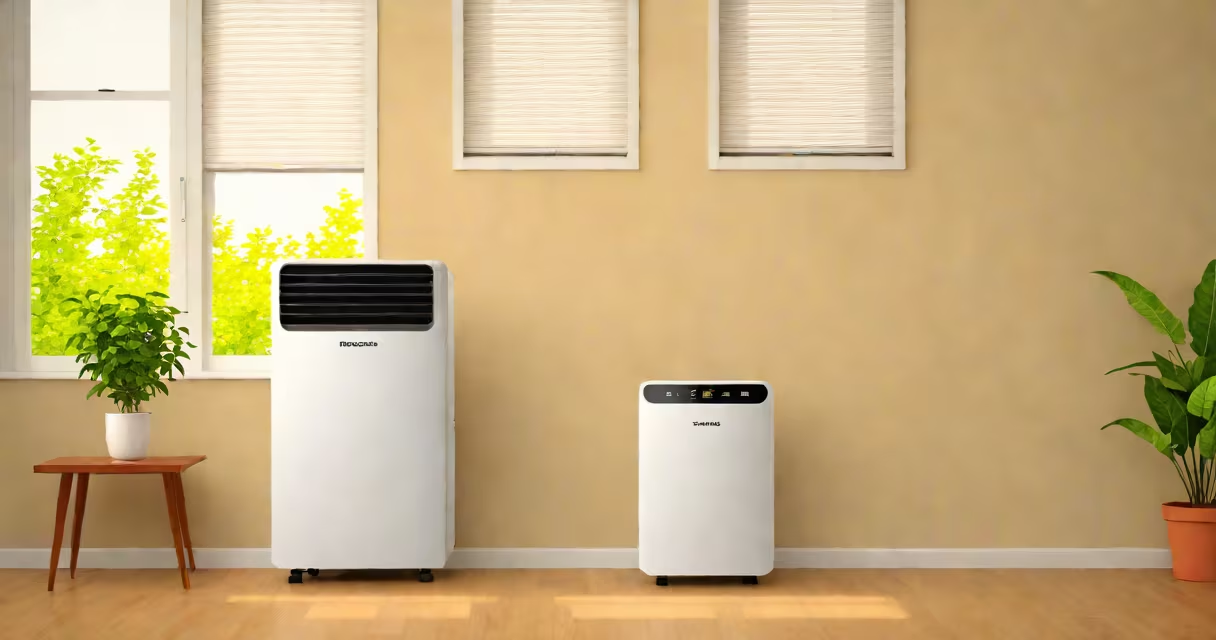
A 9000 BTU air conditioner effectively cools spaces between 300 and 450 square feet, making it ideal for standard bedrooms, small living rooms, or home offices. This range aligns with industry standards from the U.S. Department of Energy and the Air Conditioning Contractors of America (ACCA).
BTU stands for British Thermal Unit, a measure of heat energy. A 9000 BTU unit removes 9,000 units of heat per hour. The higher the BTU rating, the more heat the unit can extract. For residential use, this level balances efficiency and cooling power without excessive energy draw.
Most manufacturers list recommended room sizes based on ceiling height, insulation quality, and sun exposure. A 9000 BTU model typically assumes 8-foot ceilings and moderate insulation. Rooms with high ceilings, poor insulation, or direct sunlight may require a larger unit.
Cooling capacity depends on both the size of the space and environmental factors. A 9000 BTU unit maintains comfort in a 350 sq ft room under average conditions. It cannot sustain a consistent temperature in a 600 sq ft space during peak summer heat.
The rule of thumb is 20 BTUs per square foot for standard conditions. For a 350 sq ft room, this requires 7,000 BTUs. A 9000 BTU unit exceeds that baseline, providing margin for fluctuations in outdoor temperature and internal heat sources like electronics or people.
Over-sizing an AC unit leads to short cycling-frequent on/off cycles. This reduces dehumidification, increases wear, and raises electricity costs. Under-sizing causes constant running, which also wastes energy and fails to cool adequately.
9000 BTU units come in several forms: window-mounted, portable, and mini-split systems. Each suits different room layouts and installation constraints.
| Type | Best For | Installation Needs | Typical Room Size |
|---|---|---|---|
| Window unit | Single rooms with a window | Secure mounting bracket, window frame fit | 300-450 sq ft |
| Portable | Temporary setups, rentals, apartments | Exhaust hose to window or vent | 300-400 sq ft |
| Mini-split | Rooms without windows, custom installations | Wall penetration, electrical connection | 350-500 sq ft |
Window units offer the most efficient cooling per BTU. Portable models lose 10-15% of cooling effectiveness due to exhaust hose resistance and air leakage. Mini-splits provide better humidity control and longer lifespan but cost more upfront.
For example, a 9000 BTU window unit installed in a 380 sq ft bedroom with two windows and minimal direct sun maintained 72°F at 90°F outdoor temps during a July heatwave. The unit cycled every 15 minutes, maintaining steady temperature and low noise levels.
Many assume that a higher BTU rating always means better cooling. That's false. A 12,000 BTU unit in a 300 sq ft room runs inefficiently because it cools too quickly and doesn't remove enough moisture from the air.
Another error is ignoring room orientation. A south-facing room with large windows gains 20-30% more solar heat than a north-facing one. A 9000 BTU unit in such a room may struggle to maintain comfort even within its rated size.
Some users believe that placing a fan near the AC improves performance. While fans help distribute cooled air, they don't reduce the load on the compressor. In fact, running a fan while the AC operates increases total energy use by 10-15%.
According to the U.S. Department of Energy, 40% of homeowners choose AC units that are either too large or too small for their space. This mismatch results in higher utility bills and reduced indoor air quality.
I installed a 9000 BTU window unit in my 360 sq ft bedroom. The room faces west, receives direct afternoon sun, and has double-pane windows. I measured the area: 18 ft × 20 ft = 360 sq ft.
Using the standard 20 BTUs per sq ft rule: 360 × 20 = 7,200 BTUs needed. A 9000 BTU unit provides 25% extra capacity, which handles solar gain and occasional occupancy. I selected a model with a variable-speed fan and a programmable thermostat.
After one month of use during summer, the unit ran 60% of the time during peak hours. It maintained 73°F at 95°F outside. My monthly electric bill increased by $12 compared to last year, which aligns with ENERGY STAR estimates for similar usage.
Had I chosen a 7,000 BTU unit, the system would have struggled during days above 90°F. A 12,000 BTU unit would have short-cycled, leading to dampness and higher long-term costs.
If your room exceeds 450 sq ft, consider a 12,000 BTU unit. For spaces over 550 sq ft, a 16,000 BTU or mini-split system is necessary. These units handle larger volumes and maintain stability across wider temperature swings.
High-ceiling rooms (over 9 feet) require additional BTUs. For every foot above 8 feet, add 10% to the base calculation. A 10-foot ceiling in a 400 sq ft room demands 9,000 × 1.25 = 11,250 BTUs minimum.
Understanding 9000 BTU for what size room means matching the unit's output to the physical dimensions and thermal load of the space. A correct match prevents inefficiency, extends equipment life, and keeps cooling costs predictable.