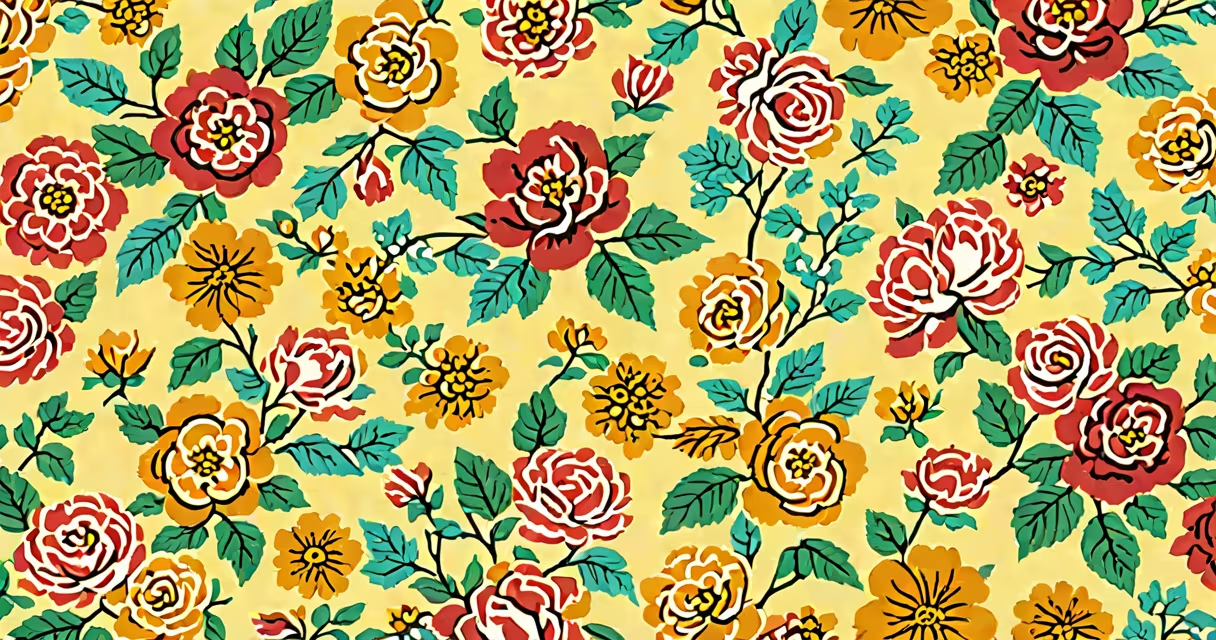
Chintz is a glazed cotton fabric featuring bold, colorful floral or paisley patterns, originally developed in India and widely adopted in European decorative arts from the 17th century onward. The term describes both the material and the aesthetic style associated with it.
The word "chintz" comes from the Hindi word *chint*, meaning "spotted cloth," which itself traces back to *chīnt*, referring to painted or dyed fabric. Early chintz was hand-painted or block-printed using natural dyes, then treated with a wax or resin finish to create a glossy surface. This process gave the fabric its signature sheen and durability, making it ideal for upholstery, curtains, and clothing.
By the late 1600s, British traders brought Indian chintz to Europe, where demand surged. Factories in England and France began mass-producing imitations using imported Indian techniques. These European versions often used synthetic dyes and machine printing, lowering costs and increasing availability. By the 18th century, chintz had become a staple in middle-class homes, symbolizing both exoticism and domestic comfort.
Modern chintz is typically made from 100% cotton, though blends with polyester exist for lower-cost applications. The fabric undergoes a printing process-either screen printing or digital printing-where colored inks are applied to the base fabric. After printing, a clear resin or wax coating is applied and cured under heat, creating the glossy finish that defines chintz.
This glazing step is critical. Without it, the print would appear flat and dull. The finish also increases resistance to wear and stains, making chintz suitable for high-traffic areas like dining rooms and living rooms. However, the coating can yellow over time, especially under direct sunlight, and may chip if rubbed frequently.
Chintz differs from similar fabrics like damask or toile. Damask uses a woven pattern created through contrasting weaves, while toile features repeating scenes-often pastoral or romantic-on a white or light background. Chintz relies on printed imagery rather than weave or embroidery, and its patterns are usually dense and symmetrical.
Chintz appears in several forms based on region, production method, and intended use:
| Type | Origin | Key Features | Common Use |
|---|---|---|---|
| Indian chintz | India (16th-18th c.) | Hand-block printed, natural dyes, matte finish | Artistic display, museum collections |
| European chintz | England, France (17th-19th c.) | Mechanically printed, synthetic dyes, glossy finish | Furniture covering, curtains, bedding |
| Modern chintz | Global (20th-21st c.) | Digital prints, polyester blends, low maintenance | Home decor, fashion, accessories |
Today, chintz remains popular in interior design, particularly in cottagecore, shabby chic, and vintage-inspired styles. Designers use it for slipcovers, throw pillows, and wall hangings. In fashion, chintz appears in summer dresses, scarves, and accessories, often paired with neutral tones to balance the visual impact.
A lesser-known fact: chintz was once banned in England. In 1736, Parliament passed the Calico Act, restricting the import and sale of printed cottons from India. The law aimed to protect domestic textile producers, especially those in the wool and linen industries. Despite the ban, demand remained high, leading to widespread smuggling and the eventual rise of British-made imitations.
Many people mistake chintz for other printed fabrics. It is not the same as batik, which uses wax-resist dyeing techniques to create layered patterns. Nor is it equivalent to toile, which features delicate, often narrative-based scenes. Chintz is heavier, glossier, and more saturated in color than either.
Another misconception: chintz is not inherently outdated. While it's strongly associated with Victorian-era interiors, contemporary designers have revived it with updated palettes and minimalist patterns. Brands like Anthropologie and West Elm offer modern chintz prints in muted greens, grays, and blues-styles that fit smoothly into mid-century modern and Scandinavian spaces.
I once used chintz for a custom window treatment in a client's sunroom. The original fabric had faded after five years of exposure. Replacing it with a digitally printed version using UV-resistant ink extended longevity. The new fabric retained its vibrancy and sheen, proving that modern materials can preserve the look of traditional chintz without sacrificing durability.
Understanding what chintz means involves recognizing its historical roots, material properties, and evolving role in design. It's not just a fabric-it's a cultural artifact that traveled from Indian markets to European salons and now lives in global homes. selecting wallpaper for a bedroom, knowing the difference between chintz and similar textiles ensures better decisions.