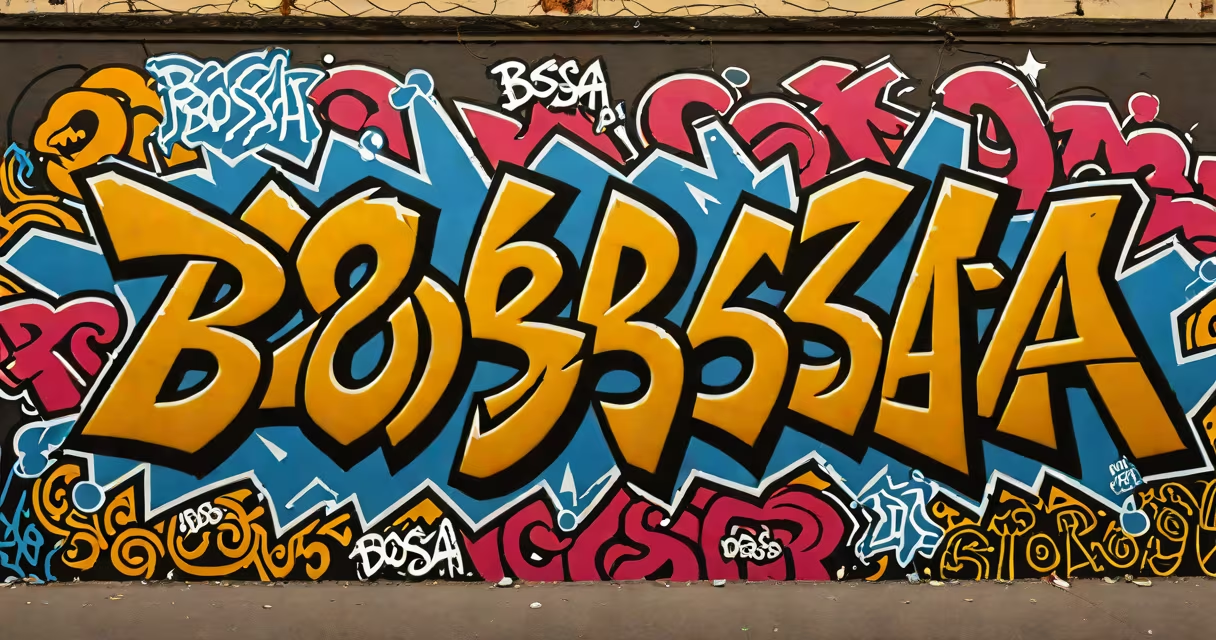
Bosa is a Mexican slang term used informally to describe something or someone as cool, relaxed, or laid-back. It originated in urban youth culture and is common in spoken Spanish across Mexico, particularly in cities like Mexico City and Guadalajara.
The word functions as an adjective or interjection. When used to describe a person, it suggests calmness and ease. When describing an atmosphere or situation, it implies comfort and low pressure. It is not formal, not found in dictionaries, and never used in official documents or academic writing.
For example, saying "Esa fiesta fue bosa" means "That party was chill." Or, "¿Qué tal tu día?" "Muy bosa" translates to "How was your day?" "Very chill."
Bosa operates as a descriptor of mood or attitude rather than a direct evaluation of quality. It doesn't mean "good" in the sense of high performance or excellence. Instead, it signals emotional ease and social comfort.
It often appears in responses to questions about daily life. A teenager might reply "Estoy bosa" after school to mean they're feeling relaxed, not tired or stressed. The tone is typically neutral or positive, depending on context.
It's not interchangeable with similar terms like "guay" (Spanish for "cool" in Spain) or "chido" (Mexican slang for "awesome"). While all three convey approval, "bosa" focuses on tranquility, not excitement or intensity.
Bosa is primarily used in central and western Mexico. It's absent in most Andean Spanish dialects and not recognized in formal Spanish education materials. Its roots lie in street language, particularly among younger people in working-class neighborhoods.
It appears frequently in music lyrics, especially in regional Mexican genres like corridos and urbano. In a 2023 track by Mexican artist Peso Pluma, he sings "Vamos pa'l barrio, todo bosa," meaning "Let's go to the neighborhood, everything's chill."
Outside Mexico, the term is rarely understood. In Colombia or Argentina, saying "bosa" would likely confuse listeners. It's not part of pan-Latin American slang, unlike "chido" or "wey."
| Term | Meaning | Region | Usage Level |
|---|---|---|---|
| bosa | cool, relaxed, laid-back | Mexico (central/western) | Informal, youth speech |
| chido | awesome, excellent | Mexico, parts of Central America | Informal, widely used |
| guay | cool, great | Spain, some Latin American countries | Informal, regional |
Bosa is sometimes misheard as "boca" (mouth) or "balsa" (a type of raft). This leads to confusion in spoken contexts. For example, someone might misunderstand "¿Te parece bosa?" as "Do you think it's a mouth?" instead of "Do you find it chill?"
Another misconception is that bosa means "bad" or "low quality." This stems from mixing it with negative slang like "malo" or "chafa." But bosa is emotionally neutral-it describes state, not value judgment.
A key distinction: bosa is not a noun. You cannot say "un bosa" to refer to a person. It's always an adjective or adverb. Saying "Él es un bosa" is incorrect. The correct form is "Él está bosa" or "Es bien bosa."
In a 2022 interview with a group of students from a public high school in Monterrey, one student described their weekend: "Fue bosa. No hicimos nada de presión. Solo escuchamos música y vimos series." Translation: "It was chill. We didn't do anything stressful. Just listened to music and watched shows."
This illustrates how bosa functions as a mood indicator. It's not about activity level-it's about mental state. The speaker isn't saying the weekend was boring. They're emphasizing lack of stress and enjoyment through ease.
When used in music, bosa often appears in lines about late-night walks, quiet moments, or emotional recovery. In a 2023 song by Grupo Frontera, the lyric "La vida es bosa cuando no hay miedo" translates to "Life is bosa when there's no fear." Here, it evokes peace and emotional safety.
I heard the word used during a trip to Mexico City in 2022. While waiting for a bus at a terminal, a young man in a hoodie told his friend, "Tío, esta espera es bosa." He wasn't complaining-he was acknowledging the calm of the moment. His tone was relaxed, almost amused. The word fit the environment perfectly.
This moment confirmed that bosa isn't just a linguistic oddity. It's a cultural marker of emotional regulation in informal settings. It reflects how young Mexicans label experiences not by achievement, but by inner peace.
For contrast, consider "aver," which in Spanish slang means "to be" or "to exist" in a very casual way. "¿Qué tal? Aver bien" means "How's it going? Pretty good." Unlike bosa, aver is existential, not descriptive of mood.
If you're learning Mexican Spanish, focus on context. Words like bosa appear in conversations, songs, and social media-not in grammar books. To hear them used correctly, watch videos from Mexican creators on platforms like YouTube or TikTok.
"What does bosa mean in Spanish" is not a question with a single dictionary answer. It's a living term rooted in lived experience. It's not about correctness-it's about belonging. When someone says "bosa," they're not describing a thing. They're sharing a feeling.