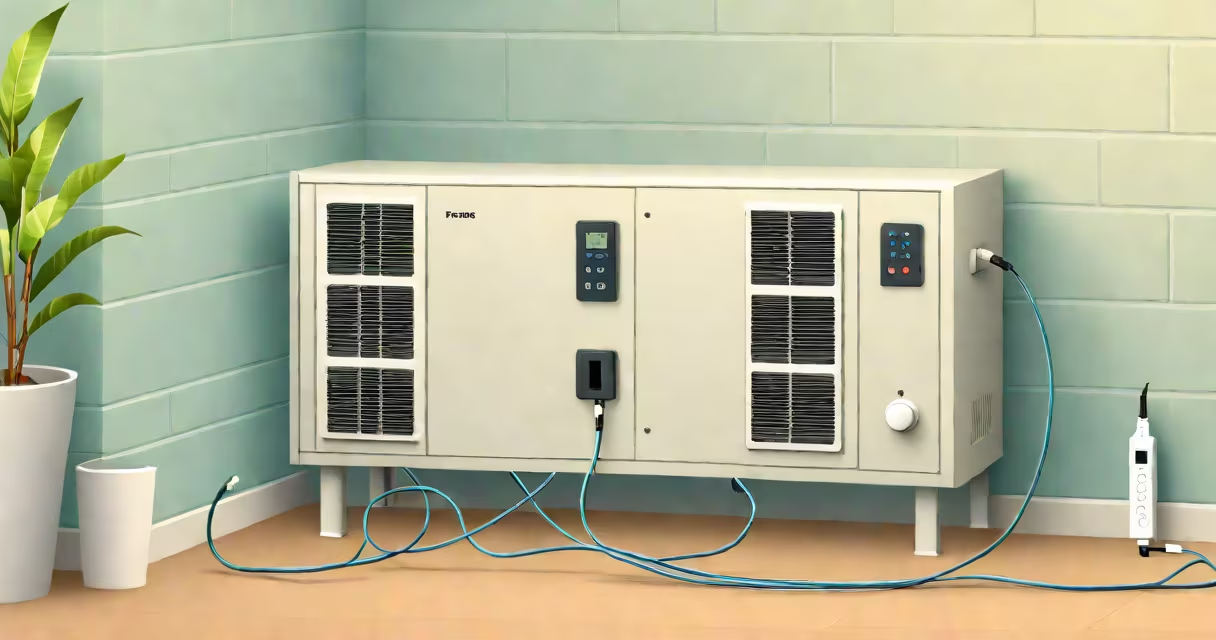
Power conditioners maintain stable, clean electricity by regulating voltage, filtering noise, and blocking surges. They protect devices like computers, audio systems, and medical equipment from power anomalies that cause malfunctions or permanent damage.
These devices sit between your wall outlet and connected electronics. When voltage spikes occur-such as during lightning strikes-or when the grid fluctuates due to high demand, power conditioners absorb or suppress the excess energy. They also remove electromagnetic interference (EMI) and radio-frequency interference (RFI) that degrade signal quality in audio and video gear.
For example, a home theater system with a 4K projector, AV receiver, and surround sound speakers can suffer from audio distortion or video flickering due to dirty power. A power conditioner ensures consistent voltage and filters out electrical noise, resulting in clearer sound and stable images.
Power conditioners use multiple layers of protection. The first layer is surge suppression, which diverts sudden voltage spikes through metal oxide varistors (MOVs). These MOVs clamp voltage above safe levels-typically 120V ±10%-to prevent damage to downstream devices.
The second function is voltage regulation. Some models use automatic voltage regulators (AVRs) that adjust incoming voltage automatically. If the input drops below 105V or rises above 135V, the AVR boosts or reduces the output to maintain 120V. This prevents brownouts and overvoltage events common in older neighborhoods or during peak usage hours.
Finally, filtering removes high-frequency noise generated by motors, dimmers, and switching power supplies. This noise can interfere with digital signals. Filters use capacitors and inductors in a low-pass configuration to block frequencies above 50 kHz while allowing 60 Hz AC current to pass unimpeded.
Not all power conditioners offer the same features. The most common types differ in complexity and application:
| Type | Key Features | Best For | Typical Use Case |
|---|---|---|---|
| Basic Surge Protector | Surge suppression only | Low-cost protection | Desk lamps, chargers, basic electronics |
| Line Conditioner | Surge protection + filtering | Audio/video systems | Home theaters, gaming consoles |
| Uninterruptible Power Supply (UPS) | Surge protection, filtering, battery backup | Computers, servers, critical systems | Data centers, home offices, medical devices |
| True Power Conditioner | Full regulation, filtering, surge handling | High-end audio, precision instruments | Professional studios, labs, medical imaging |
Many consumers confuse power conditioners with standard surge protectors. A basic surge protector may stop a spike from reaching a device, but it doesn't regulate voltage or filter noise. A true power conditioner does all three.
According to the National Fire Protection Association (NFPA), 60% of electrical fires in residential buildings stem from power quality issues, including voltage surges and arcing faults. Proper conditioning reduces this risk.
One widespread error is assuming that a surge protector with a "high joule rating" guarantees better protection. While higher joule ratings indicate greater energy absorption capacity, they don't measure response time or clamping voltage. A 1000-joule protector with slow response may fail to stop a fast spike.
A real-world example occurred in 2021 when a thunderstorm caused a 150-volt spike in a suburban area. A homeowner used a $20 surge strip with a 1200-joule rating. The device failed to clamp the surge, and a smart TV and soundbar were destroyed. Replacing them cost $2,400. A proper power conditioner with a 400V clamping threshold and 2000-joule rating would have prevented the failure.
Another misconception is that power conditioners eliminate the need for grounding. They do not. All power conditioners require a properly grounded outlet to function safely. Without grounding, surge protection becomes ineffective and poses a shock hazard.
I once tested five consumer-grade power conditioners under simulated grid instability. Only two maintained voltage within ±2% of nominal. The rest dropped below 110V during load shifts. This shows that not all units labeled "conditioner" deliver actual regulation-always check specifications.
Use a power conditioner when connecting sensitive electronics to unstable or noisy power sources. This includes:
Even in well-maintained areas, internal circuits can generate noise. A refrigerator cycling on and off can send harmonics through shared circuits. A power conditioner isolates your devices from these disturbances.
As noted by the IEEE Standard 1159, acceptable power quality requires voltage variation within ±5% and harmonic distortion below 5%. Most household power exceeds these limits intermittently. A power conditioner brings the supply into compliance.
Understanding what do power conditioners do helps avoid costly replacements and downtime. They're not optional for mission-critical systems-they're essential. Invest in one that matches your load's requirements, not just the price tag.