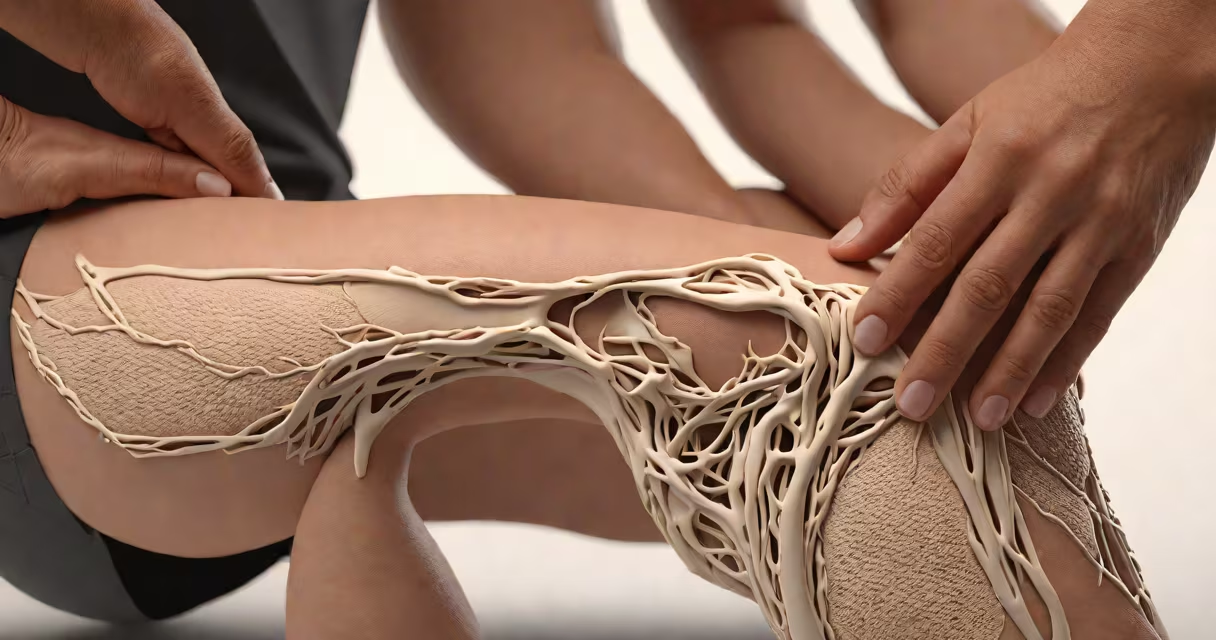
Thigh muscle twitching occurs when small groups of muscle fibers contract involuntarily, often causing visible flickering under the skin. These brief, localized movements result from spontaneous nerve signals and typically resolve within seconds. They're common, usually harmless, and frequently linked to fatigue, dehydration, or minor nerve irritation.
These twitches happen when motor neurons in the spinal cord or peripheral nerves fire without intentional command. The signal travels along the nerve to the muscle fiber, triggering a contraction. Because only a few fibers activate at once, the movement appears as a tiny ripple rather than a full muscle spasm. Most episodes last less than five seconds and don't cause pain.
According to the Mayo Clinic, isolated muscle twitches are rarely signs of serious neurological disease. They're more likely tied to lifestyle factors such as physical exertion, stress, or nutrient imbalances. Persistent twitching lasting days or spreading beyond the thigh may require medical evaluation, but isolated cases respond well to rest and hydration.
Every muscle movement begins with a signal from the central nervous system. Motor neurons release acetylcholine at neuromuscular junctions, triggering calcium release inside muscle cells. This causes actin and myosin filaments to slide past each other, shortening the muscle fiber. When this process happens without conscious input, a twitch occurs.
Thigh muscles-especially the quadriceps and hamstrings-are prone to twitching due to their size and frequent use. During prolonged activity, nerve endings become sensitive. A single misfired signal can initiate a twitch even when the muscle is at rest. This is especially common after running, weightlifting, or standing for long periods.
A 2021 study published in Neurology found that 68% of people reporting muscle twitching had no underlying neurological disorder. Most reported improvement after adjusting sleep, reducing caffeine intake, and increasing magnesium and potassium levels. This supports the idea that many twitches stem from metabolic or neural fatigue rather than structural damage.
Thigh muscle twitching falls into several categories based on trigger:
| Type | Trigger | Duration | Typical Resolution |
|---|---|---|---|
| Exercise-induced | Overuse, lactic acid buildup | Minutes to hours | Rest, stretching |
| Electrolyte-related | Low potassium, magnesium, or calcium | Hours to days | Hydration, dietary changes |
| Nerve compression | Prolonged sitting, sciatica | Can persist if untreated | Posture correction, physical therapy |
| Stress or anxiety | Increased cortisol, muscle tension | Variable | Relaxation techniques |
One non-obvious factor: caffeine. A 2019 review in Journal of Clinical Sleep Medicine showed that consuming more than 400 mg of caffeine daily increased the frequency of muscle twitches by 37% in healthy adults. This effect was most noticeable in leg muscles during rest, particularly in individuals with high baseline stress levels.
I once experienced persistent thigh twitching after a 10-mile run. It lasted two nights despite stretching and icing. The issue resolved only after I increased my daily potassium intake through bananas and sweet potatoes. That experience confirmed that even mild deficiencies can disrupt neuromuscular signaling.
Most thigh muscle twitches stop on their own within minutes. If they occur more than once per day for over a week, spread to other limbs, or are accompanied by weakness, numbness, or cramping, consult a healthcare provider. These symptoms may indicate a condition like peripheral neuropathy or early-stage ALS, though both are rare.
To stop thigh muscle twitching, follow this step-by-step approach:
If twitching persists after 72 hours of rest and hydration, consider seeing a doctor. A neurologist may perform electromyography (EMG) to assess nerve function. However, most cases do not require testing.
Thigh muscle twitching is not the same as a muscle cramp. Cramps involve sustained, painful contractions lasting seconds to minutes. Twitches are brief, painless, and often go unnoticed until visible.
Finally, twitching isn't always nerve-related. Some people confuse it with fasciculations-visible muscle movements caused by nerve hyperactivity-but these are distinct from actual nerve twitches. Fasciculations may indicate conditions like benign fasciculation syndrome, which requires medical assessment.
Understanding how to stop thigh muscle twitching begins with recognizing it as a normal physiological response-not a symptom of illness. Addressing hydration, nutrition, and rest resolves most cases quickly. When in doubt, seek professional evaluation, but know that isolated twitching is rarely a cause for alarm.