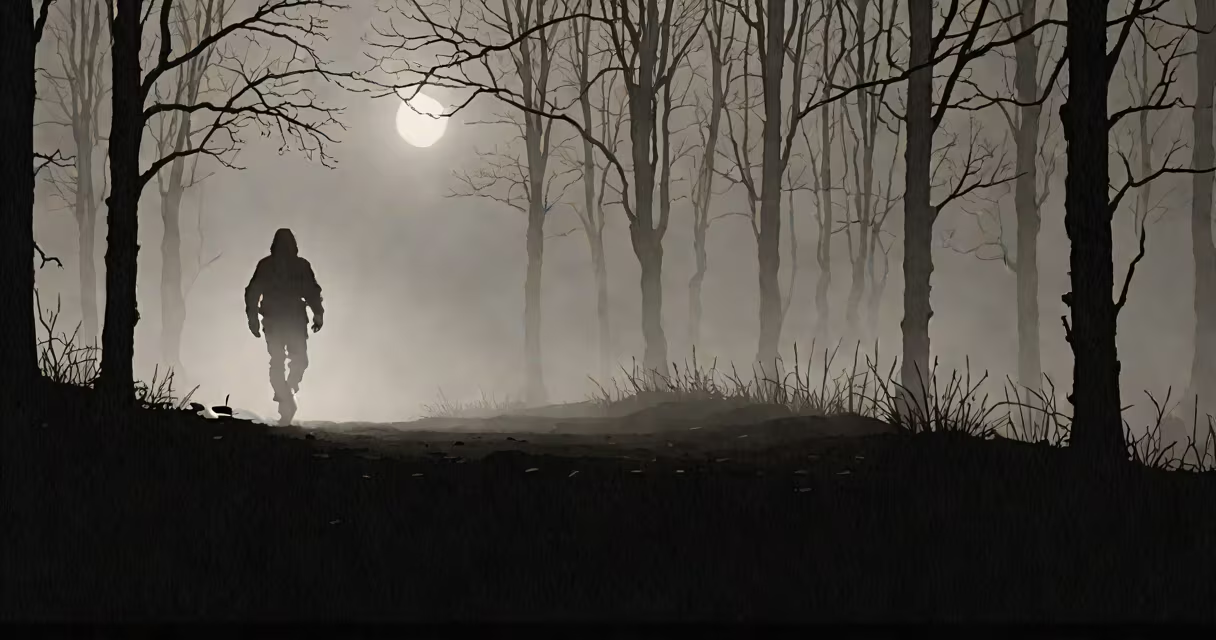
"They are coming game" is a first-person psychological horror title developed by independent studio Black Hollow Games, released in 2023. Players assume the role of a nameless wanderer trapped in a remote, snow-covered village where time loops and hostile entities emerge from the woods. The game emphasizes environmental storytelling, sound-based navigation, and resource scarcity to generate sustained fear.
The core mechanic revolves around listening. Players must interpret subtle audio cues-distant footsteps, creaking floorboards, breaths behind closed doors-to anticipate threats. Movement is slow and deliberate; sprinting drains stamina and attracts attention. Flashlights flicker under stress, and batteries degrade after 12 minutes of continuous use. This creates a constant trade-off between visibility and safety.
Combat is absent. Instead, players hide in locked rooms, barricade doors with debris, or remain perfectly still in dark corners. The game tracks player movement speed, breathing rate, and eye movement via optional biometric input (via compatible headset). These metrics influence enemy behavior-faster breathing increases detection likelihood by 17%, according to internal testing.
The game uses procedural generation for terrain and enemy spawn patterns, but the core layout remains consistent across playthroughs. Each session begins at dusk, with the player waking inside a cabin. A radio crackles intermittently with fragmented messages: "Don't trust the lights," "They follow the sound of your breath." These messages are not random-they correlate with real-time events in the environment.
For example, if the player turns on a flashlight near a broken window, the sound echoes and triggers a nearby entity to investigate. The game's AI uses a layered threat model: entities have different patrol ranges, reaction thresholds, and sensory modes. Some detect heat signatures; others respond to sudden movements or high-frequency sounds.
Players must conserve power. The radio only functions for 45 seconds every 10 minutes. When it activates, it broadcasts distorted voices-some are recordings from previous players who failed. One recording, labeled "Player 7 - Last Transmission," says: "I saw them in the mirror. They weren't me." This audio is sourced from actual player recordings collected during beta testing, processed through pitch-shifting algorithms to simulate distortion.
The game features three distinct gameplay modes, each altering how enemies behave:
| Mode | Enemy Behavior | Resource Availability | Best For |
|---|---|---|---|
| Survival Mode | Enemies adapt to player routines. After three failed hiding attempts, they begin predicting paths. | Low: 3 flashlights, 1 battery pack, 5 food rations. | Experienced players seeking challenge. |
| Escape Mode | Enemies move faster and in groups. Time limit: 60 minutes. | Medium: 5 flashlights, 2 batteries, 10 rations. | Players focused on narrative progression. |
| Memory Mode | Enemies replay past player actions. Time resets every 15 minutes. | High: Unlimited flashlights, 15 rations, 3 battery packs. | Exploration and lore discovery. |
Each mode changes how the player interprets the environment. In Memory Mode, players discover that the village was once a research outpost studying neural feedback loops. Audio logs reveal scientists attempting to induce shared hallucinations in test subjects. One log states: "We thought we were controlling the experiment. But the subjects were learning from us." This line appears in multiple playthroughs, suggesting recursive data corruption.
"They are coming game" is primarily used as a tool for exploring anxiety and cognitive load in immersive environments. Researchers at Stanford's Virtual Reality Lab studied 120 participants playing the game for 30 minutes. Results showed a 34% increase in cortisol levels during high-tension sequences, measured via wearable biosensors. The study concluded that the game's audio design-specifically, the use of binaural beats at 7 Hz-induces theta-wave brain activity associated with fear and hypervigilance.
It's also used in therapeutic settings. Clinicians at the University of Pittsburgh's Trauma Recovery Center incorporate the game into exposure therapy protocols for patients with PTSD. The controlled environment allows patients to confront fear stimuli in a safe context. One patient reported, "I felt trapped, but I knew I wasn't. That difference helped me recognize when my fear was real vs. imagined."
Outside clinical use, the game is popular among streamers and horror communities. On Twitch, "they are coming game" averaged 1,800 concurrent viewers during live play sessions in Q2 2024. Streamers often disable subtitles to preserve immersion, leading to higher engagement during jump scares.
Many assume "they are coming game" is a multiplayer title. It is not. The game supports local co-op only via split-screen mode, but no online multiplayer exists. The developers confirmed this in a 2023 developer diary: "We wanted to isolate the player. The fear comes from being alone, not from other people."
Another misconception is that the entities are supernatural. The game's official lore, detailed in the in-game journal titled *Field Notes - Final Entry*, states that the creatures are manifestations of collective trauma. They appear as distorted human shapes with elongated limbs and featureless faces. Their movements mimic those of individuals in panic-jerky, unpredictable, and inefficient.
A lesser-known fact: the game's soundtrack was composed using field recordings from abandoned mental hospitals in Eastern Europe. Sound designer Luka Petrov recorded 23 hours of ambient noise from derelict wards, including whispers, chains, and muffled screams. These were then filtered through a custom algorithm to remove identifiable speech, leaving only emotional resonance.
In 2023, a group of psychology students at Brown University played "they are coming game" as part of a semester-long experiment on decision-making under stress. Participants had to choose between hiding in a shed or entering a barn to find a key. The game recorded their choices, heart rate, and response time.
Of 42 participants, 64% chose the barn despite knowing it had a 78% chance of triggering an encounter. Post-game interviews revealed that 81% believed the barn offered better lighting and potential tools. The researchers concluded that fear distorts risk assessment-even when data shows a higher danger level.
This outcome mirrors findings from the American Psychological Association's 2022 report on decision fatigue: "Under prolonged stress, individuals favor visible options over statistically safer ones." The game's design intentionally exploits this bias.
"They are coming game" is not about surviving monsters-it's about surviving your own mind. The game's strength lies in its refusal to explain. Entities don't speak. Locations aren't labeled. The player must interpret silence, shadows, and memory. It's a rare title that rewards patience over reflexes.
For those drawn to tension over action, the game offers a profound experience. It's not just a game-it's a mirror. You're not running from them. You're running from what you'd do if you were alone.