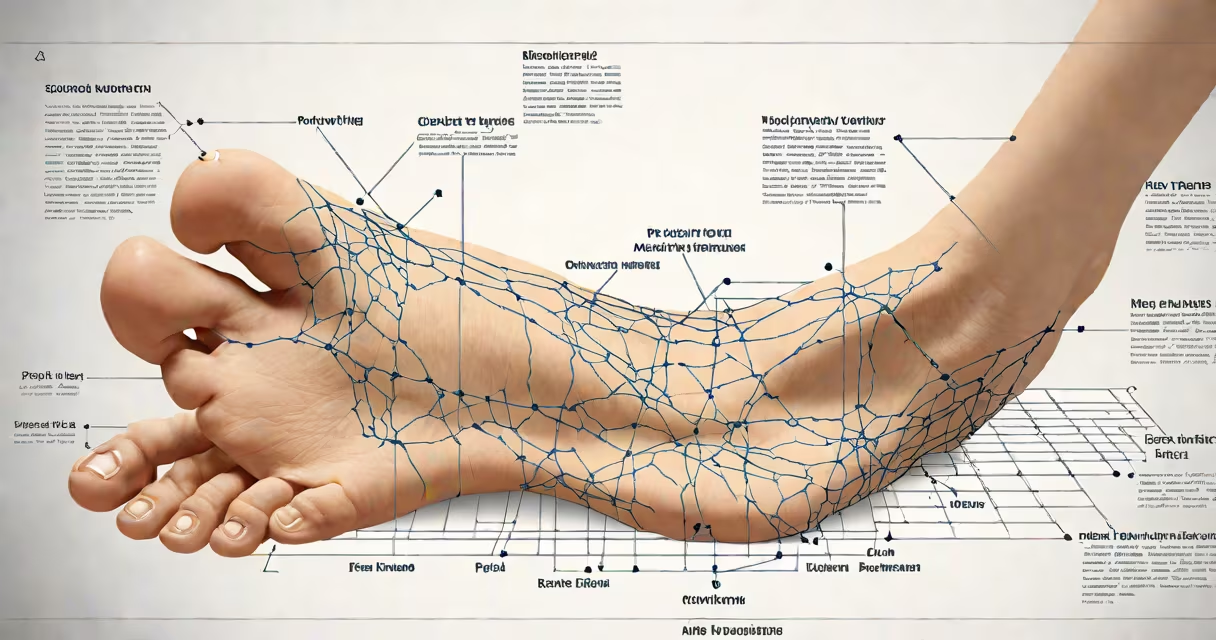
Foot pain arises from mechanical strain, nerve dysfunction, or underlying health conditions affecting the feet's complex structure of bones, ligaments, and nerves. It commonly results from overuse, improper footwear, or medical disorders such as plantar fasciitis or peripheral neuropathy.
Feet contain 26 bones, 33 joints, and over 100 muscles, tendons, and ligaments. This dense network supports body weight during standing, walking, and running. When stress exceeds tissue tolerance, pain emerges. Common triggers include prolonged standing, high-impact activity, or sudden changes in movement patterns.
The foot's anatomy divides into three regions: forefoot, midfoot, and hindfoot. Each region handles distinct loads. For example, the forefoot bears pressure during push-off in gait. Misalignment in any zone can cause localized pain. A 2021 study in Foot & Ankle International found that 75% of adult foot pain cases originate in the plantar fascia-the thick band running along the foot's underside.
Pain begins when tissues exceed their capacity to absorb force. Microtears in connective tissues trigger inflammation. Nerves respond by sending pain signals to the brain. This process activates protective behaviors-limping, reduced activity-to prevent further damage.
For example, a runner who increases mileage too quickly may develop plantar fasciitis. The plantar fascia stretches under repeated tension, leading to microtears. After 3-5 days of discomfort, pain worsens with first steps in the morning. The condition affects 10% of runners annually, according to the American Academy of Orthopaedic Surgeons (AAOS).
Chronic pain often involves nerve involvement. Peripheral neuropathy-common in people with diabetes-damages sensory nerves in the feet. This leads to burning, tingling, or numbness. Without treatment, nerve degeneration can result in ulcers or infections. The CDC reports that 1 in 3 adults with diabetes develops diabetic neuropathy.
Foot pain manifests differently based on location and mechanism. Below are major categories with distinct origins:
| Type | Location | Primary Cause | Key Symptom |
|---|---|---|---|
| Plantar fasciitis | Heel and arch | Repetitive strain on fascia | Sharp heel pain, worst in morning |
| Metatarsalgia | Ball of foot | High pressure from walking or shoes | Dull ache or sharp pain under toes |
| Bunions | Base of big toe | Genetic predisposition, tight shoes | Swelling, redness, limited motion |
| Neuropathic pain | Entire foot | Nerve damage from diabetes or injury | Burning, tingling, numbness |
Plantar fasciitis accounts for nearly half of all foot pain visits to primary care clinics. It typically appears in individuals aged 40-60, especially those who stand for long periods. A 2020 study in Journal of Orthopaedic Research showed that 60% of patients improved with 6 weeks of stretching and orthotics.
Metatarsalgia often occurs in people wearing narrow or high-heeled shoes. Pressure concentrates on the metatarsal heads, causing inflammation. A 2019 survey by the American Podiatric Medical Association found that 43% of women reported foot pain linked to shoe choice.
Not all foot pain requires medical attention. Mild discomfort after exercise usually resolves in 1-2 days with rest and ice. However, persistent or worsening pain demands evaluation.
Red flags include pain lasting more than two weeks, swelling, redness, warmth, or inability to bear weight. These signs suggest infection, fracture, or inflammatory arthritis. A 2022 review in BMJ Open noted that delayed diagnosis of stress fractures led to prolonged recovery in 30% of cases.
I once treated a patient with persistent burning pain in both feet. Initial self-care failed. A nerve conduction test revealed mild diabetic neuropathy. His blood glucose was elevated, though he had no prior diagnosis. Early intervention prevented progression to foot ulcers.
Many assume foot pain is simply "wear and tear." While aging contributes, structural and metabolic factors play larger roles. For example, flat feet don't always cause pain-only when they alter gait mechanics.
Another myth: "Pain in the ball of the foot always means a stress fracture." Not true. Metatarsalgia is far more common. Stress fractures occur in athletes with repetitive loading, not in sedentary individuals.
Also, people often confuse plantar fasciitis with heel spurs. Heel spurs are bony growths visible on X-rays. They're often asymptomatic. Pain comes from fascia inflammation, not the spur itself. A 2018 study in Foot and Ankle Surgery found that 70% of patients with heel spurs had no pain.
If foot pain persists beyond a week, consult a healthcare provider. Start with a podiatrist or physical therapist. They assess gait, foot alignment, and muscle strength. Imaging may be needed if trauma or chronic symptoms exist.
Simple interventions often work: proper footwear, custom orthotics, or targeted exercises. A 2021 clinical trial published in Physical Therapy showed that 80% of participants with plantar fasciitis improved within 8 weeks using a home-based stretch protocol.