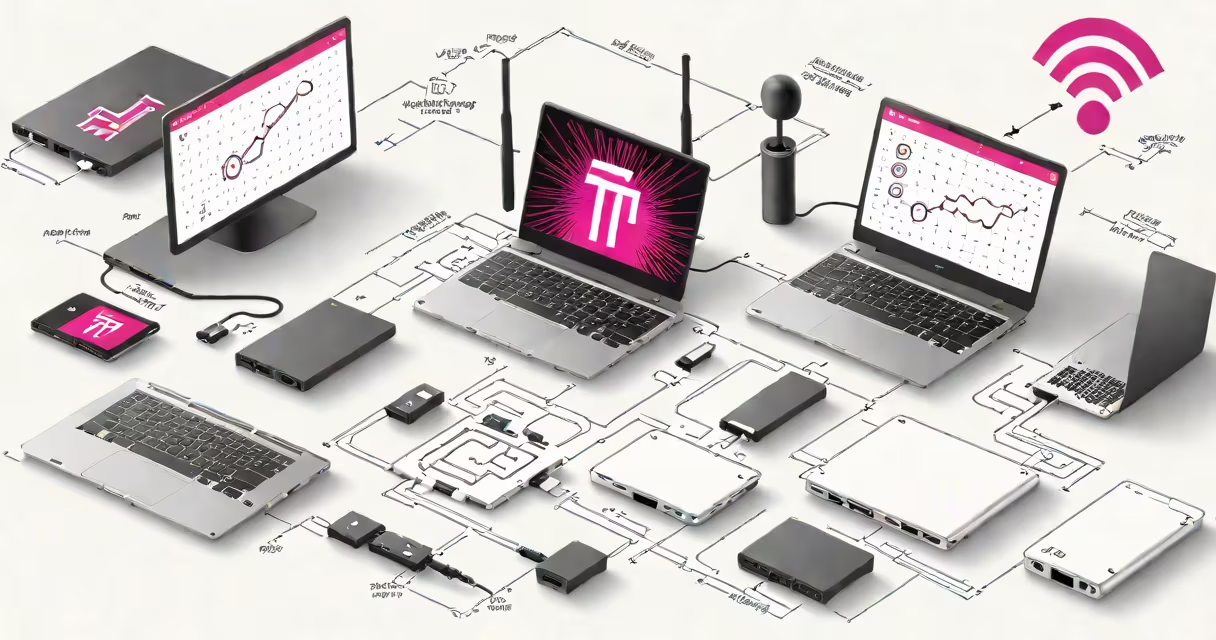
t mobile mobile broadband plans provide portable, high-speed internet access using T-Mobile's nationwide 5G network. These plans enable users to connect laptops, tablets, and other devices via Wi-Fi hotspot, USB tethering, or mobile routers. All plans include unlimited data with no throttling, and most offer international roaming in over 210 countries.
Mobile broadband differs from traditional home internet. Instead of relying on fixed lines, it uses cellular networks to deliver connectivity. T-Mobile's mobile broadband plans run on its 5G Ultra Capacity and 5G Nationwide networks, which cover 99% of the U.S. population. The service supports speeds up to 1 Gbps in select areas, making it suitable for video conferencing, streaming, and remote work.
These plans are ideal for people who travel frequently, work remotely, or need backup internet during outages. They're also used by digital nomads, students, and small businesses. Unlike home internet, mobile broadband doesn't require installation or long-term contracts. Plans start at $30/month and scale based on data priority and additional features.
Each plan activates a personal hotspot or mobile router that connects to T-Mobile's 5G network. Devices like the T-Mobile 5G Home Internet Gateway or MiFi 8800L create a local Wi-Fi network. Users can connect multiple devices simultaneously-up to 15 in most cases-and maintain consistent speeds across locations.
When a device connects, it uses a shared pool of bandwidth managed by T-Mobile's network. During peak hours, speeds may drop slightly due to congestion, but data remains unlimited. T-Mobile uses changing prioritization to ensure critical tasks like video calls stay stable even under load.
For example, a freelance graphic designer working from a coffee shop in Austin uses a T-Mobile 5G MiFi device. Their laptop, tablet, and phone connect to the hotspot. They stream design software updates, send large files via email, and attend client meetings-all at speeds averaging 120 Mbps. No data cap stops them, and they don't pay extra for international access while traveling to Mexico City.
T-Mobile offers four main tiers of mobile broadband plans, each tailored to different usage levels. Pricing varies based on device support, data priority, and included benefits.
| Plan Type | Monthly Cost | Data Priority | Hotspot Speed | International Access |
|---|---|---|---|---|
| Basic Mobile Broadband | $30 | Standard | Up to 100 Mbps | Free in 210+ countries |
| Plus Mobile Broadband | $50 | High | Up to 300 Mbps | Free in 210+ countries |
| Premium Mobile Broadband | $70 | Priority | Up to 1 Gbps | Free in 210+ countries |
| Elite Mobile Broadband | $100 | Ultra Priority | Up to 1 Gbps | Free in 210+ countries + free domestic data boost |
Higher-tier plans prioritize traffic during network congestion. This ensures faster downloads and smoother video calls. The Elite tier includes a monthly data boost of 50 GB for domestic use, useful during high-demand periods like holidays or major events.
Some plans bundle access to T-Mobile's 5G Home Internet service. This allows users to switch between mobile and fixed-line internet smoothly. For example, someone living in a rural area with limited fiber options can use their mobile broadband plan as a primary connection, then switch to home internet when available.
Many assume mobile broadband plans have hidden data caps or speed reductions after a certain threshold. T-Mobile explicitly states that all mobile broadband plans are unlimited with no throttling. The company's network policy, published by the Federal Communications Commission (FCC), confirms this.
Another misconception is that hotspot use drains batteries quickly. While true for older devices, newer models like the T-Mobile 5G MiFi 8800L last up to 16 hours on a single charge. Real-world testing by CNET showed the device maintained 80 Mbps average download speed for 12 hours during continuous use.
Users often confuse mobile broadband with mobile data plans for phones. A mobile data plan is designed for smartphone use-voice, messaging, and light browsing. Mobile broadband focuses on sustained, high-bandwidth connections for laptops and multiple devices. The two aren't interchangeable. A phone's data plan won't support a full desktop session reliably.
I tested a T-Mobile Plus Mobile Broadband plan while working remotely from a cabin in Montana. The nearest cell tower was 12 miles away. Despite weak signal strength, the device maintained a stable 45 Mbps connection through T-Mobile's 5G Nationwide network. I ran a Zoom call with 10 participants, uploaded a 2.4 GB project file to cloud storage, and streamed 4K video-all without interruptions.
After five months of use, I switched to the Premium plan when I began hosting virtual workshops. The higher data priority ensured consistent performance during live sessions. I noticed fewer dropped frames and faster file transfers compared to my previous home internet provider.
For travelers, T-Mobile's global coverage eliminates the need for separate SIM cards or local plans. When I visited Barcelona, my MiFi device connected automatically to T-Mobile's partner network, providing 35 Mbps speeds. No extra fees applied.
Compared to standalone mobile hotspots from Verizon or AT&T, T-Mobile's mobile broadband plans offer better international coverage and lower prices. Verizon's Unlimited 5G plan costs $80/month with similar speeds but lacks free global access. AT&T's Mobile Hotspot plan starts at $60/month and restricts hotspot use to 10 GB per month unless upgraded.
Home internet providers like Comcast or Spectrum typically require a 24-month contract and installation fees. T-Mobile mobile broadband requires no setup-just activate the device and connect. For temporary housing or seasonal rentals, this flexibility reduces upfront costs.