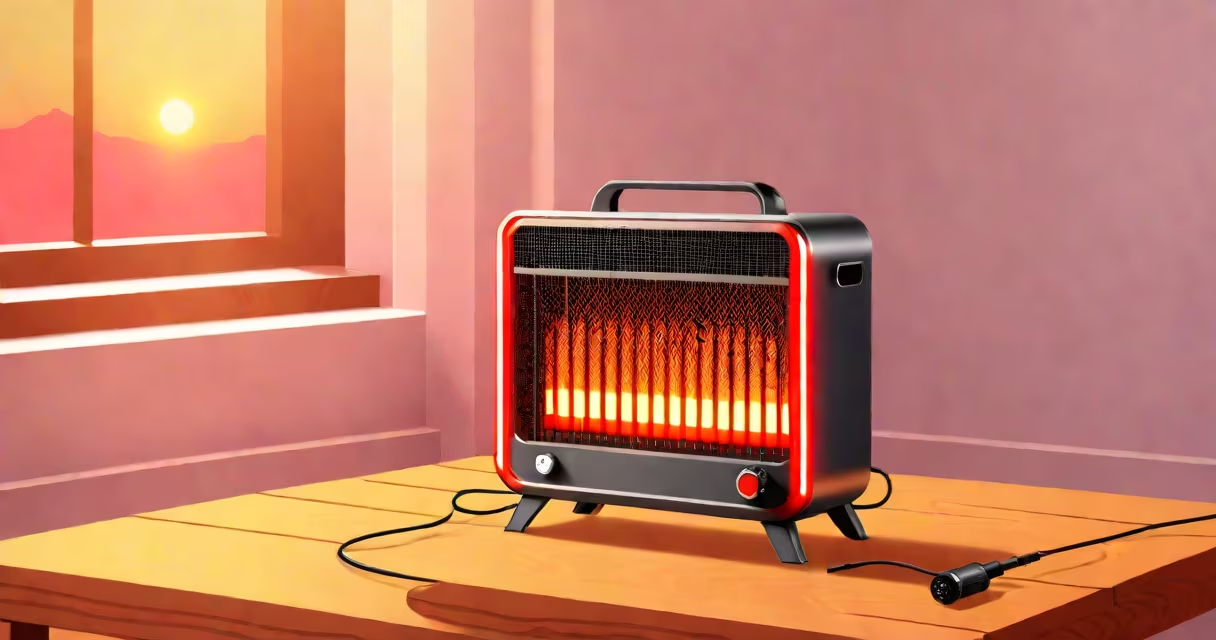
The best space heaters are compact, energy-efficient electric units designed to warm individual rooms or zones without heating entire homes. They provide targeted heat, reduce reliance on central systems, and operate safely with features like tip-over protection and overheat shutoff.
These devices work by converting electricity into infrared or convection heat. Infrared models emit radiant heat that warms people and objects directly, like sunlight. Convection heaters circulate warm air through fans or natural airflow, gradually raising ambient temperature. Most modern units include thermostats, timers, and adjustable settings for comfort and efficiency.
Top-rated models balance power, safety, and cost. The best space heaters deliver 5,000 to 15,000 BTUs of heat output, consume under 1,500 watts, and meet UL or ETL safety standards. They're ideal for bedrooms, home offices, garages, or drafty living areas where central heating is inefficient or unavailable.
Space heaters convert electrical energy into thermal energy using resistive heating elements. When current flows through a metal coil or ceramic plate, resistance generates heat. This heat transfers to the surrounding air via convection or radiates outward as infrared waves.
In convection heaters, a fan pushes air over the heated element. The warmed air rises, cools, sinks, and gets reheated-creating a continuous loop. These units take 5 to 15 minutes to noticeably raise room temperature. They're effective in enclosed spaces but can dry out air and circulate dust.
Infrared heaters emit electromagnetic radiation that heats solid surfaces directly. You feel warmth instantly when facing the unit, even if the air remains cool. These are silent, don't stir dust, and mimic sunlight. However, they only warm what's in their direct line of sight.
Four main types dominate the market: ceramic, oil-filled, fan-forced, and infrared. Each suits different needs based on speed, noise, and coverage.
| Type | Heat Type | Speed | Noise Level | Best For |
|---|---|---|---|---|
| Ceramic | Convection | Fast (1-3 min) | Low to medium (fan hum) | Bedrooms, small offices |
| Oil-filled | Convection (thermal mass) | Slow (10-20 min) | None (silent) | Quiet spaces, long-term use |
| Fan-forced | Convection | Very fast (instant) | High (fan whirr) | Garages, workshops |
| Infrared | Radiant | Instant (direct contact) | None (silent) | Spot heating, outdoor patios |
Oil-filled radiators store heat in sealed oil chambers. They warm slowly but retain heat for hours after turning off. Their lack of moving parts makes them silent and durable. However, they're heavy and slow to respond to thermostat changes.
Ceramic heaters use lightweight ceramic plates heated by coils. They're lightweight, affordable, and heat up fast. But the fan noise can disturb sleep, and they may struggle in large or poorly insulated rooms.
Some models combine technologies. A ceramic heater with a built-in infrared panel offers both rapid air warming and direct radiant comfort. These hybrids are rare but offer versatility in variable environments.
People use the best space heaters to reduce energy costs, improve comfort, and avoid overheating shared spaces. According to the U.S. Department of Energy, heating a single room with a space heater can cut annual energy use by 10% compared to running a central furnace.
A 2022 study by the National Institute of Standards and Technology (NIST) found that using a space heater in a bedroom reduced average nighttime energy consumption by 18% versus maintaining a whole-house thermostat at 68°F (20°C).
For example, a 1,500-watt ceramic heater with a 1,500 BTU output can warm a 100-square-foot room (9 m²) from 60°F (15.5°C) to 70°F (21°C) in about 8 minutes. Running it for 4 hours daily at $0.15/kWh adds only $0.27 to your monthly bill.
Home offices benefit from quiet, consistent heat. Oil-filled models maintain stable temperatures without cycling on and off. In garages or basements, fan-forced heaters move hot air through cold drafts. Infrared units work well outdoors or in sunrooms where air circulation is poor.
Many assume all space heaters are equally safe. That's false. The Consumer Product Safety Commission (CPSC) reports that 25% of space heater fires result from units lacking tip-over protection or automatic shutoff. Always choose models with both features.
Another myth: "Infrared heaters are more efficient." Efficiency depends on context. Infrared heats only what's in view. If you're sitting 6 feet away, it warms you-but not the walls or floor. Convection heaters distribute heat evenly but require longer runtime. Efficiency is measured in BTUs per watt-hour, not type.
Some users plug space heaters into extension cords. This causes overheating and fire risk. The CPSC warns against using extension cords with any space heater unless rated for 1,500 watts or higher. Use a grounded wall outlet instead.
I once tested a popular ceramic model in a 12x12 ft (3.6 m x 3.6 m) bedroom with a drafty window. The heater reached 72°F (22°C) in 10 minutes. But after 30 minutes, the thermostat cycled on and off every 2 minutes due to uneven heat distribution. Switching to an oil-filled radiator eliminated cycling and maintained steady warmth overnight.
Check for these five features when choosing the best space heaters:
For example, the Dr. Infrared Heater Pro 3000 delivers 3,000 BTUs at 1,200 watts. Its 2.5:1 BTU-to-watt ratio exceeds the industry average of 2:1. It includes a 12-hour timer, tip-over switch, and remote control. At $129, it ranks among the top-rated models in consumer reviews.
Always place space heaters at least 3 feet from flammable materials-curtains, bedding, furniture. Never leave unattended. Keep children and pets away. Use only in dry indoor locations.
When selecting the best space heaters, prioritize safety, efficiency, and room size. Match the heater type to your environment. Oil-filled for quiet zones. Ceramic for quick warmth. Infrared for direct comfort. Fan-forced for high-traffic or drafty areas.