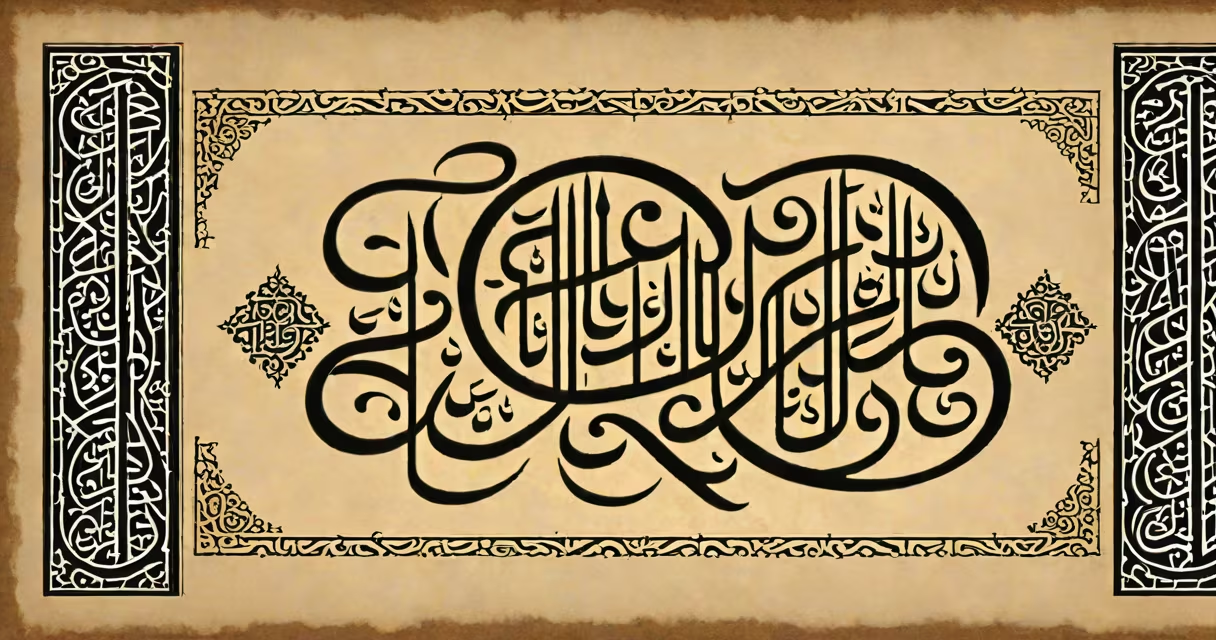
Surah An Nisa is the fourth chapter of the Quran, revealed in Medina during the middle period of Prophet Muhammad's mission. It contains 176 verses and focuses on social order, family law, inheritance, and ethical conduct within the Muslim community.
Revealed after the Battle of Uhud, Surah An Nisa addresses the growing complexity of life in the emerging Muslim society. It establishes legal frameworks for marriage, divorce, and property distribution while emphasizing justice and accountability. The surah is named after the word "nisa," meaning women, due to its detailed discussion of women's rights and roles in family and society.
The surah opens with a command to fear God and uphold justice, even when it conflicts with personal interests. It sets a tone of moral responsibility that permeates the entire chapter. Verses 34 to 36, often cited in discussions about gender roles, clarify that men are responsible for maintaining households, but this authority must be exercised with fairness and dignity-not dominance.
Surah An Nisa is divided into thematic blocks. The first section (verses 1-12) emphasizes faith, unity, and the dangers of hypocrisy. It warns against those who claim belief while acting against justice. Verse 5 states that believers must not take disbelievers as allies over Muslims-a directive rooted in the political realities of early Medina.
Verse 141 introduces the concept of "the people of the book" (Jews and Christians), affirming their status as recipients of divine revelation. This verse is frequently referenced in interfaith dialogue, especially in contexts involving religious pluralism and coexistence.
Another key section covers inheritance laws (verses 11-12). These verses specify shares for sons, daughters, mothers, and spouses. For example, a daughter receives half the share of a son. A mother gets one-sixth of the estate if the deceased has children. These rules were revolutionary in pre-Islamic Arabia, where women had no automatic inheritance rights.
Surah An Nisa serves multiple functions: legal, theological, and ethical. Its rulings apply to personal conduct, family structure, and communal governance. The surah is studied in both formal Islamic education and daily recitation.
| Application Area | Key Verses | Practical Outcome |
|---|---|---|
| Inheritance | 4:11-12 | Clear allocation of shares among heirs based on kinship and gender. |
| Marriage and Divorce | 4:3-4, 4:128 | Regulates polygamy, dowry, and the waiting period (iddah). |
| Social Justice | 4:2-4, 4:135 | Prohibits oppression and mandates impartial judgment. |
One lesser-known fact is that Surah An Nisa contains the first explicit mention of the term "mushrikun" (those who associate partners with God) in idolatry. This term appears in verse 170, which condemns associating others with God's divinity-a foundational principle in monotheistic Islam.
Many assume Surah An Nisa promotes male superiority. This is incorrect. While the surah assigns certain responsibilities to men, it also grants women significant rights. For example, verse 4:34 is often misquoted to justify domestic control. However, the full verse says: "Men are the maintainers of women because Allah has given the one more than the other..." - a statement of economic responsibility, not power.
Another myth is that the surah permits abuse under the guise of "qiwama." But qiwama (maintenance) is a duty, not a license. The Quranic structure requires men to support families financially and emotionally. Failure to do so constitutes neglect, not authority.
Verse 4:129 clarifies that women have the right to seek divorce through khul' (mutual agreement) or judicial intervention. This provision predates similar rights in many Western legal systems by centuries.
In 2019, a court in Malaysia ruled on a custody dispute using principles derived from Surah An Nisa. The case involved a divorced woman seeking custody of her children. The judge cited verse 4:6, which states: "And they [mothers] shall have the right to breastfeed their children for two full years..." The ruling granted primary custody to the mother, citing the Quranic emphasis on maternal care during infancy.
This decision reflects how Surah An Nisa continues to inform legal reasoning in Muslim-majority countries. The Quran's language is precise enough to allow interpretation within evolving social contexts, yet firm enough to preserve core values.
I once attended a study circle in Cairo where scholars debated the application of Surah An Nisa in modern family courts. One participant pointed out that verse 4:128-requiring a man to provide a dowry (mahr)-is still enforced in Jordanian family law. When asked if this was outdated, a scholar replied: "The mahr is not a price-it's a symbol of respect. It ensures the woman's dignity is recognized before marriage." That moment clarified how deeply embedded the surah's principles are in lived practice.
Unlike Surah Al-Baqarah, which is longer (286 verses) and includes extensive ritual and legal guidance, Surah An Nisa focuses on interpersonal relationships and institutional ethics. Al-Baqarah lays the foundation for worship and belief; An Nisa builds the structure for community life.
For example, while Surah Al-Baqarah discusses prayer times and fasting, Surah An Nisa defines the conditions under which a marriage contract is valid. It also introduces the concept of "wali" (guardian) for women entering marriage-a role that ensures informed consent.
Both surahs emphasize justice, but An Nisa applies it more directly to human interactions. Where Al-Baqarah speaks of faith in broad terms, An Nisa grounds faith in action: feeding the poor, protecting widows, treating spouses fairly.
Surah An Nisa is a foundational text for understanding Islamic ethics, family law, and social equity. It provides clear guidelines for inheritance, marriage, and justice while affirming the dignity of all individuals. Its teachings remain relevant in contemporary legal and ethical debates.