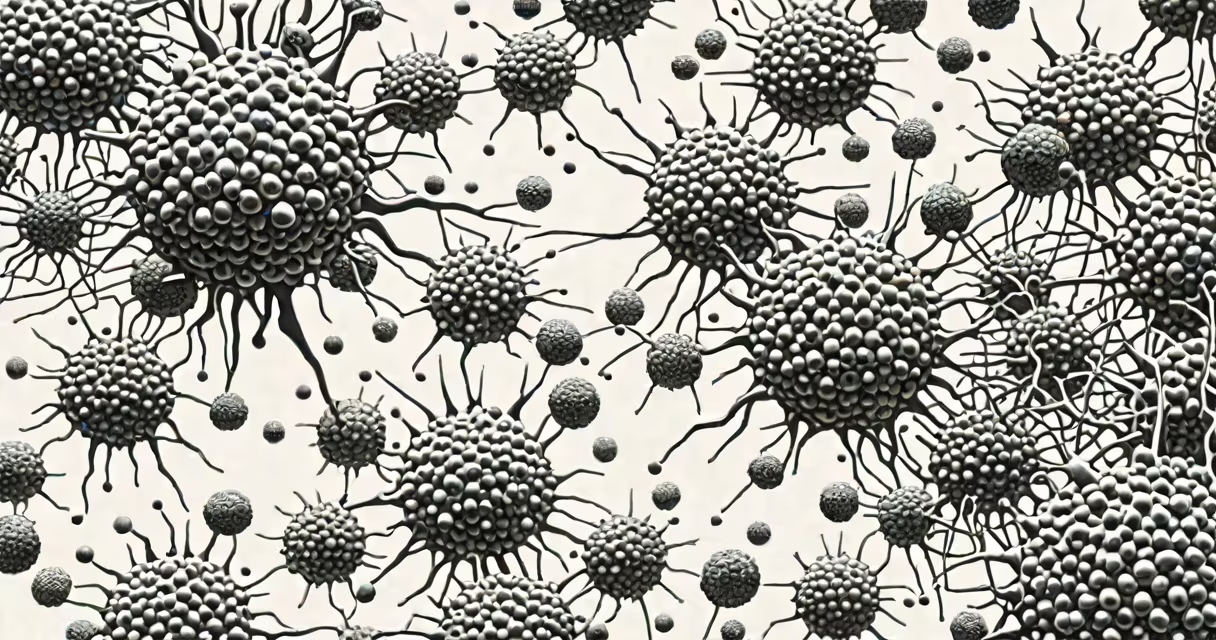
Cytotoxic means capable of causing damage or death to cells. The term comes from "cyto-" (cell) and "-toxic" (poisonous). Cytotoxic agents disrupt important cellular functions, leading to cell rupture or programmed death. This property is central to chemotherapy and immune responses.
Cytotoxicity occurs when a substance interferes with essential processes inside a cell. These include DNA replication, protein synthesis, or membrane integrity. For example, chemotherapeutic drugs like doxorubicin bind to DNA and prevent cancer cells from dividing. This stops tumor growth but also harms healthy cells, which causes side effects such as hair loss and nausea.
The effect is measured in laboratory settings using assays like MTT or LDH release. These tests expose cells to a substance and measure how many die after 24-72 hours. A concentration that kills 50% of cells within a set time is called the IC50 value. Lower IC50 values indicate stronger cytotoxic activity.
Cytotoxic compounds act through several mechanisms. Some damage DNA directly, preventing replication. Others disrupt microtubules during mitosis, halting cell division. A third group triggers apoptosis, a form of controlled cell death. Apoptosis avoids inflammation and is preferred in therapeutic contexts.
For instance, paclitaxel stabilizes microtubules, preventing their breakdown during cell division. This traps cells in metaphase, leading to apoptosis. In clinical practice, paclitaxel is used to treat ovarian, breast, and lung cancers. Its effectiveness stems from targeting rapidly dividing cells-common in tumors.
Immune cells also use cytotoxic mechanisms. Natural killer (NK) cells release perforin and granzyme B. Perforin forms pores in the target cell's membrane, allowing granzyme B to enter and activate caspases. Caspases then dismantle the cell's internal structures. This process eliminates infected or cancerous cells without harming nearby tissue.
Cytotoxic agents fall into categories based on origin and mechanism:
| Type | Source | Example | Use Case |
|---|---|---|---|
| Chemotherapy drugs | Synthetic or plant-derived | Doxorubicin, cisplatin | Treatment of solid tumors |
| Immunotoxins | Engineered antibodies | Brentuximab vedotin | Targeted therapy for lymphoma |
| Environmental toxins | Natural or industrial | Carbon tetrachloride, aflatoxin B1 | Occupational hazard, food contamination |
| Antibiotics | Microbial metabolites | Adriamycin (same as doxorubicin) | Anticancer and antifungal uses |
Some substances are cytotoxic only under specific conditions. For example, methotrexate inhibits dihydrofolate reductase, blocking DNA synthesis. It's effective against rapidly dividing cells but less harmful to resting cells. This selectivity improves its safety profile compared to older agents.
Cytotoxicity is essential in oncology. Chemotherapy relies on killing cancer cells faster than they can repair themselves. However, because healthy cells divide too, side effects occur. Bone marrow suppression leads to low blood counts. Mucosal damage causes mouth sores and diarrhea. These are direct results of cytotoxic action on normal tissues.
In toxicology, cytotoxicity testing screens new drugs and chemicals. The U.S. Environmental Protection Agency (EPA) requires in vitro cytotoxicity data before approving pesticides. The European Chemicals Agency (ECHA) mandates similar assessments under REACH regulations. These rules prevent environmental exposure to harmful substances.
A key distinction often missed: not all cell-killing is therapeutic. Cytotoxicity in a lab dish doesn't guarantee clinical benefit. A compound may kill cells in culture but fail in humans due to poor delivery, metabolism, or immune clearance. The FDA emphasizes that in vivo efficacy must be demonstrated before approval.
Cytotoxic does not mean "cancer-causing." Carcinogenicity involves DNA mutation and long-term risk of tumor formation. Cytotoxicity is immediate cell death. A substance can be both-but they're separate properties. For example, benzene is carcinogenic and cytotoxic, but the mechanisms differ.
Another error: assuming all cytotoxic agents are dangerous. Some are intentionally designed to be selective. Monoclonal antibody-drug conjugates (ADCs) deliver toxins directly to cancer cells. Brentuximab vedotin targets CD30-positive cells in Hodgkin lymphoma. Clinical trials show reduced side effects compared to traditional chemo.
I once observed a lab experiment where a researcher mislabeled a cytotoxic compound as inert. After exposing human fibroblasts to it, nearly 90% died within 12 hours. The mistake was caught during quality control. This highlights the need for accurate labeling and standardized testing protocols.
Cytotoxic means capable of damaging or killing cells. It applies to drugs, toxins, and immune responses. Understanding this term helps interpret medical reports, research findings, and safety warnings. Always consider context-cytotoxicity can be beneficial in treatment or harmful in exposure.