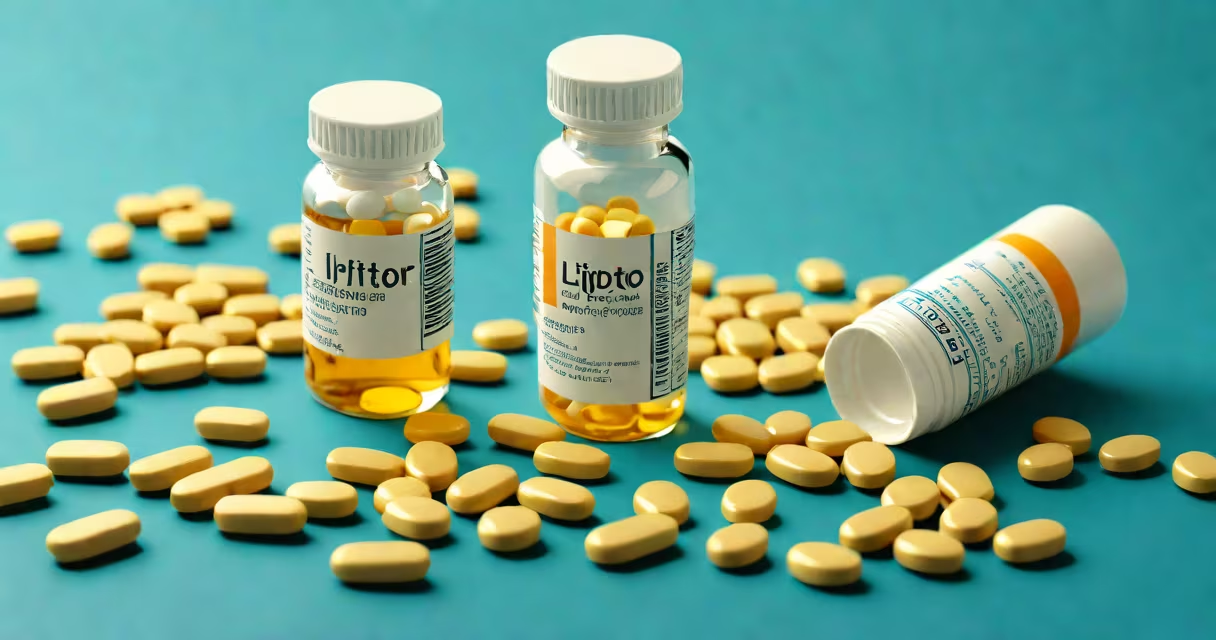
Lipitor (atorvastatin) is a prescription statin drug used to lower LDL cholesterol and reduce cardiovascular risk. Common side effects include muscle pain, digestive upset, and fatigue. Rare but serious reactions may involve liver damage or increased blood sugar.
Lipitor works by inhibiting HMG-CoA reductase, an enzyme in the liver responsible for cholesterol production. By reducing cholesterol synthesis, it lowers circulating LDL ("bad") cholesterol and modestly raises HDL ("good") cholesterol. The drug is taken daily, usually in doses ranging from 10 mg to 80 mg, depending on risk profile and response.
Most patients tolerate Lipitor well. However, clinical trials and post-marketing surveillance have identified a range of adverse events. The FDA requires warnings about myopathy (muscle damage) and rhabdomyolysis (severe muscle breakdown), which can lead to kidney failure. These risks increase with higher doses and in combination with certain drugs like gemfibrozil or cyclosporine.
Approximately 10-15% of patients report mild side effects during the first few weeks of treatment. The most frequently reported include:
A 2019 analysis of over 12,000 patients in the CTT (Cholesterol Treatment Trialists') Collaboration found that muscle-related symptoms occurred in 2.3% of those on statins versus 1.8% on placebo. Symptoms typically resolve within days to weeks after dose reduction or discontinuation.
One patient in a primary care clinic reported persistent leg cramps after starting 40 mg Lipitor. After switching to pravastatin at 20 mg, the cramping stopped completely. This illustrates that individual sensitivity varies, even among similar medications.
While uncommon, several severe side effects require monitoring. The FDA reports that rhabdomyolysis occurs in about 1 in 10,000 patients annually. Symptoms include unexplained muscle soreness lasting more than a few days, dark urine, and elevated creatine kinase (CK) levels in blood tests.
Another concern is new-onset diabetes. A 2012 meta-analysis published in The Lancet showed that statin users had a 9% increased risk of developing type 2 diabetes compared to placebo. The absolute risk remains low-about 1 extra case per 250 patients treated over five years-but matters for individuals with prediabetes or metabolic syndrome.
Liver enzyme elevations occur in less than 1% of patients. Routine monitoring of ALT and AST is recommended at baseline and periodically thereafter. If levels rise above three times the upper limit of normal, treatment should be paused and evaluated.
| Side Effect | Incidence Rate | When to Seek Help |
|---|---|---|
| Muscle pain (myalgia) | 2-3% | Persistent pain, weakness, dark urine |
| Rhabdomyolysis | ~1 in 10,000/year | Severe muscle pain, fever, confusion |
| New-onset diabetes | 0.5-1% over 5 years | HbA1c >6.5%, frequent urination, thirst |
| Abnormal liver enzymes | <1% | Jaundice, dark urine, right upper quadrant pain |
Many patients assume all statin side effects are due to the drug itself. But research shows that symptom reporting often correlates more strongly with patient expectations than actual drug exposure. A 2018 double-blind trial published in JAMA Internal Medicine found that 30% of participants who believed they were on statins reported muscle pain-even when receiving placebo.
This highlights the role of nocebo effects. Patients may misattribute normal bodily sensations to medication. For example, mild fatigue or joint stiffness after exercise is common and not necessarily drug-induced. Distinguishing between expected physiological changes and true adverse events is critical.
Another misconception is that Lipitor causes cognitive decline. Early media reports linked statins to memory loss. However, a 2020 review in Neurology analyzed 15 randomized trials and found no significant difference in cognitive function between statin and placebo groups. Any perceived mental fog often resolves after stopping the drug, but evidence suggests it's not caused by direct brain effects.
If muscle pain develops, reduce the dose or switch to a different statin. Pravastatin and fluvastatin are less likely to cause myopathy because they're not metabolized by CYP3A4, unlike atorvastatin. A 2021 study in Clinical Pharmacology & Therapeutics showed that switching from Lipitor to pravastatin reduced muscle symptoms in 68% of affected patients.
Always inform your doctor before stopping Lipitor. Abrupt discontinuation increases cardiovascular risk. A 2017 study in European Heart Journal found that patients who stopped statins without medical guidance had a 40% higher risk of heart attack within six months.
Monitoring includes annual blood tests for liver enzymes and lipid panels. Check CK levels if muscle symptoms persist. Most patients can continue treatment safely with regular follow-up.
For those who cannot tolerate any statin, alternatives exist. Ezetimibe reduces cholesterol absorption and is well-tolerated. PCSK9 inhibitors like evolocumab are injectable options for high-risk patients, though cost and access remain barriers.
One patient with familial hypercholesterolemia tried four statins before finding tolerance with rosuvastatin. His LDL dropped from 220 mg/dL to 90 mg/dL over six months. He experienced no muscle symptoms and maintained adherence. This underscores that individual responses vary widely.
Contact your provider if you experience:
These signs may indicate rhabdomyolysis, liver injury, or diabetes. Early intervention prevents complications.
Patients should not stop Lipitor based on internet forums or anecdotal reports. Real-world data from the UK Biobank study (2022) confirmed that statin use reduced major cardiovascular events by 30% over ten years, outweighing the small risk of side effects.
Understanding the balance between benefit and risk is essential. For most people with high cardiovascular risk, the benefits of Lipitor far exceed the potential harms. Monitoring and communication with your healthcare team make safe use possible.