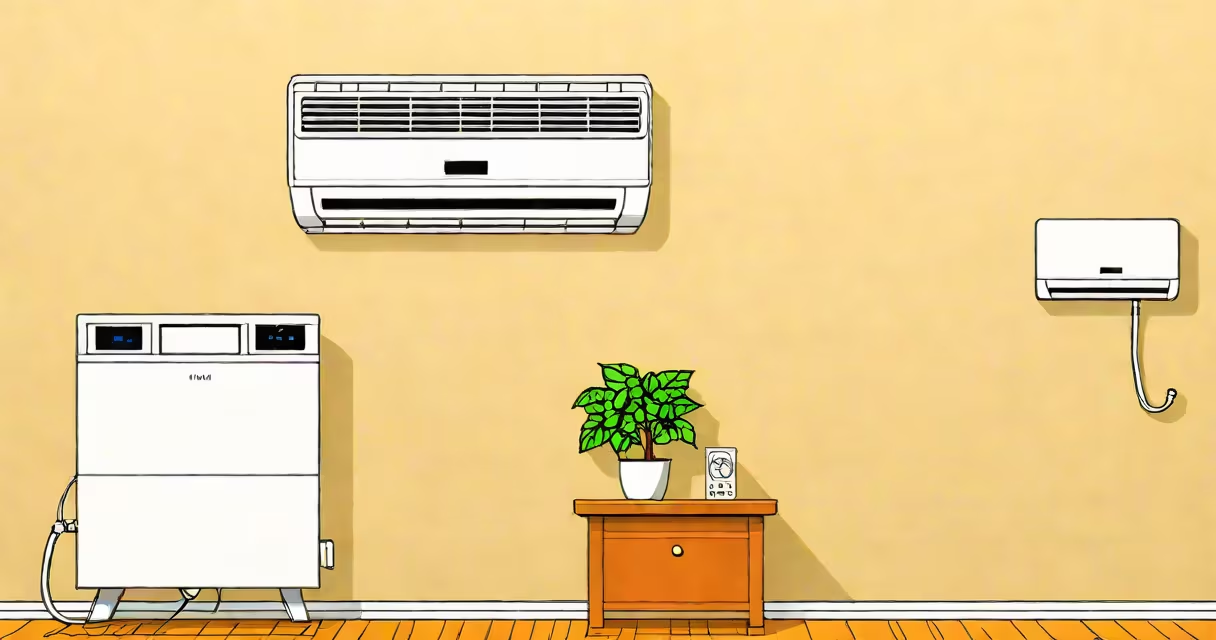
A what size ac refers to the cooling capacity of an air conditioning system, measured in tons-1 ton equals 12,000 British Thermal Units (BTUs) per hour. A properly sized unit removes heat efficiently and maintains consistent indoor temperatures without overworking.
AC units cool by drawing warm indoor air over cold evaporator coils, then expelling heat outdoors through condenser coils. The size determines how much heat the system can remove in an hour. Too small, and the unit runs constantly without lowering temperature. Too large, and it cycles on and off too quickly, failing to dehumidify the air and increasing wear.
The U.S. Department of Energy states that improperly sized systems waste 20-30% more energy than correctly matched ones. A 3-ton unit (36,000 BTU/hour) typically handles homes between 1,500 and 2,000 square feet, depending on insulation, window quality, and climate zone.
Proper sizing begins with a Manual J load calculation-a standardized method used by HVAC professionals to estimate heat gain through walls, windows, roof, and internal sources like appliances and people. This calculation accounts for local weather patterns, ceiling height, and building orientation.
For example, a home in Phoenix with 8-foot ceilings and single-pane windows may require 25 BTU per square foot. A 1,600 sq ft house would need 40,000 BTU/hour, or roughly 3.3 tons. A similar home in Seattle, with cooler summers and better insulation, might only need 15 BTU/sq ft-24,000 BTU/hour, or 2 tons.
Homeowners often guess based on square footage alone. That leads to errors. A 2,000 sq ft home in Florida with poor attic insulation may need a 4-ton unit. The same home in Minnesota with high insulation and double-glazed windows might only need 2.5 tons. Relying solely on square footage ignores critical variables.
Residential AC systems come in several forms, each with distinct sizing considerations:
| System Type | Typical Capacity Range | Best For |
|---|---|---|
| Split System (Central) | 1.5 to 5 tons | Whole-home cooling, most common in U.S. homes |
| Window Unit | 5,000 to 18,000 BTU/hour (0.4 to 1.5 tons) | Single rooms, rentals, temporary use |
| Ductless Mini-Split | 9,000 to 36,000 BTU/hour (0.75 to 3 tons) | Room additions, older homes without ductwork |
| Portable AC | 6,000 to 12,000 BTU/hour (0.5 to 1 ton) | Small spaces, temporary cooling |
Mini-splits offer greater control per zone. A 12,000 BTU unit can cool a 400 sq ft bedroom. But placing a 12,000 BTU portable AC in a 600 sq ft living room leads to inadequate cooling and higher electricity bills.
Some manufacturers advertise "energy-efficient" models with oversized compressors. These run longer at lower speeds, which improves humidity control-but only if the unit is sized correctly. An oversized mini-split in a small room cycles too frequently, reducing efficiency and shortening lifespan.
"Bigger is better" is a widespread myth. A 5-ton AC installed in a 1,200 sq ft home will cool the space rapidly but fail to remove moisture. Relative humidity can rise above 60%, making the room feel sticky even at 72°F. The EPA notes that excessive humidity increases mold risk and reduces comfort.
Another error: assuming that a new AC will fix old ductwork problems. Leaky or undersized ducts lose 20-30% of cooled air. A 3-ton system with poorly sealed ducts may deliver only 2.2 tons of effective cooling. The unit runs longer, uses more power, and fails to maintain set temperatures.
One homeowner I worked with replaced a 10-year-old 2.5-ton central AC with a 3-ton model. The house cooled faster, but the thermostat cycled every 10 minutes. The indoor humidity stayed above 65%. After checking the ducts, we found gaps around joints and unsealed registers. Sealing them restored performance-no new equipment needed.
Start with a professional load calculation using Manual J. This process considers:
Use the results to select a unit within 10% of the required capacity. A 2.5-ton system (30,000 BTU/hour) is suitable for a 1,400 sq ft home with average insulation. A 3-ton unit (36,000 BTU/hour) fits a 1,800 sq ft home with moderate insulation and southern exposure.
Check SEER ratings (Seasonal Energy Efficiency Ratio). A unit with a SEER 16 rating uses less energy than a SEER 13 model, even at the same capacity. Over 10 years, a SEER 16 system saves $1,200 in electricity costs compared to SEER 13, according to the U.S. Department of Energy.
After selecting the correct size, ensure installation follows manufacturer guidelines. A 3-ton unit requires a 3/4-inch refrigerant line and a dedicated 240V circuit. Improper wiring causes compressor failure. A licensed technician performs the charge verification-too little refrigerant causes overheating; too much causes poor performance.
When replacing an existing unit, match the new system to the original ductwork. If ducts were designed for a 2-ton system, installing a 3-ton unit creates pressure imbalances. Airflow becomes uneven, leading to hot and cold spots.
If your system runs continuously during summer, struggles to reach the thermostat setting, or produces dampness on walls or windows, it may be oversized or poorly matched. A properly sized unit maintains steady operation-cooling in 15-20 minute cycles with consistent indoor humidity.
Always base your what size ac decision on verified load calculations, not square footage alone. A correct size ensures efficient cooling, lower utility bills, and longer equipment life.