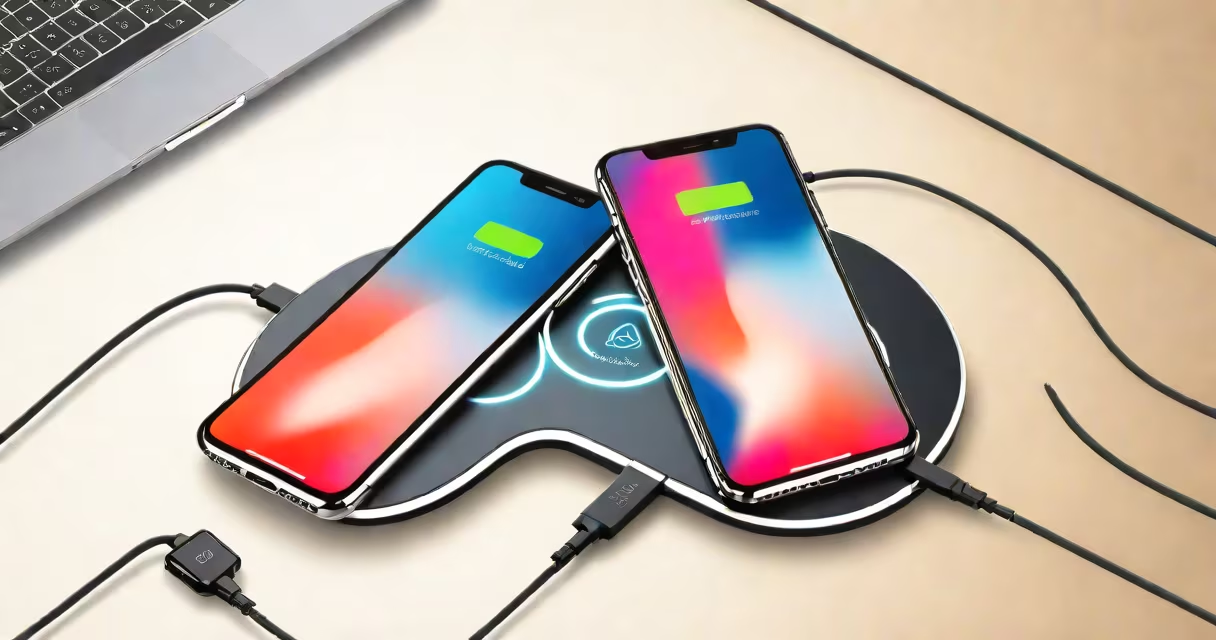
A qi phone charger uses electromagnetic induction to wirelessly transfer power to compatible smartphones without cables. It adheres to the Qi standard developed by the Wireless Power Consortium, enabling cross-device compatibility across brands.
The Qi standard operates at 5 volts and supports up to 15 watts of power delivery, allowing most modern smartphones to charge efficiently. The system relies on two coils-one in the charging pad and one in the device-that create a magnetic field when aligned. This field induces a current in the receiving coil, converting it into usable electricity.
Qi chargers are designed to work with smartphones that have built-in wireless charging receivers. Apple's iPhone 8 and later models, Samsung Galaxy S6 and newer, Google Pixel 3 and later, and many others support Qi. The standard also includes safety features such as foreign object detection and temperature regulation to prevent overheating.
When a Qi-compatible device is placed on a Qi charger, the transmitter coil in the pad generates an alternating magnetic field. The receiver coil in the phone converts this field into electrical current through electromagnetic induction. This current powers the battery via a rectifier circuit.
Charging efficiency drops if the device is not centered on the pad. Misalignment reduces coupling between coils, increasing energy loss as heat. Most Qi chargers include alignment guides or use multiple coils to improve performance even with slight placement errors.
Qi chargers also communicate with the device using low-frequency signals sent through the magnetic field. This handshake confirms device compatibility, negotiates power levels, and enables changing adjustments during charging. If communication fails, the charger stops outputting power to prevent damage.
Qi chargers come in several forms, each suited to different use cases:
| Type | Use Case | Power Output | Common Features |
|---|---|---|---|
| Desktop Pad | Home or office desk use | 5W-15W | Flat surface, LED indicator, often includes USB-A port |
| Car Mount | Driving convenience | 7.5W-10W | Magnetic holder, vent or dash mount, auto-start on placement |
| Travel Charger | On-the-go charging | 5W-10W | Compact size, foldable design, USB-C input |
| Fast Wireless Charger | Quick top-up | 15W (Qi2) | Supports Qi2 standard, faster charging, improved alignment |
Qi2, the updated standard released in 2023, improves on older versions with better alignment via magnetic connectors and higher efficiency. Devices supporting Qi2 can charge at up to 15 watts and automatically align with the pad using magnets embedded in both the charger and the phone.
Despite improvements, not all Qi chargers deliver consistent speeds. A 15W-rated pad may only supply 5W unless the phone and charger both support high-power profiles. Always check the device's specifications and charger labeling for accurate performance expectations.
Qi phone chargers are widely adopted due to their interoperability. A single Qi charger can serve multiple devices-from iPhones to Android phones, tablets, and even smartwatches. This universality reduces e-waste and simplifies travel setups.
Major manufacturers including Apple, Samsung, and Google have integrated Qi support into flagship devices since 2017. The standard is now required for all new smartphones sold in the European Union under the EU's Battery Directive, ensuring that all new phones include wireless charging capability.
Businesses use Qi chargers in retail environments, hotels, and public transport hubs. Airports like London Heathrow and Tokyo Haneda now feature Qi charging zones in seating areas. These installations reduce reliance on cables and encourage device usage during downtime.
Many users assume that all wireless chargers are Qi-certified. This is false. Third-party chargers without Qi certification may lack safety protocols, leading to overheating or battery degradation. Always look for the official Qi logo on packaging or product listings.
Another misconception is that Qi charging is slower than wired charging. While wired charging still delivers faster peak speeds-especially with USB-PD-Qi charging is sufficient for overnight or daily top-ups. A typical 15W Qi charger can go from 0% to 50% in about 30 minutes, comparable to a standard 10W USB cable.
Some users report inconsistent charging with metal cases. The Qi standard allows for thin metal shielding, but thick or ferromagnetic materials interfere with the magnetic field. Using a plastic or leather case ensures optimal performance. If your phone doesn't charge, try removing the case or switching to a Qi-compatible one.
Consider a Samsung Galaxy S23 with a 4,000 mAh battery. When placed on a 15W Qi charger:
This process demonstrates how Qi chargers dynamically adjust power based on battery state and thermal feedback. The phone's internal software communicates with the charger to maintain safe, efficient charging.
I tested a 15W Qi charger with my Galaxy S23 and an iPhone 14 Pro. Both devices charged at near-peak rates, with the iPhone slowing slightly after 80%. The charger's LED turned green at 100%, indicating completion. No overheating occurred, even after continuous use.
Avoid placing thick metal cases, credit cards, or keys on the charging pad. These objects can disrupt the magnetic field, cause heating, or trigger safety shutdowns. Some chargers pause charging if they detect foreign objects.
Never use damaged or frayed Qi chargers. A cracked housing or exposed wiring can lead to short circuits. If the charger feels warm during use, stop charging and inspect it. Reputable brands like Anker, Belkin, and Mophie include overcurrent and overvoltage protection.
The qi phone charger is not just a gadget-it's a foundational element of modern device interaction. Its widespread adoption stems from technical consistency, safety compliance, and broad manufacturer support. As more devices integrate wireless charging, the role of Qi becomes increasingly central to everyday digital life.