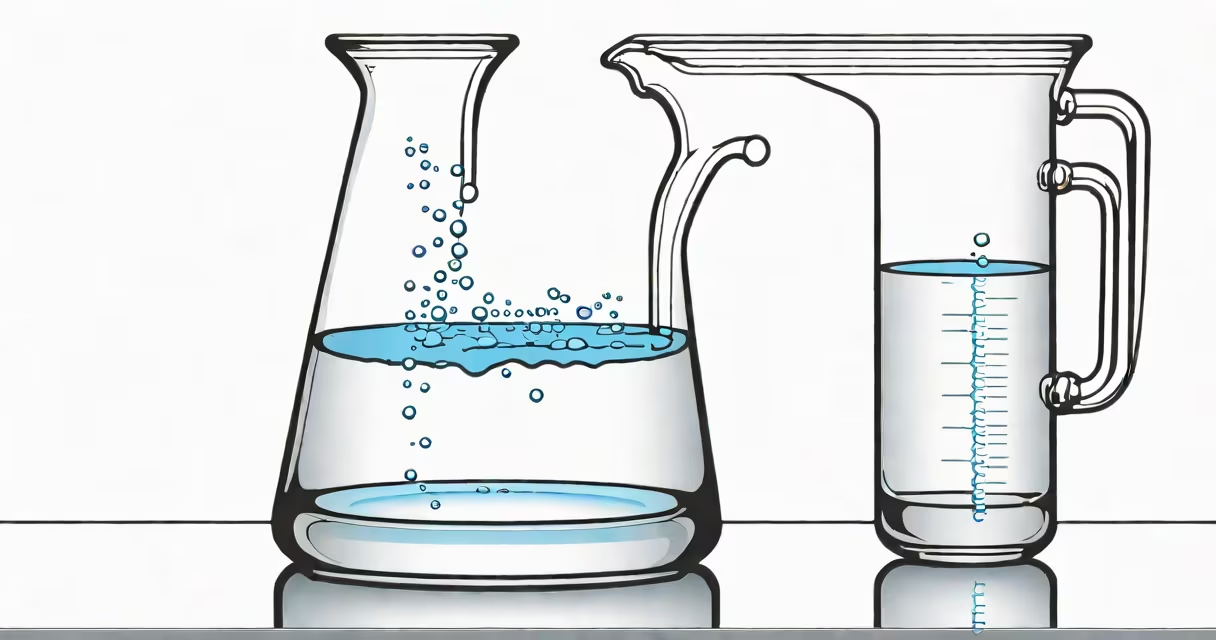
Sulphuric acid in water is a highly exothermic mixture formed when concentrated H₂SO₄ dissolves in H₂O, releasing intense heat and forming hydronium ions (H₃O⁺). This reaction is central to industrial chemistry and laboratory procedures.
The process begins when pure sulphuric acid (H₂SO₄) contacts water. The molecule donates protons (H⁺) to water molecules, creating H₃O⁺ and HSO₄⁻ ions. This ionization occurs in two steps: first, H₂SO₄ → H⁺ + HSO₄⁻, then HSO₄⁻ ⇌ H⁺ + SO₄²⁻. The initial step is nearly complete, making sulphuric acid a strong acid in aqueous solution.
When mixing, always add acid to water slowly while stirring. Adding water to concentrated acid causes violent boiling due to rapid heat release. A single drop of concentrated H₂SO₄ added to 10 mL of water can raise temperature by over 100°C. This rule prevents splattering and thermal shock.
Sulphuric acid in water exists in multiple concentrations, each suited to specific applications. Concentrations are measured by weight percent (wt%) or molarity (mol/L).
| Concentration | Weight % H₂SO₄ | Molarity | Common Uses |
|---|---|---|---|
| Dilute | 10-30% | 1-3 M | Car batteries, pH adjustment |
| Medium | 50-70% | 6-9 M | Chemical synthesis, metal cleaning |
| Concentrated | 95-98% | 18 M | Fertilizer production, dehydration reactions |
Concentrated sulphuric acid (98%) has a density of 1.84 g/mL and boils at 337°C. It acts as a dehydrating agent, removing water from organic compounds-ethanol turns to ethylene gas under its influence. This property distinguishes it from other strong acids like hydrochloric or nitric acid.
A common misconception is that sulphuric acid in water is simply "acidic water." That's incorrect. The solution contains H₃O⁺, HSO₄⁻, and SO₄²⁻ ions. At 1 M concentration, pH ≈ 0.3. The high proton activity enables useful oxidation and catalytic functions.
Over 250 million metric tons of sulphuric acid are produced annually worldwide. About 60% goes into phosphate fertilizer manufacturing. In this process, rock phosphate (Ca₅(PO₄)₃F) reacts with H₂SO₄ to form water-soluble calcium dihydrogen phosphate (Ca(H₂PO₄)₂), essential for crop nutrition.
Batteries rely on diluted sulphuric acid (30-40% w/w). Lead-acid cells use Pb and PbO₂ electrodes immersed in H₂SO₄ solution. During discharge, Pb oxidizes to PbSO₄, and PbO₂ reduces to PbSO₄. The electrolyte maintains ion flow and supports the redox reaction. A typical car battery holds about 3.5 liters of 33% acid solution.
In metallurgy, sulphuric acid removes oxide layers from steel before galvanizing. A 10% solution applied at 60°C strips rust efficiently. After treatment, the surface bonds better with zinc coating. This step improves corrosion resistance in outdoor structures.
Many assume sulphuric acid in water is safe to handle at low concentrations. This is false. Even 10% solutions cause severe burns on contact with skin. The National Institute for Occupational Safety and Health (NIOSH) lists H₂SO₄ as a substance requiring chemical-resistant gloves and eye protection. Exposure to vapors can damage lungs.
Another error is believing that dilution equals neutralization. Diluting acid doesn't remove its acidity. A 1 M solution remains strongly acidic. Neutralization requires adding base until pH reaches ~7. For example, 1 liter of 1 M H₂SO₄ requires 2 moles of NaOH to neutralize completely.
Some confuse sulphuric acid with nitric acid. Both are strong acids, but they differ in oxidizing power. Nitric acid oxidizes metals like copper, producing nitrogen dioxide gas. Sulphuric acid does not-its primary role is proton donation and dehydration.
I once observed a lab technician mix 10 mL of 98% sulphuric acid into 100 mL of water. Despite wearing goggles and gloves, the container heated rapidly. Within 30 seconds, steam rose visibly. The temperature reached 95°C. The solution was cooled under running water before further handling. This demonstrated the danger of improper mixing.
One non-obvious fact: sulphuric acid in water forms azeotropes. At 78% H₂SO₄, the mixture boils at 338°C with constant composition. This property complicates distillation and affects industrial recovery processes.
Another key point: sulphuric acid is not flammable. But it reacts violently with combustible materials. Wood, paper, and oils ignite upon contact with concentrated acid due to dehydration and exothermic reactions.
According to the U.S. Environmental Protection Agency (EPA), sulphuric acid is classified as a hazardous substance under the Clean Air Act. Facilities using over 10,000 pounds annually must report emissions. The European Chemicals Agency (ECHA) regulates it under REACH, requiring safety data sheets (SDS) for all commercial grades.
For context, the global production of sulphuric acid exceeds 200 billion kilograms per year. The largest producers are China, India, and the United States. China alone produces over 60 million metric tons annually, primarily for fertilizer and mining applications.
For reference, the chemical symbol for sulphuric acid is H₂SO₄. Its molar mass is 98.08 g/mol. The compound is synthesized via the Contact Process, where sulfur dioxide (SO₂) is oxidized to SO₃, then absorbed in H₂SO₄ to form oleum (H₂S₂O₇), which is later diluted.
Always treat sulphuric acid in water with respect. Its utility spans agriculture, energy, and manufacturing-but misuse leads to injury, environmental harm, and equipment failure.