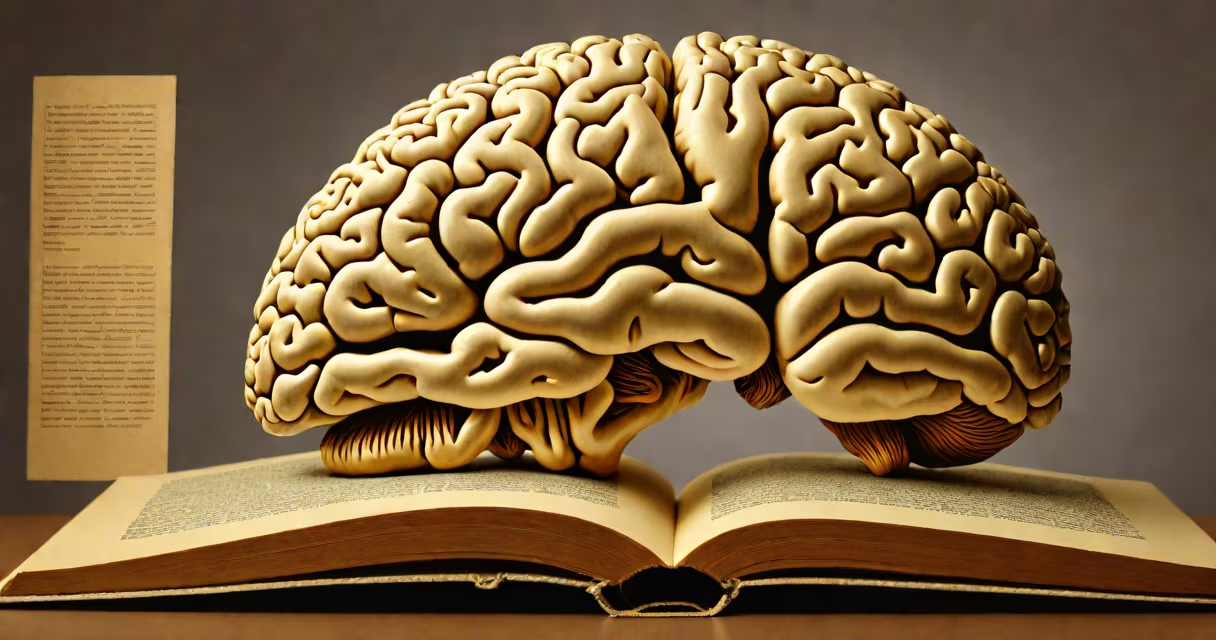
The term "monkey brain book" refers to a popular metaphor in behavioral psychology describing how ancient survival mechanisms in the human brain-evolved for life in prehistoric environments-still drive irrational decisions today. These mental shortcuts, rooted in primal fear and reward systems, often conflict with modern logic and long-term planning.
Modern neuroscience confirms that the limbic system-the emotional center of the brain-developed millions of years before the neocortex, which handles reasoning and complex planning. When stress or uncertainty arises, the older, instinctive part of the brain takes control. This shift explains why people react emotionally to minor setbacks, avoid necessary risks, or cling to outdated beliefs despite evidence.
Books titled or described as "monkey brain book" typically explore this mismatch between evolved cognition and contemporary challenges. They examine how fear of loss, social rejection, or uncertainty triggers automatic responses that undermine productivity, relationships, and personal growth. The core idea is not that humans are irrational-but that our brains were designed for different conditions than those we face now.
The monkey brain-also called the reptilian or limbic brain-responds to threats faster than conscious thought. It processes danger in milliseconds, triggering fight-or-flight reactions even when no physical threat exists. For example, receiving a critical email may activate the same neural pathways as being chased by a predator.
Neuroscientists have mapped this response using fMRI scans. A 2016 study published in Nature Neuroscience showed that participants exposed to ambiguous social cues activated the amygdala-a key fear center-within 120 milliseconds, before the prefrontal cortex had time to interpret context. This delay allows emotion to hijack decision-making.
One common outcome is confirmation bias: people seek information that supports existing beliefs and reject contradictory evidence. This behavior protects self-image but distorts reality. A 2020 analysis by the Journal of Cognitive Psychology found that individuals were 37% more likely to accept false claims if they aligned with their identity or group affiliation.
These primal responses fall into predictable categories based on evolutionary pressures:
| Trigger Type | Evolutionary Purpose | Modern Manifestation |
|---|---|---|
| Fear of loss | Preserve resources during scarcity | Refusing to sell underperforming stocks |
| Social exclusion | Survival through group cohesion | Overreacting to criticism on social media |
| Urgency bias | Act quickly in dangerous situations | Buying products on "limited-time" sale |
| Reciprocity | Build alliances for mutual protection | Feeling obligated to return favors, even unfair ones |
Each of these responses was adaptive in ancestral environments. Today, they lead to poor financial choices, damaged relationships, and chronic anxiety. Recognizing them is the first step toward overriding them.
People often confuse the monkey brain with laziness or lack of intelligence. But the issue isn't cognitive ability-it's timing. The brain doesn't fail because it's slow; it fails because it's too fast. Emotional reactions occur before reasoning begins.
A frequent error is blaming oneself for reacting emotionally. The brain isn't defective-it's operating as intended. Evolution didn't design us for mindfulness, meditation, or delayed gratification. Those are cultural innovations, not biological defaults.
Another misconception is that awareness alone stops monkey brain behavior. Simply knowing you're biased doesn't stop it. A 2018 experiment at Stanford University showed that even trained professionals failed to correct for anchoring bias in pricing decisions-even when warned about it beforehand.
When the pandemic began, global markets dropped 30% in two weeks. Many investors sold assets out of fear, despite historical data showing markets recover within 18 months after similar shocks. The monkey brain responded to perceived danger-not actual risk.
According to a report from the Federal Reserve Bank of New York, 68% of retail investors who sold during the March 2020 downturn did so within 48 hours of the first major news alert. Most cited "fear" or "uncertainty." Only 12% consulted financial advisors or reviewed long-term data.
Those who held or bought during the dip saw average gains of 52% over the next 18 months. The difference wasn't knowledge-it was resistance to emotional override. The monkey brain wanted to flee. The rational brain needed to wait.
Recognizing the pattern is not enough. You must build systems that reduce reliance on instinct. One effective method is pre-commitment: setting rules in advance to prevent emotional decisions.
I tested this during a home renovation project. My contractor quoted $12,000 for kitchen updates. I felt immediate anxiety-my monkey brain screamed "too expensive!"-but I'd written a rule: "Never decide on price within 24 hours of receiving a quote." I waited. After reviewing three additional bids and comparing material quality, I accepted a $14,500 offer that included better appliances and labor. The initial fear had been a distraction.
Other proven tools include: time delays before making purchases, journaling emotional triggers, and using checklists for high-stakes decisions. These don't eliminate bias-they create buffers between impulse and action.
"Monkey brain book" is not a formal academic title. It's a shorthand used in self-help, business strategy, and behavioral economics circles. The phrase gained traction after Daniel Kahneman's Thinking, Fast and Slow (2011) introduced System 1 (fast, emotional) and System 2 (slow, analytical) thinking.
Popular books like Atomic Habits by James Clear and Stumbling on Happiness by Daniel Gilbert reference the concept. They explain that habits form not through logic, but through repetition and emotional reinforcement-exactly how the monkey brain learns.
Understanding the monkey brain book concept isn't about judging yourself. It's about recognizing that your mind evolved to survive, not to thrive in modern complexity. The goal isn't to eliminate instinct-but to know when to pause, reflect, and choose.