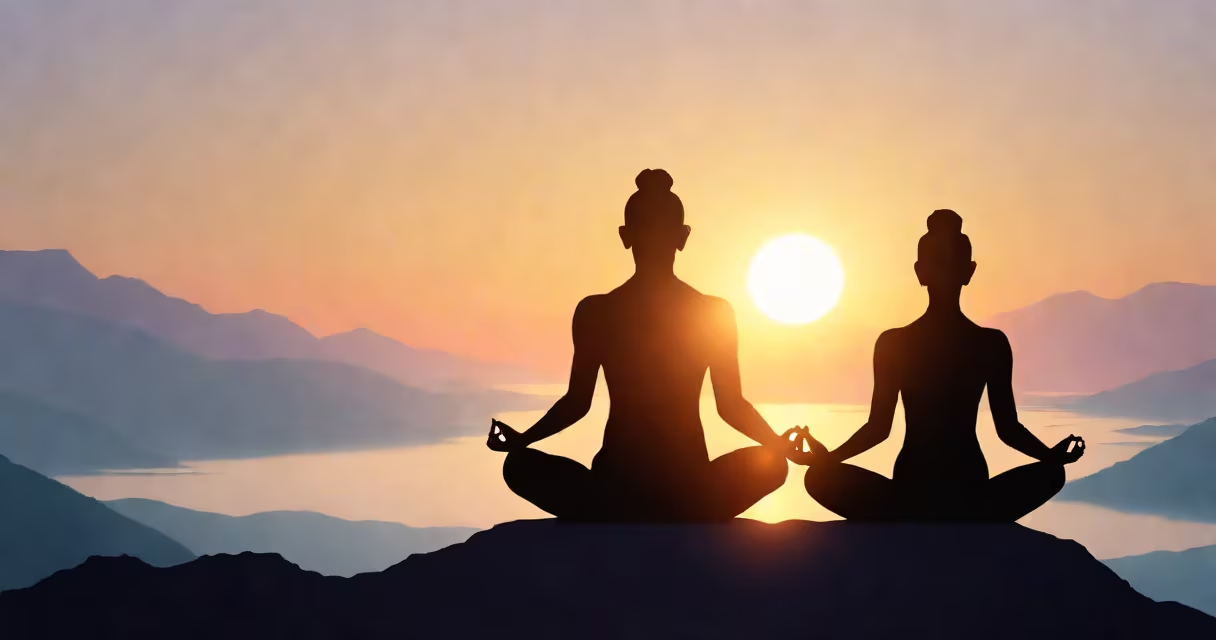
Yoga and meditation are often grouped together under wellness, but they are not the same. Yoga involves physical postures, breath control, and mindful movement. Meditation centers on focused attention, mental stillness, and awareness without judgment. While both support mental clarity and emotional balance, they differ in method, structure, and purpose.
Yoga originated in ancient India as part of a complete system for physical, mental, and spiritual development. The practice includes asanas (postures), pranayama (breath regulation), and dhyana (meditative focus). These elements work together to prepare the body and mind for deeper states of concentration. According to the Bhagavad Gita, yoga aims to unite the individual self with the universal consciousness through disciplined action and awareness.
Meditation, by contrast, is a standalone mental discipline. It typically involves sitting quietly, focusing on the breath, a mantra, or bodily sensations. The goal is to observe thoughts without reacting, cultivating present-moment awareness. Research from the National Institutes of Health shows that consistent meditation reduces activity in the default mode network-the brain region linked to mind-wandering and self-referential thinking-leading to improved focus and reduced anxiety.
Yoga uses structured sequences of movement and breath. A typical session begins with warming-up poses like cat-cow or child's pose, progresses through standing and balancing postures such as warrior II or tree pose, and ends with relaxation in savasana. The physical effort creates internal heat, increases circulation, and releases muscular tension. This embodied experience supports mental readiness for stillness.
Meditation operates without physical exertion. It requires no special equipment beyond a quiet space and a comfortable seat. Practitioners may sit cross-legged, on a cushion, or in a chair. They close their eyes, bring attention to the breath, and gently return focus whenever the mind drifts. Over time, this builds sustained attention and emotional resilience. A 2018 study published in JAMA Internal Medicine found that mindfulness meditation reduced symptoms of depression and anxiety over eight weeks.
Some forms of yoga incorporate formal meditation. For example, in hatha yoga, the final stage is often a period of silent seated meditation lasting 5 to 15 minutes. In contrast, many meditation traditions-like Zen or Vipassana-do not include physical postures. The practice is purely cognitive and sensory, relying on sustained attention rather than bodily alignment.
The table below outlines key differences between yoga and meditation based on structure, duration, and primary goals.
| Feature | Yoga | Meditation |
|---|---|---|
| Primary Focus | Body-mind integration through movement and breath | Quiet observation of thoughts and sensations |
| Typical Duration | 60-90 minutes | 10-30 minutes (can extend) |
| Physical Component | Present-poses, stretches, alignment | Absent-stillness is key |
| Common Settings | Studio classes, home routines, retreats | Quiet rooms, nature, guided apps |
Not all yoga styles emphasize meditation equally. Vinyasa and power yoga prioritize flow and endurance. Yin yoga focuses on long-held passive poses to release connective tissue. In contrast, kundalini and raja yoga integrate extended periods of silent meditation and chanting. Similarly, meditation varies widely-some traditions use visualization, others focus on loving-kindness (metta) or body scans.
People turn to yoga for flexibility, strength, stress relief, and improved sleep. A 2020 survey by the CDC found that 14.3 million U.S. adults practiced yoga in the past year, with 72% citing mental health benefits. Many studios offer drop-in sessions or online classes, making access easy.
Meditation is used to manage anxiety, improve concentration, and improve self-awareness. Apps like Headspace and Calm report over 100 million users combined. In clinical settings, mindfulness-based stress reduction (MBSR) programs have shown measurable reductions in cortisol levels and improvements in mood disorders.
Despite overlapping benefits, using them interchangeably leads to mismatched expectations. For example, someone seeking mental stillness after a long day may try a vigorous vinyasa class and feel more agitated. Conversely, attempting to meditate while physically tense can make focus harder. The key is matching the practice to the current state of mind and body.
One widespread error is assuming that any quiet time counts as meditation. Sitting still doesn't equal mindfulness. If the mind is racing, planning, or judging, the practice lacks the core element of non-reactive awareness. True meditation requires intentional training, not just silence.
Is yoga the same as meditation? No. Yoga is a physical and energetic practice that prepares the body and mind for stillness. Meditation is a mental discipline focused on awareness and presence. They share goals-inner peace, reduced stress, greater self-understanding-but achieve them through different methods. Combining both offers a fuller path to well-being, but understanding their differences ensures effective use.