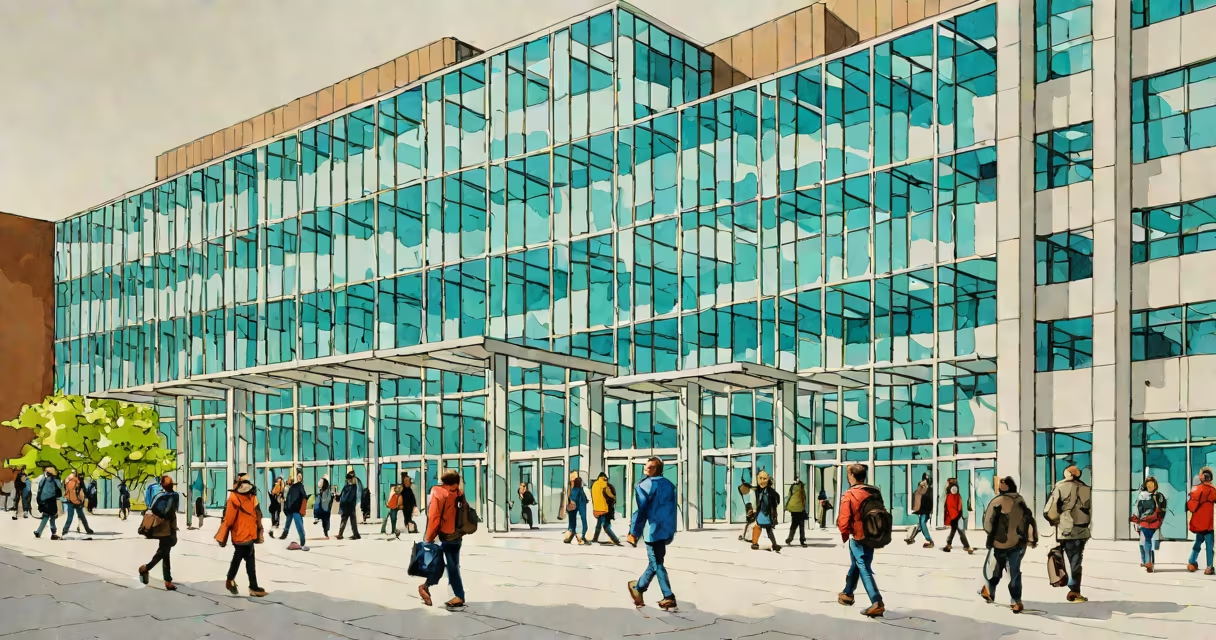
The Imperial College Union is the central student representative and service organization for students at Imperial College London, managing facilities, events, advocacy, and welfare support across the South Kensington campus.
Founded in 1908, the Union operates independently from the university's academic administration but works closely with the institution to represent student interests. It oversees a network of clubs, societies, and campaigns focused on academic, social, cultural, and political issues affecting students. The Union's core functions include organizing student events, running student-run bars and cafes, providing mental health and wellbeing resources, and offering legal advice and financial support.
It serves approximately 18,000 undergraduate and postgraduate students across four faculties: Science, Engineering, Medicine, and Business. The Union's headquarters are located in the Queen's Building on the main campus, housing offices, meeting rooms, event spaces, and the student-run bar, The Union Bar.
Decision-making within the Union is governed by a democratic structure. Students elect representatives annually to the Union Executive Committee, which includes roles such as President, Vice-President (Academic), Vice-President (Welfare), and Vice-President (External). These officers lead departments responsible for specific areas: events, campaigns, finance, and communications.
Each elected officer leads a team of volunteer committee members who manage programs and coordinate activities. For example, the Events Team organizes weekly club nights, guest lectures, and large-scale festivals like the annual Freshers' Fair and Winter Ball. The Campaigns Team runs initiatives on sustainability, mental health awareness, and diversity inclusion, often partnering with external organizations and university departments.
Students can also participate through the Union's Standing Committees, which meet regularly to discuss policy, budget allocations, and strategic priorities. All meetings are open to enrolled students, and minutes are published online for transparency.
The Union's operations are divided into functional units, each with dedicated staff and student volunteers. Key components include:
| Service/Department | Key Functions | Example Activity |
|---|---|---|
| Events & Societies | Manages 200+ registered student societies, including academic, cultural, and recreational groups. | Organizing the annual Science Festival featuring live experiments and guest speakers. |
| Welfare & Mental Health | Provides confidential counseling, peer support networks, and workshops on stress management. | Running "Mindful Mondays" sessions during exam periods with guided meditation and mindfulness techniques. |
| Finance & Funding | Allocates £1 million annually to student groups via grants and bursaries. | Funding a robotics competition team to attend the International RoboCup finals in Japan. |
| Advocacy & Representation | Lobbies university leadership on tuition fees, accommodation standards, and academic policies. | Successfully campaigned for improved accessibility in lecture halls following a 2022 survey. |
One non-obvious fact: the Union maintains a separate legal entity from Imperial College London. This allows it to contract services, hold assets, and operate independently in matters like fundraising and event licensing. The Union's financial statements are audited annually and published on its website, ensuring accountability.
Students engage with the Imperial College Union throughout their academic process. Freshers use it to join societies, access orientation events, and find accommodation. Final-year students rely on it for career fairs, alumni networking, and job placement support. Postgraduates benefit from research-specific funding and childcare services.
For example, during the 2023-2024 academic year, the Union hosted over 1,200 events, ranging from tech hackathons to film screenings. The annual "Hack the Future" competition attracted 45 teams from across Europe, with winners receiving £5,000 in seed funding and mentorship from industry partners.
It's commonly mistaken for the university's administrative offices. While Imperial College London manages academic calendars, degrees, and faculty appointments, the Union handles student life beyond the classroom. It does not award grades or oversee course content. Instead, it ensures students have a voice in decisions that affect their daily experience on campus.
Some students assume the Union is solely a social organization. In reality, it plays a critical role in student welfare and institutional accountability. According to a 2022 report by the National Union of Students (NUS), Imperial College Union ranked in the top 10% of UK student unions for student satisfaction and policy influence.
Another misconception is that membership is optional. In fact, all full-time students at Imperial College pay a mandatory fee-currently £165 per year-to support Union services. This fee funds everything from mental health outreach to subsidized tickets for cultural events. The Union publishes an annual financial report detailing how funds are allocated.
I once attended a debate hosted by the Union's Politics Society on climate policy in higher education. The event drew 150 attendees, including faculty members and local MPs. What stood out was the level of student-led analysis-participants presented data from the university's carbon audit and proposed binding targets for net-zero by 2030. That moment confirmed the Union's role not just as a social hub, but as a platform for meaningful civic engagement.
The Imperial College Union is the central hub for student life, advocacy, and services at Imperial College London. It provides essential infrastructure for academic success, personal development, and community connection. Its work extends far beyond parties and clubs-it shapes the student experience through policy, wellbeing, and representation.
Understanding the Union is key to going through campus life effectively. Whether joining a society, seeking mental health support, or participating in decision-making, students interact with the Union at multiple points during their time at Imperial. The organization remains a important part of the institution's system, grounded in student democracy and service.