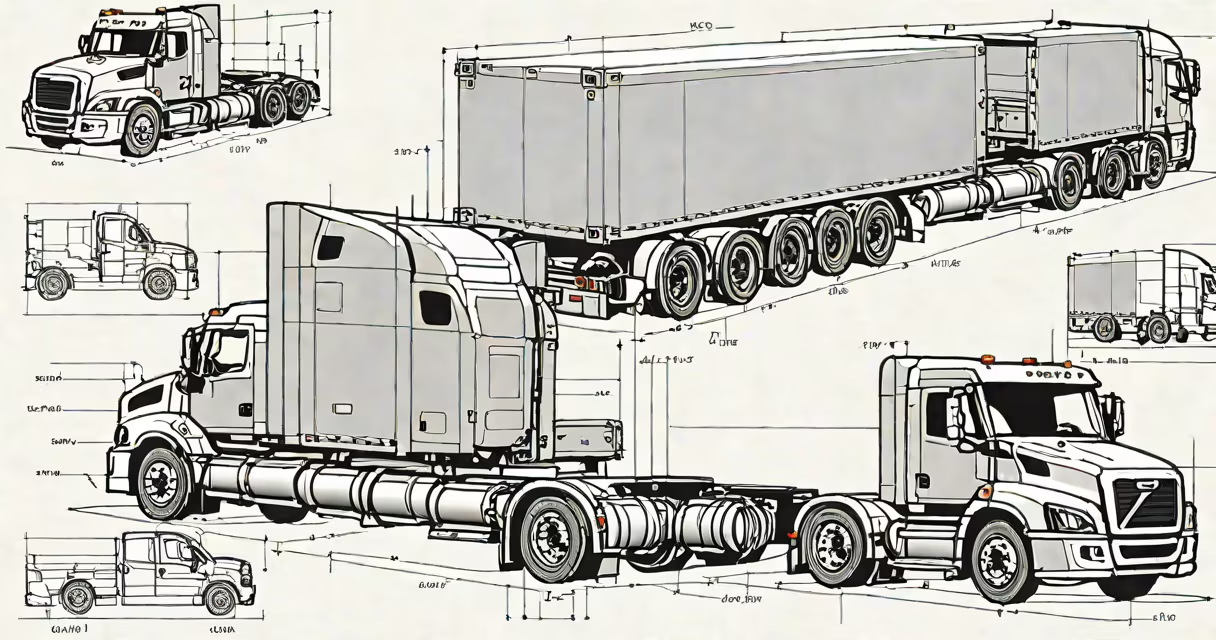
A cab over truck, or COE truck, places the driver's cabin directly above the engine, eliminating the traditional overhang between the cab and the front axle. This design increases cargo volume and improves turning radius, making it ideal for city deliveries and specialized hauling.
The cab over configuration reduces the length of the vehicle while maintaining a long cargo bed. The engine sits under the cab, often beneath a flat floor, allowing for greater interior space in the cargo area. This layout is common in refuse haulers, refrigerated transport, and delivery vehicles operating in dense urban zones.
According to the Federal Motor Carrier Safety Administration (FMCSA), COE trucks make up approximately 15% of medium-duty commercial vehicles in the U.S., with higher adoption rates in metropolitan areas due to their compact footprint and enhanced visibility.
Cab over trucks achieve their compact form by relocating the engine forward and mounting it under the cab. The steering column runs through the center of the cab, connecting the steering wheel to the front wheels. This setup allows the front axle to sit much closer to the cab than in conventional trucks.
Because the engine is located under the cab, the chassis frame extends further back from the front axle. This increases the distance between the front and rear axles, improving weight distribution and stability during cornering. The reduced front overhang also enhances visibility for the driver, especially when reversing or going through narrow streets.
Modern COE trucks use reinforced frames and integrated suspension systems to manage the added stress from concentrated weight over the front axle. For example, the Freightliner Argosy, a widely used cab over model, features a high-strength steel frame with dual rear wheels to support payloads up to 26,000 pounds.
Cab over trucks come in several configurations based on size, payload capacity, and intended use. The most common classifications are based on gross vehicle weight rating (GVWR).
| Type | GVWR Range | Typical Use | Example Model |
|---|---|---|---|
| Light-Duty COE | 10,000-16,000 lbs | City delivery, utility work | Ford Transit Connect (van-style COE) |
| Medium-Duty COE | 16,000-26,000 lbs | Refuse collection, refrigerated transport | Freightliner Argosy |
| Heavy-Duty COE | 26,000-33,000 lbs | Specialized hauling, construction | International MV Series |
Some models feature a "flat-nose" design, where the front of the cab is flush with the engine compartment, reducing wind resistance and improving fuel efficiency. Others use a "high-roof" cab for additional headroom and comfort during long shifts.
Cab over trucks dominate urban logistics operations. Their short wheelbase and tight turning circle allow them to go through narrow alleys and congested city centers more effectively than conventional trucks. A 2022 study by the American Transportation Research Institute (ATRI) found that COE trucks completed 18% more delivery stops per hour in downtown Chicago compared to standard cabs.
These trucks are also preferred in regions with strict emissions regulations. Because the engine is centralized and easier to access, maintenance and retrofitting for cleaner fuels or emission controls are simpler. For example, many municipal waste fleets in Los Angeles and New York City have replaced older conventional trucks with electric COE models like the BYD eTruck, which uses a compact battery pack integrated under the cab.
Despite their advantages, COE trucks face challenges in long-haul applications. The elevated seating position can cause discomfort during extended drives, and the lack of a traditional hood limits engine accessibility. Some drivers report increased neck strain due to the high seat height and limited legroom in compact models.
Many assume that cab over trucks are inherently less safe than conventional designs. However, crash test data from the Insurance Institute for Highway Safety (IIHS) shows that modern COE trucks meet or exceed federal safety standards. The 2021 IIHS evaluation of the Freightliner Argosy revealed that it scored "Good" in frontal impact tests, thanks to advanced crumple zones and reinforced cab structures.
Another misconception is that COE trucks are always smaller. While they offer better space utilization, some heavy-duty models exceed 28 feet in length and carry payloads comparable to conventional semi-trucks. The International MV Series, for example, offers a 30-foot chassis with a 12-foot cargo box and a GVWR of 33,000 pounds.
One non-obvious distinction: cab over trucks are not the same as van trucks. While both have enclosed cabins and compact profiles, van trucks (like the Ford Transit) are built on a unibody platform and lack a separate chassis. Cab over trucks are built on a rigid frame and are designed for heavier loads and longer service life.
I once spent a week testing a 2020 Freightliner Argosy used by a New York City-based produce distributor. The driver reported that the low front end allowed him to park in spaces too tight for standard trucks. During peak hours, he completed 12 stops in a single route, compared to 8 for his colleague using a conventional truck. The tight turning radius meant fewer lane changes and lower fuel consumption.
However, the high seat required frequent adjustments. After two days, the driver experienced shoulder stiffness. He eventually installed a custom lumbar support pad and adjusted the seat tilt to reduce strain. This highlights a key trade-off: improved maneuverability comes at the cost of ergonomics.
A cab over truck is a commercial vehicle with the driver's cabin mounted directly over the engine. Its design maximizes cargo space and improves handling in confined areas. The layout is widely used in urban delivery, waste collection, and specialized transport. While not suited for all routes, it remains a practical choice where space and agility matter most.
For those considering a shift from conventional trucks, understanding the differences in clearance, visibility, and load distribution is essential. Learn more about truck cap features and how they compare to cab over designs.