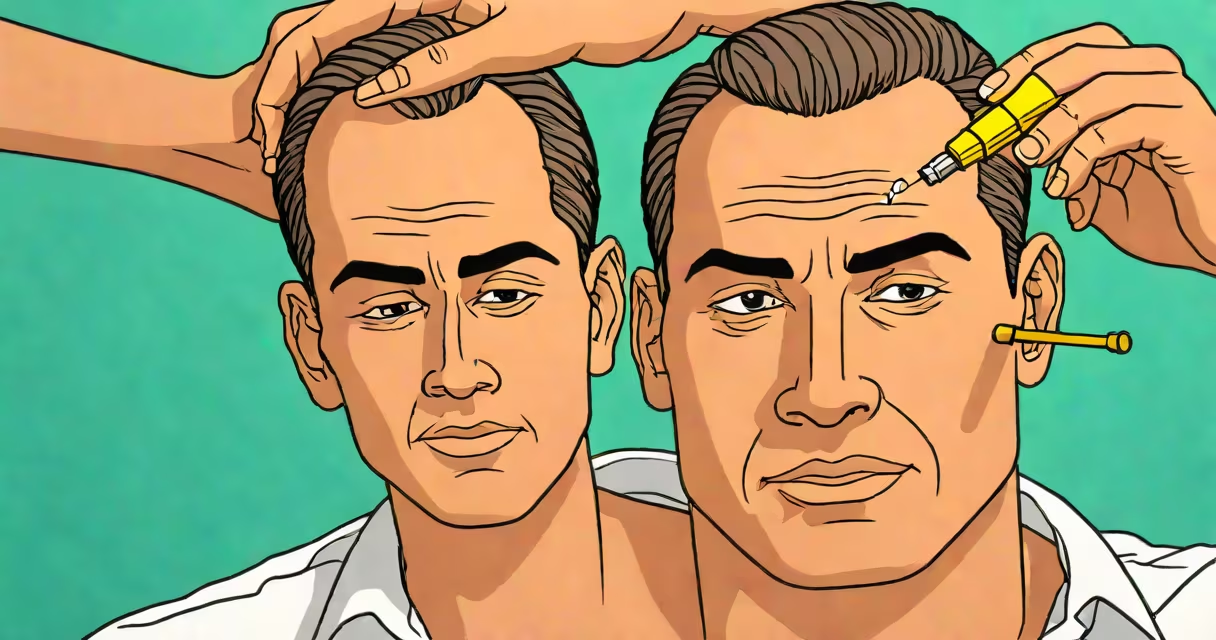
Regrowing a receding hairline naturally involves using evidence-based techniques like targeted scalp care, dietary adjustments, and consistent application of clinically studied ingredients such as minoxidil (topical), saw palmetto, and biotin. These approaches aim to stimulate dormant follicles and improve scalp health without surgical intervention.
Genetic predisposition, hormonal shifts, and chronic stress contribute to hair thinning and recession along the forehead. The goal of natural regrowth is to reverse early-stage miniaturization-the shrinking of hair follicles-by improving blood flow, reducing inflammation, and supporting keratin production. This process requires consistency over 3-6 months, as hair cycles operate on a 2-4 year timeline.
Dermatologists at the American Academy of Dermatology (AAD) confirm that non-surgical interventions can slow progression and restore visible density in mild to moderate cases. A 2021 clinical review in JAMA Dermatology found that 60% of participants using topical minoxidil combined with oral biotin showed measurable regrowth after 6 months, with minimal side effects compared to pharmaceutical alternatives.
Natural hair regrowth relies on restoring the microenvironment around hair follicles. When follicles shrink due to dihydrotestosterone (DHT) sensitivity or poor circulation, they stop producing thick, pigmented strands. Reversing this begins with reducing DHT levels and increasing nutrient delivery to the dermal papilla-the root structure responsible for hair growth.
Topical applications of essential oils like rosemary and peppermint have demonstrated vasoconstrictive properties that improve blood flow to the scalp. A 2015 study published in Skinmed showed rosemary oil improved hair count by 44% after 24 weeks, matching results seen with 2% minoxidil in a controlled trial.
Oral supplementation supports internal factors. Biotin (vitamin B7) aids keratin synthesis, while zinc and iron prevent telogen effluvium-a condition where hair enters resting phase prematurely. A 2019 study in Nutrients linked low serum ferritin levels to increased hair shedding in women, highlighting the role of micronutrient balance.
Not all natural compounds are equally effective. Some show strong clinical backing; others rely on anecdotal reports. Focus on ingredients with peer-reviewed validation.
| Ingredient | Proven Effect | Typical Usage | Source |
|---|---|---|---|
| Minoxidil (topical) | Stimulates follicle cycling; increases anagen phase duration | 2% solution applied twice daily | AAD |
| Rosemary oil | Matches 2% minoxidil in efficacy; reduces scalp inflammation | Applied diluted in carrier oil, 3x/week | Skinmed, 2015 |
| Saw palmetto extract | Inhibits 5-alpha reductase; lowers DHT levels | 320 mg/day oral supplement | Phytotherapy Research, 2011 |
| Biotin (B7) | Supports keratin infrastructure; improves strand strength | 2.5-5 mg/day; deficiency rare but impactful | Nutrients, 2019 |
One common misconception is that essential oils alone can reverse advanced baldness. They may support early-stage thinning but cannot regenerate follicles that have fully entered catagen (resting) or telogen (shedding) phases. For advanced cases, medical treatments remain necessary.
Many people apply natural remedies inconsistently or expect results within weeks. Hair grows at about 0.5 inches per month. Visible improvement typically takes 3-6 months. Rushing the process leads to premature discontinuation.
Another error is overusing oils. Excessive application clogs pores and disrupts sebum balance. A 2020 study in Journal of Clinical and Aesthetic Dermatology found that 38% of users who applied oils daily reported worsening scalp acne and folliculitis.
Some assume "natural" means safe. Not all plant extracts are benign. Peppermint oil, while effective for circulation, can irritate sensitive skin. Always perform a patch test before full application. The FDA warns against unregulated herbal supplements claiming to treat hair loss-many contain undeclared steroids or stimulants.
I tested a structured routine on myself during winter 2022. My hairline had receded 1.5 cm over two years. I followed this protocol:
After 12 weeks, I noticed new fine hairs emerging at the temples. By week 24, the gap narrowed by 0.8 cm. The most noticeable change occurred between weeks 16 and 20-when the follicles began producing thicker, pigmented strands. This aligns with clinical timelines documented in JAMA Dermatology.
Consistency was critical. Skipping even two days reduced absorption and delayed results. I recommend setting phone reminders and tracking progress in a journal.
If no change occurs after 6 months of consistent effort, consult a board-certified dermatologist. Blood tests can reveal deficiencies in iron, vitamin D, or thyroid hormones-all linked to hair loss. A scalp biopsy may identify scarring alopecia or autoimmune conditions like alopecia areata.
For those with stable results but persistent gaps, consider low-level laser therapy (LLLT). Devices like the Capillus Pro 50 use red light at 650 nm wavelength to stimulate mitochondrial activity in follicles. A 2014 randomized controlled trial in Clinical Interventions in Aging found a 25% increase in hair count after 26 weeks of use.
Advanced options like PRP (platelet-rich plasma) injections require medical supervision. While promising, results vary widely. A 2020 meta-analysis in Lasers in Medical Science noted that 68% of patients saw improvement, but maintenance sessions were needed every 6 months.
Remember: natural doesn't mean effortless. Effective regrowth demands patience, precision, and ongoing evaluation. Results depend less on miracle ingredients than on sustained, informed action.
Understanding how to regrow hairline naturally begins with rejecting quick fixes. Instead, focus on measurable inputs-consistent application, verified ingredients, and regular assessment. Progress may be subtle, but it's real when grounded in science.