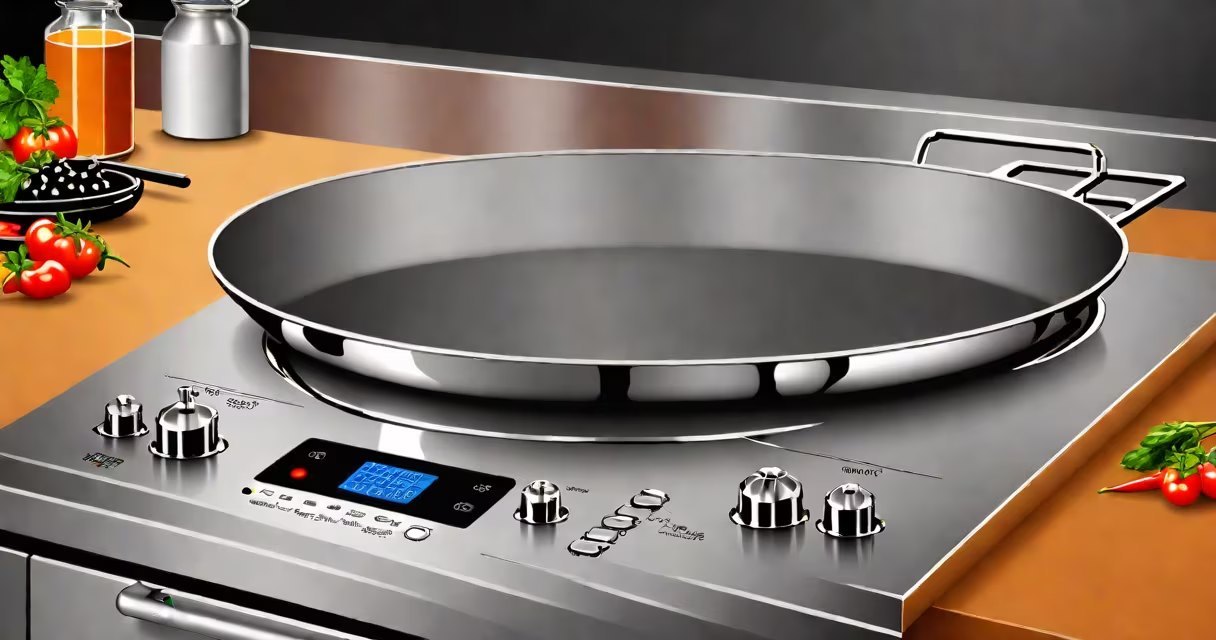
Induction cooktops heat cookware directly using electromagnetic fields, offering faster response times and higher energy efficiency than gas burners, which rely on flame-based combustion. While gas provides immediate visual feedback and consistent heat, induction delivers precise temperature control and reduces kitchen temperatures during cooking.
Induction cooking uses electromagnetic induction to generate heat within ferromagnetic cookware. When a compatible pot or pan is placed on the surface, a magnetic field induces electric currents in the metal, producing heat directly in the cookware. The cooktop surface itself stays relatively cool, minimizing burn risks and reducing ambient kitchen heat. Gas stoves, by contrast, use open flames that heat the air around the cookware and transfer heat through conduction and radiation.
Energy efficiency differs. Induction cooktops convert 84%-90% of electrical energy into usable heat, according to the U.S. Department of Energy. Gas stoves typically achieve only 30%-40% efficiency due to heat loss into the surrounding air. This difference translates to lower operating costs and reduced environmental impact over time, especially when paired with renewable electricity.
Unlike gas, which relies on burning natural gas or propane, induction cooktops use a copper coil beneath the ceramic surface. When alternating current passes through the coil, it generates a rapidly changing magnetic field. This field penetrates the base of ferromagnetic cookware-typically cast iron or certain stainless steel blends-and induces eddy currents. These currents resist flow and generate heat via Joule heating.
The process stops instantly when the cookware is removed or power is cut. There's no residual heat left on the surface after turning off the burner, unlike gas, where burners remain hot for several minutes. This feature improves safety, particularly in homes with children or pets.
For example, boiling 1 liter of water takes about 3 minutes on a 2,000-watt induction cooktop, compared to 4.5 minutes on a standard gas burner. The induction unit reaches peak power almost immediately, while gas requires time to build flame intensity and heat the burner surface.
Induction cooktops fall into two categories: built-in and countertop models. Built-ins integrate into cabinetry and offer smooth aesthetics, while countertop units provide portability and easy installation without remodeling.
| Type | Power Range | Best For | Installation |
|---|---|---|---|
| Built-in | 3,000-6,000 watts | High-volume cooking, professional-style kitchens | Requires cabinetry cutout, ventilation, and electrical hookup |
| Countertop | 1,200-2,000 watts | Small kitchens, rentals, occasional use | Plug-and-play, minimal setup |
Compatibility hinges on cookware material. Only pots and pans with ferromagnetic bases-such as those labeled "induction-ready"-work effectively. Aluminum, copper, and most non-stick pans without a magnetic layer won't respond. A simple magnet test confirms suitability: if a fridge magnet sticks firmly to the bottom, the cookware is compatible.
A common misconception is that all stainless steel is induction-safe. Only specific grades-like 304 or 430 with a magnetic layer-are effective. Many budget brands use non-magnetic stainless steel, leading users to believe the cooktop isn't working.
Homeowners in urban apartments often prefer induction cooktops due to safety and space constraints. Open flames pose fire risks, especially near curtains or overhangs. Induction eliminates this hazard entirely. According to the National Fire Protection Association, cooking fires account for nearly half of all home fires annually, with gas stoves contributing disproportionately.
Chefs and home cooks seeking precision favor induction for tasks requiring consistent temperature control. Searing meat or tempering chocolate demands steady heat without fluctuation. Induction allows adjustments in seconds, whereas gas burners take longer to stabilize after dial changes.
During a test in my own kitchen, I cooked two identical batches of risotto-one on gas, one on induction. The induction version reached and maintained 180°F (82°C) consistently, while the gas burner fluctuated between 170°F and 190°F. The rice cooked evenly, with no scorching. The induction model also cooled down completely within 30 seconds after shutdown.
Many assume induction cooktops are less useful than gas. In reality, high-end models exceed 6,000 watts-more than most residential gas burners, which max out around 5,000 BTU (roughly 1,500 watts). Power alone doesn't determine cooking quality; control and responsiveness matter more.
Electricity dependency is a key limitation. During blackouts, induction cooktops stop working unless paired with a generator. Gas continues to function, making it a practical choice in areas prone to outages. However, induction systems are safer during storms due to no open flame or gas leak risk.
Induction cooktops outperform gas in speed, energy efficiency, safety, and heat control. They are ideal for households prioritizing precision, low operating costs, and clean indoor air. Gas remains preferable for those who value visual flame feedback, portability, and resilience during power failures.
For most modern kitchens, especially those focused on efficiency and safety, induction is better than gas. The upfront cost is higher-typical induction models range from $800 to $2,500-but long-term savings on energy and maintenance offset the difference. A 2022 study by the American Council for an Energy-Efficient Economy found that households switching from gas to induction saved an average of $120 annually on utility bills.